

Written wrapped in a jacket I didn’t think I’d need in Vietnam, holding a cup of weasel coffee I definitely overpaid for.
Everyone told me Da Lat was “cheap.” Nobody told me cheap compared to what. So instead of another vague “Vietnam is affordable” post, here’s exactly what I spent over four days in Da Lat — every taxi, every bowl of bánh căn, every entrance fee — so you can actually plan around real numbers instead of guessing.
I’m not backpacking on the tightest possible budget here, and I’m not staying in luxury resorts either. This is a normal traveler’s trip: mid-range guesthouse, eating well, doing the popular things, riding a rented scooter instead of taking private cars everywhere. Adjust up or down from here depending on your style.
Getting to Da Lat: 850,000 VND
I flew into Lien Khuong Airport from Ho Chi Minh City rather than taking the notoriously winding overnight bus, mostly because I get carsick and had heard enough horror stories about that road. The one-way flight cost me about 750,000 VND booked two weeks out, plus 100,000 VND for the shuttle bus from the airport into Da Lat city center, which takes about 40 minutes through pine-covered hills that already felt noticeably cooler than Saigon.
If budget is tighter than time, the overnight sleeper bus from Saigon runs closer to 300,000-350,000 VND, but budget a rough night’s sleep and possibly some nausea on the mountain switchbacks for that discount.
Where I Stayed: 280,000 VND/night x 4 nights = 1,120,000 VND
I booked a family-run guesthouse a ten-minute walk from Xuan Huong Lake, the kind of place with a shared breakfast table and an owner who draws you a hand-map of “the good places” on your first morning. Private room, hot water (which matters more here than anywhere else in Vietnam — Da Lat gets genuinely cold at night), decent wifi.
This isn’t the cheapest option — dorm beds start around 120,000 VND/night — but after a day of walking hilly streets in cool air, I wanted my own space to actually warm up in. Mid-range hotels with better amenities run 500,000-800,000 VND/night if you want to upgrade.
What I Ate: roughly 950,000 VND over 4 days
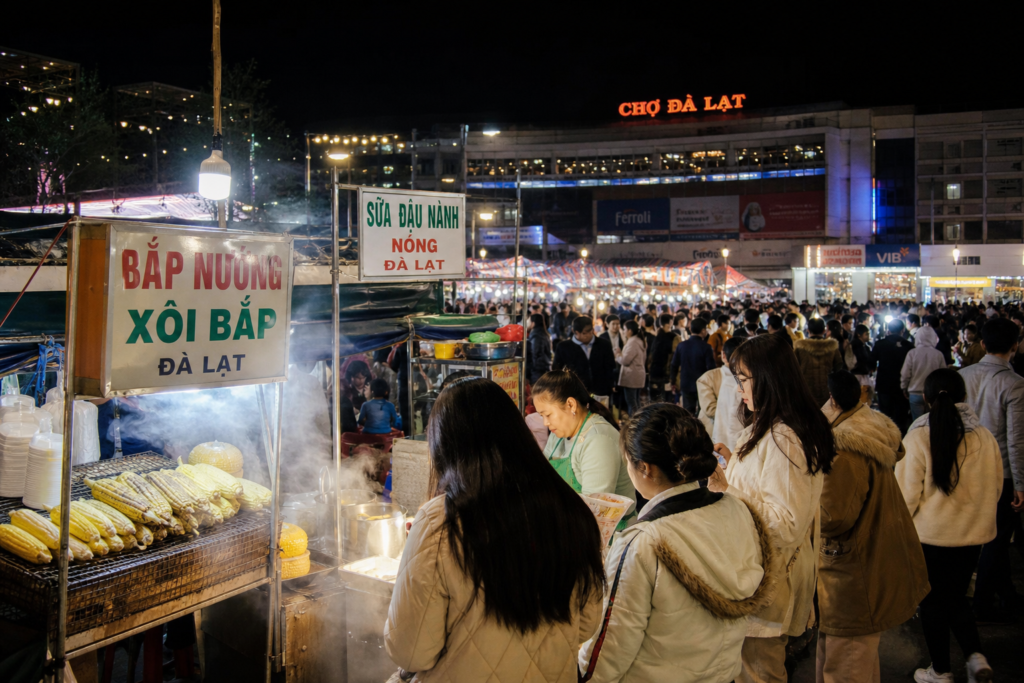
This is where Da Lat quietly wins. The night market around Cho Da Lat is where I ate most nights — bánh tráng nướng (a grilled rice paper snack locals call “Vietnamese pizza”) for about 20,000 VND, bánh căn (mini savory pancakes cooked in a clay pan, served with a quail egg on top) for another 25,000-30,000 VND a plate, and hot soy milk for 10,000 VND to warm my hands between stalls. A full dinner of market food rarely crossed 60,000 VND.
The one splurge: weasel coffee (cà phê chồn), which I tried once at a proper roastery outside the city and paid roughly 90,000 VND for a single cup — a novelty price for a novelty coffee. Regular Da Lat-grown coffee, which is genuinely excellent and much cheaper, cost me 25,000-35,000 VND a cup at any of the countless small cafés around town.
Sit-down restaurant meals for lunch ran 60,000-100,000 VND depending on how touristy the spot was near the lake versus a few streets back.
What I Did
Rented a scooter: 120,000 VND/day x 3 days = 360,000 VND
Da Lat’s hills and spread-out attractions make a scooter close to essential unless you’re only sticking to the city center. I rented mine from my guesthouse, no license check, which is common here but worth knowing carries real risk if anything goes wrong with insurance or police.
Tuyen Lam Lake + a rowboat: 100,000 VND
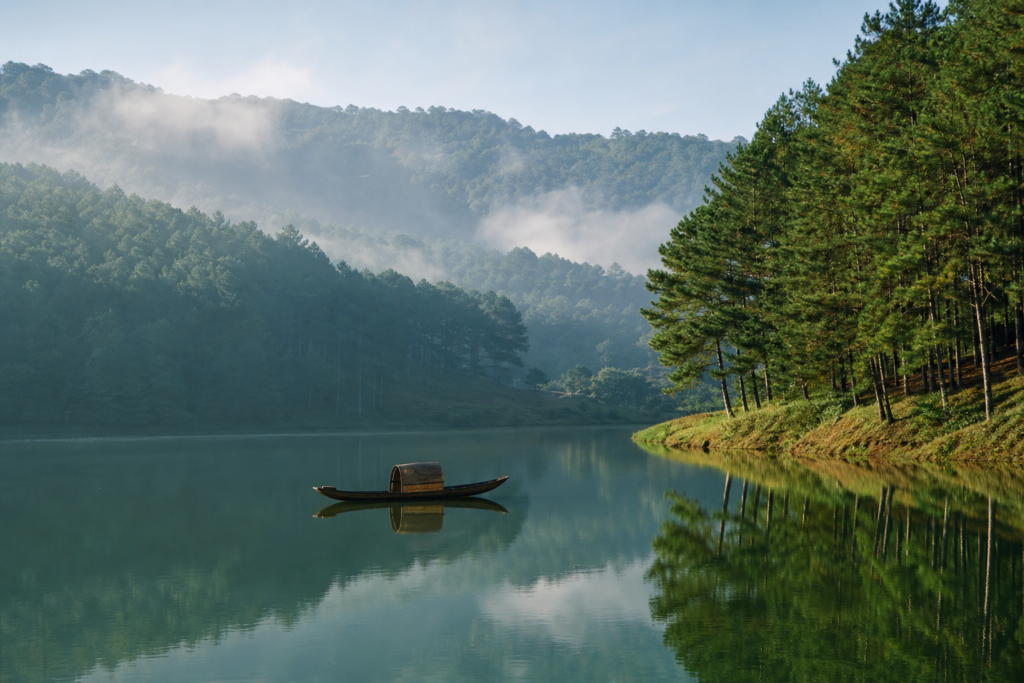
Free to visit, but I paid 100,000 VND to rent a small rowboat for half an hour, which turned out to be the quietest, most worthwhile half hour of the whole trip — pine-covered hills reflected in still water, almost nobody else around at 7am. I’d rank this above most of the “official” attractions in town.
Da Lat Flower Gardens: 60,000 VND entrance
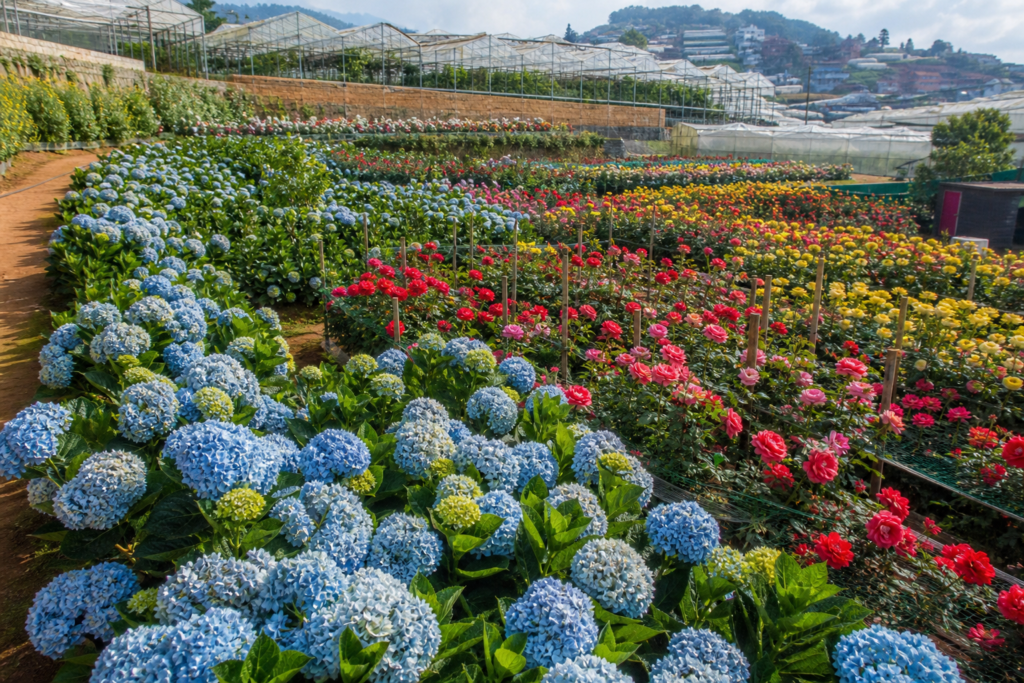
Honestly, this one is a mixed bag — pretty, well maintained, but crowded with tour groups doing coordinated photoshoots. Worth an hour, not much more. If you’re not big on garden photo-ops specifically, you could skip it without missing much.
Da Lat Railway Station: free to view, 5,000 VND if you want the platform
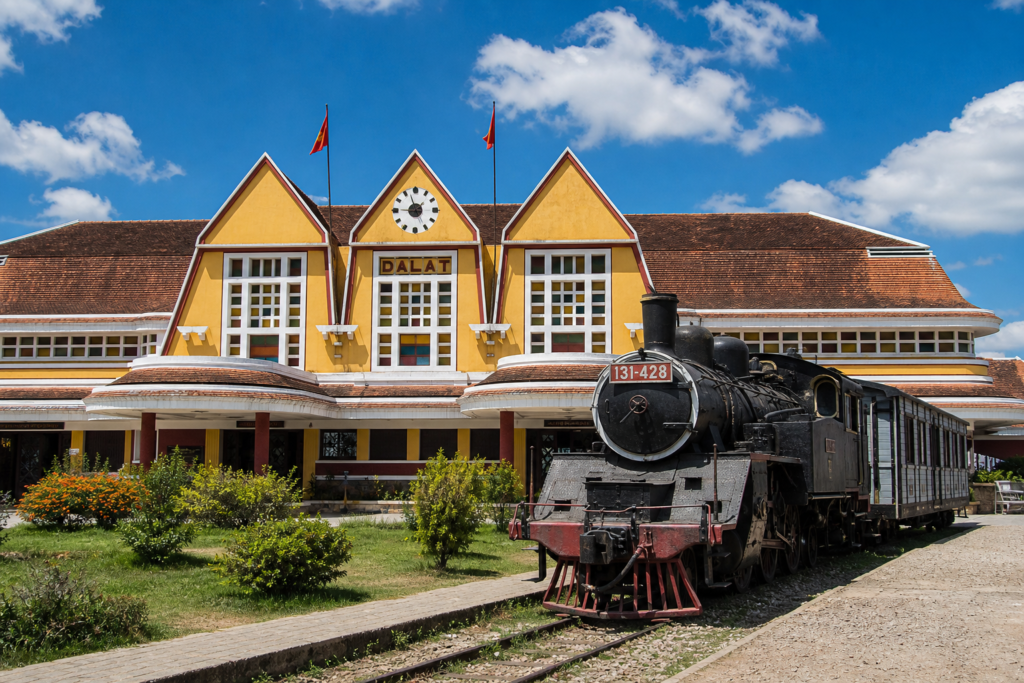
This yellow art deco building is one of the more striking pieces of colonial-era architecture I saw anywhere in Vietnam, worth comparing to the different colonial character of Hoi An’s old town if you’ve been there — completely different eras and influences, but both worth the wander. I didn’t take the short heritage train ride to Trai Mat village (75,000 VND) due to time, which in hindsight I regret; several other travelers told me it was worth the extra hour.
Coffee farm visit: 50,000 VND (self-guided, via scooter)

I rode out to a small terraced coffee farm about 25 minutes outside the city and paid a small fee to walk through and taste fresh-roasted beans. Da Lat sits in one of Vietnam’s main coffee-growing regions, and seeing the terraced hillsides in person made every cup afterward taste a little more specific, if that makes sense.
What I Skipped (and don’t regret)
Datanla Waterfall and the Crazy House both get heavy tourist traffic and mixed reviews from travelers I met — some loved the Crazy House’s surreal architecture, others called it overpriced and gimmicky at 60,000 VND entrance for what’s essentially a strange building you walk through in 20 minutes. I chose to spend that time and money on a second visit to Tuyen Lam Lake instead, and don’t regret it.
The Full Breakdown
| Category | Cost (VND) |
|---|---|
| Flight + airport shuttle | 850,000 |
| Guesthouse (4 nights) | 1,120,000 |
| Food (4 days) | 950,000 |
| Scooter rental (3 days) | 360,000 |
| Tuyen Lam Lake + rowboat | 100,000 |
| Flower Gardens | 60,000 |
| Railway station platform | 5,000 |
| Coffee farm | 50,000 |
| Total (4 days, 1 person) | ~3,495,000 VND (~$140 USD) |
That works out to roughly 875,000 VND (~$35) per day, all-in, for a comfortable but not extravagant trip. Skip the flight for the overnight bus and you’d shave that down closer to $30/day.
Is Da Lat Worth the Money?
Compared to the cost of a few days in Sapa, which involves more expensive trekking guides and homestay packages, Da Lat came in noticeably cheaper for a similar “cool mountain town” experience, just with flowers and coffee farms instead of rice terraces and ethnic minority villages. They scratch a similar itch — escaping Vietnam’s heat and humidity for a few days — but the vibe and the price point are genuinely different, and I’m glad I did both rather than picking one to represent “mountain Vietnam.”
Da Lat itself has a strange colonial history worth a quick read if you’re curious why a Vietnamese mountain town has French villas and a train station that looks like it belongs in the Alps — the Wikipedia page on Đà Lạt covers how the French built it as a hill station retreat from the coastal heat in the early 1900s, which explains a lot of what you’ll see walking around.
What I’d Do Differently
- Take the heritage train to Trai Mat — I skipped it for time and regretted it based on what others said.
- Skip the Flower Gardens if you’re tight on time; the free views around Tuyen Lam Lake are more memorable for less money.
- Budget for a warmer jacket than you think you need. I underpacked for the cold nights and ended up buying a cheap fleece at the market for 150,000 VND, which I didn’t include above because it wasn’t planned.
- Rent the scooter for the full trip length, not just 3 of 4 days — I wasted time on foot on day one figuring out where things were before renting.
Frequently Asked Questions
Is Da Lat expensive compared to the rest of Vietnam? Not really — my four days came to about $140 USD total, or roughly $35/day, which is in line with other mid-range Vietnam travel, maybe slightly higher than coastal cities due to guesthouse heating and warmer clothing needs.
How many days do you need in Da Lat? Three to four days is enough to cover the lake, the coffee farms, the markets, and one or two of the bigger sights without rushing. Two days works if you’re just passing through.
Do you need a scooter in Da Lat? Not strictly, but it makes getting to Tuyen Lam Lake and the coffee farms much easier and cheaper than arranging taxis each time. Many attractions are outside comfortable walking distance from the city center.
What’s the best time of year to visit Da Lat? December to March tends to have the driest, coolest weather, which suits the “cool mountain town” appeal Da Lat is known for. It also gets noticeably colder at night than most of Vietnam, so pack accordingly.