

Hoi An chicken rice (cơm gà) is a plate of turmeric-yellow rice topped with hand-shredded poached chicken, and in Hội An it costs roughly 35,000–70,000 VND (about $1.35–2.70). On its own it is a light, quick lunch. Built into a proper meal, it becomes one of the better-value sit-downs in central Vietnam.
This guide treats the plate as the centre of a meal and works outward: what is on it, what goes beside it, what to drink, and where it fits in a day of eating in the old town.
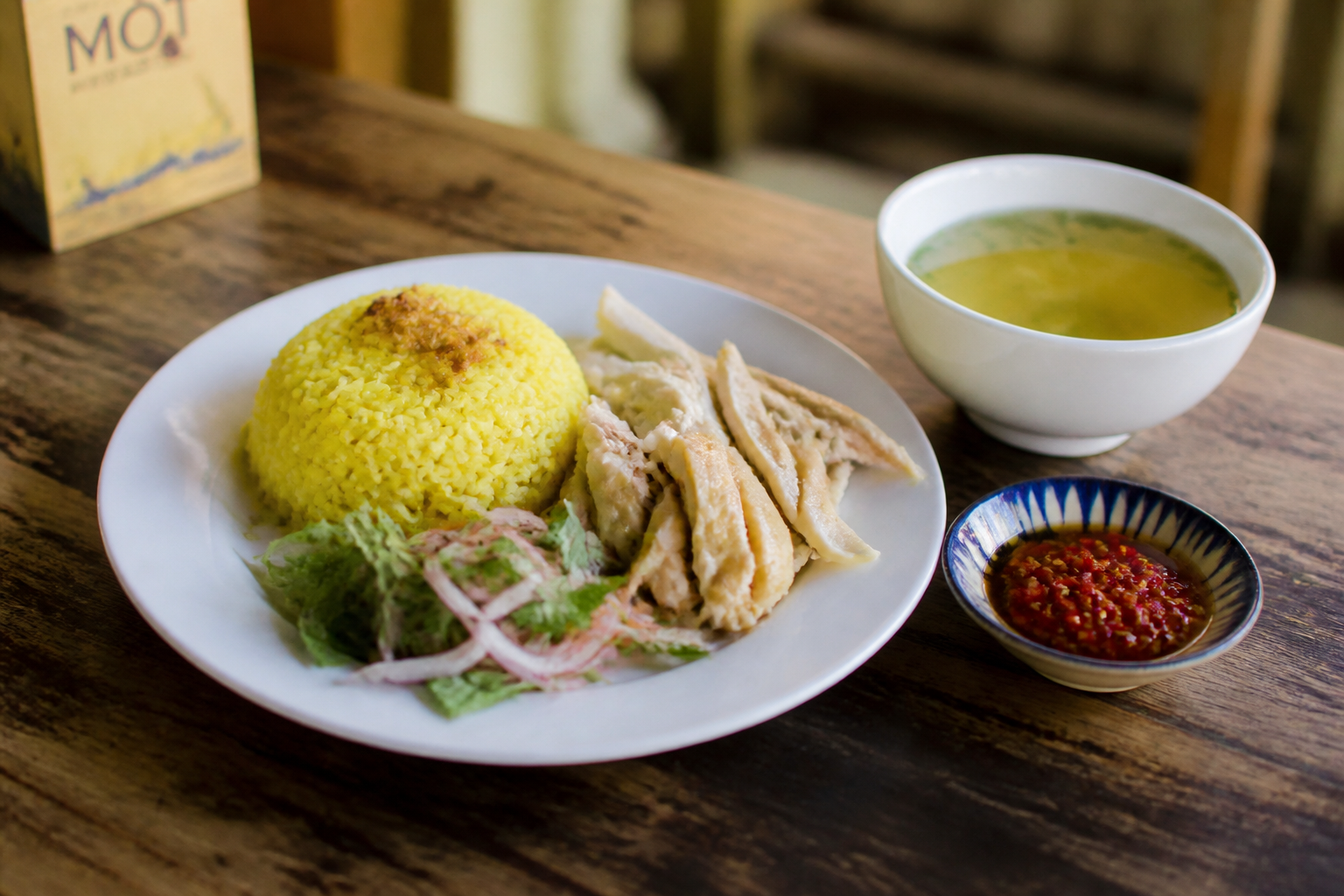
Course 0: What Hoi An Chicken Rice Looks Like on the Plate
Hoi An chicken rice has five parts. Knowing them makes it easier to judge a plate and to order extras.
- The rice. Short-to-medium grain rice cooked in chicken stock, often with a little chicken fat and turmeric. The colour ranges from pale gold to deep yellow. Colour alone is not a quality marker; a pale grain that tastes of stock beats a bright one that tastes of nothing.
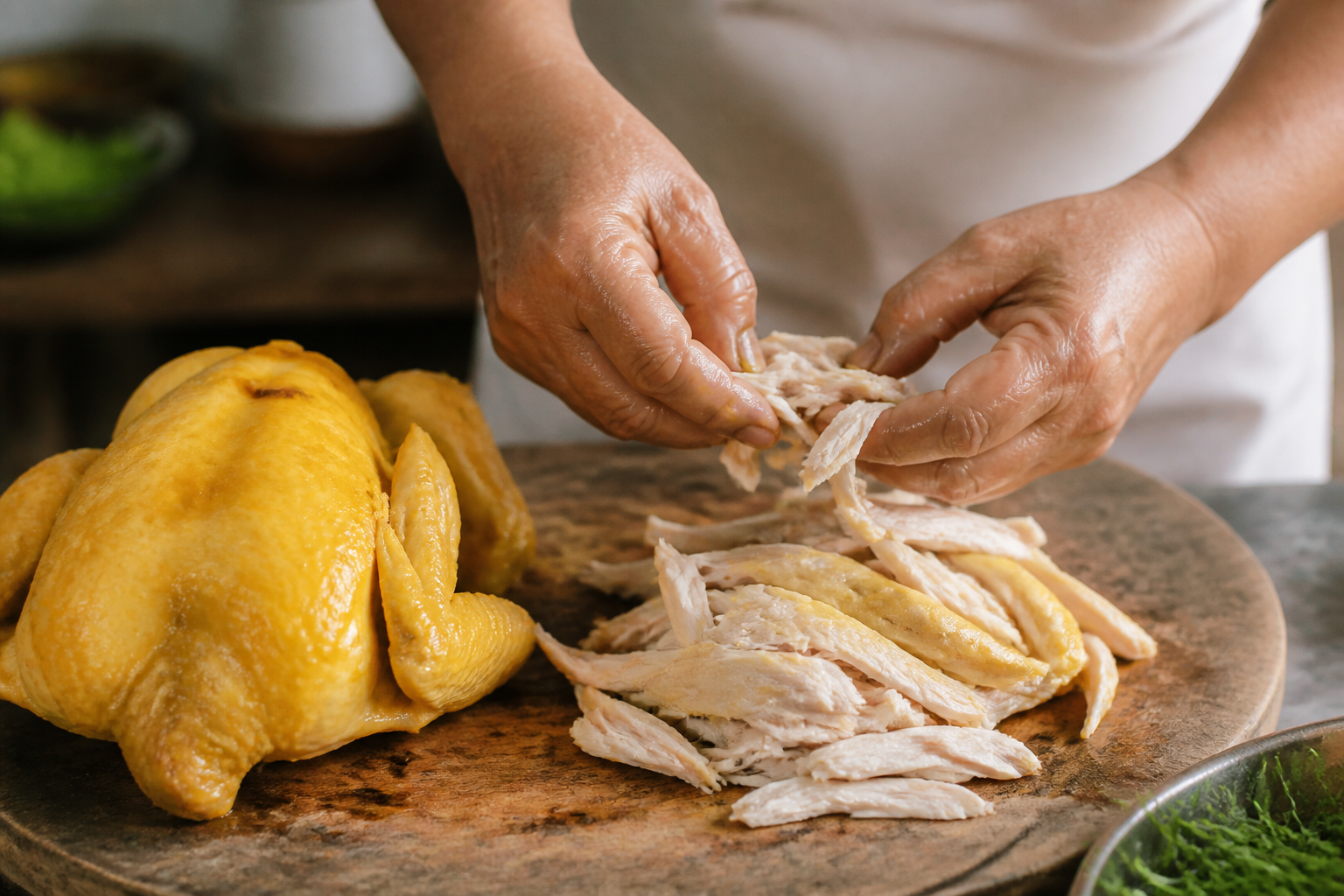
- The chicken. Usually gà ta, the leaner free-range bird, poached whole in barely simmering water and then cooled so the skin sets. It is torn by hand into strips, not sliced.
- The onion and herbs. Sliced onion is dressed with salt, lime and black pepper, then mixed with rau răm (Vietnamese coriander), which has a peppery, slightly citrus bite. This cuts the richness of the fat.
- The sauce. A small dish of chilli, lime and fish sauce, sometimes with a spoon of ginger. It is meant for dipping chicken, not for pouring over rice.
- The broth. A bowl of clear stock from the poaching, often with chopped scallion and a few offal pieces.
The dish originates in Quảng Nam province. The neighbouring city of Tam Kỳ, roughly 55–60 km from Hội An by road, has its own version with a heavier hand on the rice and a separate plate of chicken. Hội An’s version is lighter, served as a single plate, and tuned to the town’s visitors.
Course 1: Choose the Chicken Cut
Most eateries offer a default plate of mixed meat. The choice matters more than most diners expect.
Breast versus thigh
Breast meat (ức) is lean and dry if overcooked. Thigh and leg (đùi) keep more fat and gelatine, so they stay moist. If the menu lets you choose, thigh is the safer pick. A mixed plate (gà xé thập cẩm or simply cơm gà) usually covers both.
Skin and offal
Skin is part of the dish. Asking for it removed (bỏ da) takes away much of the flavour. Offal such as liver, gizzard and heart (lòng gà) is often sold as an add-on or arrives in the broth. Gizzards are the easiest place to start; they are chewy rather than strong.
Whole-bird sets
Some restaurants sell a half or whole poached chicken (nửa con, cả con) for groups of three or more, with rice served separately. Prices for a whole bird typically run 250,000–450,000 VND ($9.60–17.30), depending on the size of the bird and the restaurant.
Course 2: Add the Side Dishes
A plate of Hoi An chicken rice is rarely the whole order at a sit-down place. These sides are the standard extras.
- Green papaya salad (gỏi đu đủ): shredded papaya dressed with lime, herbs and sometimes dried beef or peanuts. It adds crunch and acid. Typically 25,000–45,000 VND ($0.95–1.75).
- Chicken salad (gỏi gà): shredded chicken tossed with cabbage, onion and herbs. Rich plates call for it less; plain rice plates pair well with it.
- Pickles (dưa chua): mustard greens or carrots in brine. Free or around 10,000 VND at many places.
- Fried egg (trứng ốp la): a cheap protein add-on, 5,000–10,000 VND.
- Extra broth: a refill is often free at casual places; ask once.
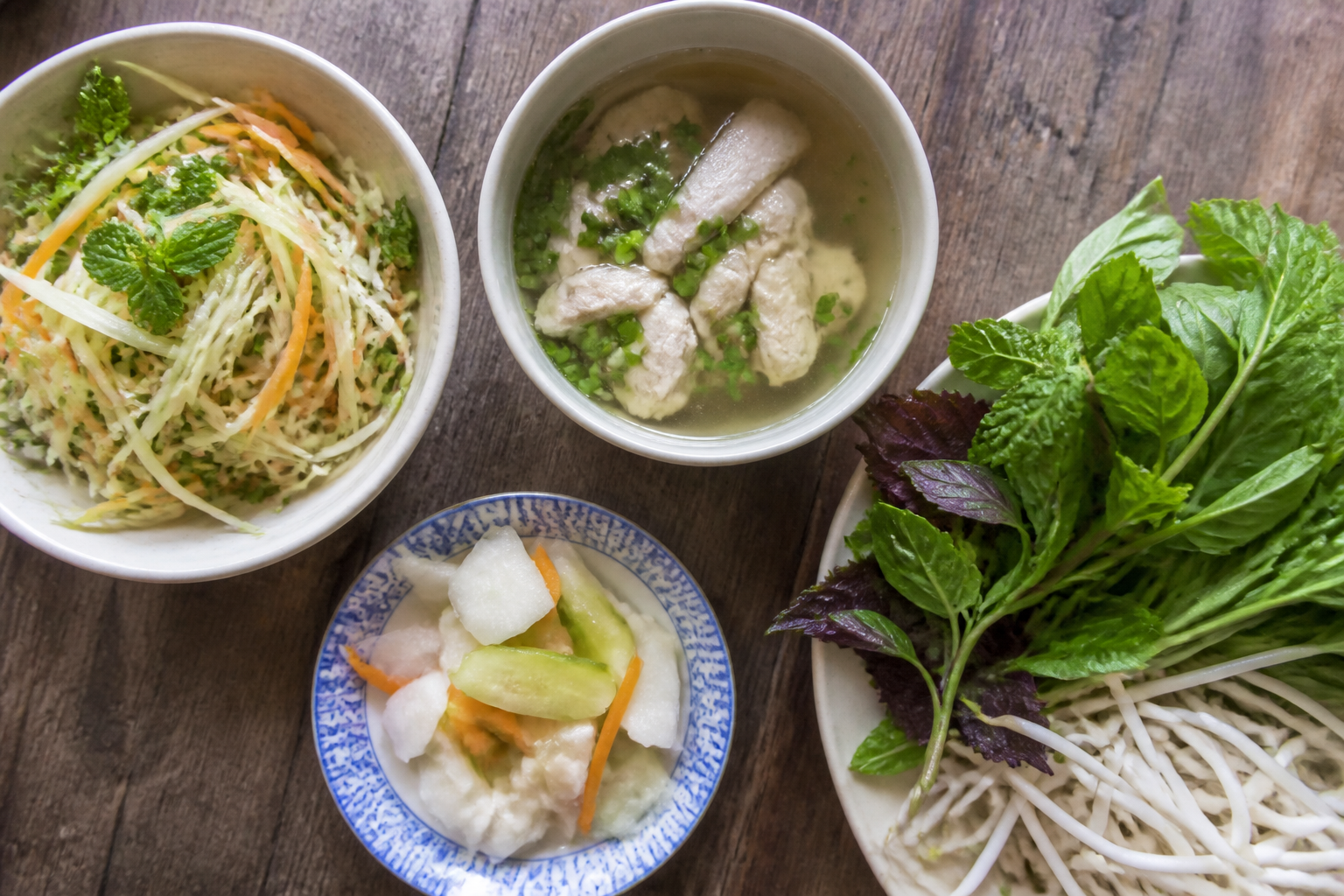
Skip anything fried if the plate already has a fried egg. Rice, chicken and fat in the same bite is enough; the sides exist to cut it.
How the Rice and Chicken Are Made
The method explains why the plate tastes the way it does, and why a good stall does not need many ingredients.
The chicken is lowered into a pot of water just below a simmer, typically for 20–30 minutes depending on weight, then lifted out and rested or dipped briefly in cold water. This keeps the meat tender and sets the skin. The poaching liquid is the most valuable by-product: it becomes the stock for both the rice and the side broth.
Raw rice is often fried briefly in chicken fat with shallot and turmeric before the stock goes in. Cooking it in stock rather than water is what gives the grains their savoury edge. The result is rice that tastes complete without any topping, which is why the chicken can stay simple.
Two practical points follow. First, the dish is only as good as the bird, so stalls that specialise in it tend to beat generalist menus. Second, there is no frying or heavy seasoning to hide a poor chicken, so the quality signals in Course 6 are easy to read.
Course 3: Mix the Sauce and Eat in the Right Order
Eating order is not strict, but a sequence works better than stirring everything together.
- Taste the broth first. It shows how the chicken was poached. Clear, lightly sweet, with no strong smell of fat, is a good sign.
- Dip chicken, not rice, in the sauce. The rice is already seasoned by the stock. Adding sauce to rice makes the plate salty.
- Eat herbs and onion with the chicken. They are meant to be a mouthful together.
- Finish the pickles at the end to reset the palate before dessert or a drink.
Chilli level varies. Fresh sliced chilli is usually served on the side; ask for it (cho tôi ớt) rather than assuming it is in the sauce.
Course 4: Pick the Drink
The drinks that suit chicken rice are light and cold or hot and plain.
- Iced tea (trà đá): free or 3,000–5,000 VND at most eateries.
- Sugarcane juice (nước mía): around 10,000–20,000 VND ($0.40–0.75). The sweetness suits salty chicken and chilli.
- Calamansi lime juice (nước tắc or nước quất): sour and sharp. It is the best match for a fatty plate.
- Hot green tea: lower sugar and handy if the broth is oily.
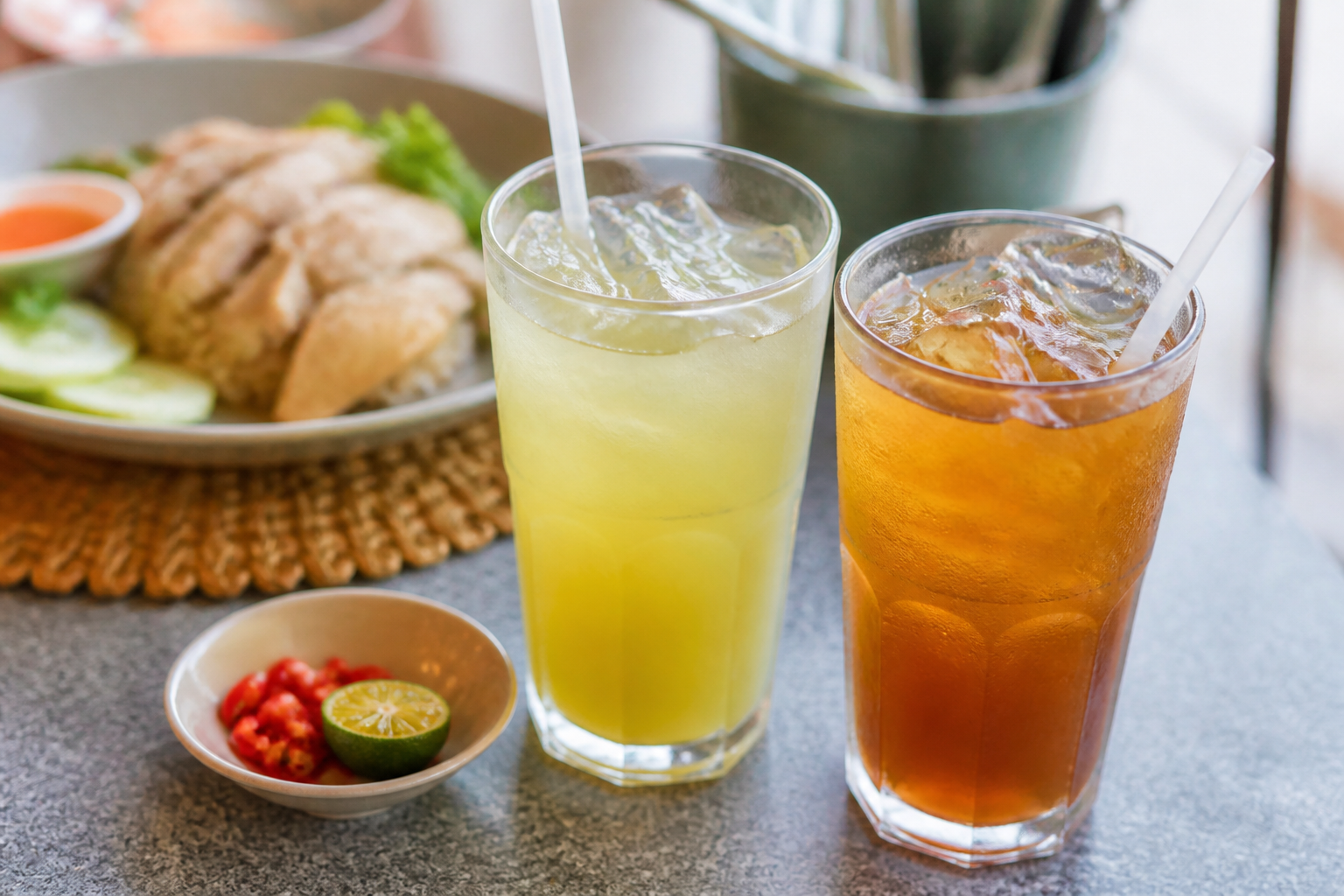
Avoid heavy soft drinks or beer at lunch if you plan to walk the old town afterwards; the midday sun and a full stomach make that a slow afternoon.
Course 5: Choose the Right Type of Place
Hoi An chicken rice is sold at three kinds of venues in Hội An, and each suits a different meal.
Specialist street-side stalls
These usually sell only chicken rice, with a glass cabinet of poached birds out front. Plates are 35,000–50,000 VND ($1.35–1.95). Service is fast; seating is plastic stools. Many open by 10:00 and close when the chicken runs out, sometimes before 14:00. These are the best places for the plain dish.
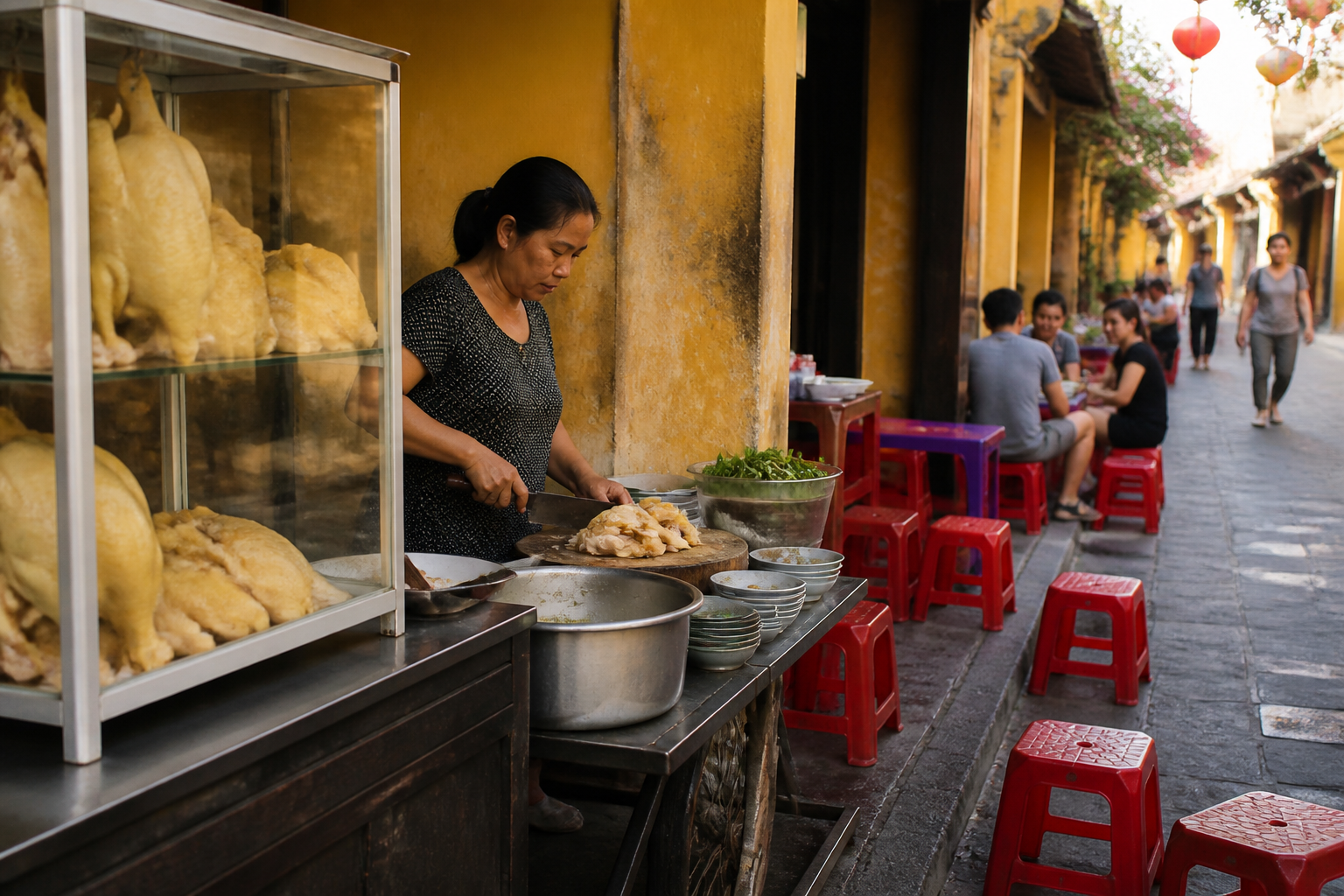
Family restaurants
Menus add salads, soups and whole-bird sets. Plates are 50,000–70,000 VND ($1.95–2.70) and the meal comes with more choice. They are the right pick for groups and for building the full meal described above.
Tourist-facing restaurants
Along the main riverfront and Trần Phú and Nguyễn Thái Học streets, chicken rice sits on menus beside other dishes. Prices can reach 80,000–120,000 VND ($3.10–4.60). Quality varies; check whether the chicken is torn by hand and whether the rice is yellow from stock rather than from food colouring.
Course 6: Quality Signals Worth Checking
Four checks separate a good plate from an average one.
- Skin that is pale and set, not rubbery or grey.
- Rice grains that stay separate, with a little shine from the fat.
- Herbs that are fresh, with rau răm leaves green and unwilted.
- Broth that is clear, not cloudy or heavily salted.
Avoid places where chicken is pre-shredded in a large uncovered tray in the sun. Poached chicken stored warm for hours is a food-safety risk in a hot climate.
Dietary Notes
Hoi An chicken rice is built on chicken stock and chicken fat, so it is not suitable for vegetarians, and a request for “no chicken” still leaves a stock-cooked rice. Anyone avoiding pork can eat it comfortably; the dish contains none by default, though some sauces and sides may. Fish sauce appears in the dipping sauce, so people with shellfish or fish allergies should ask for the sauce on the side (nước chấm riêng) or skip it. Gluten exposure is low, since the plate has no wheat, but soy sauce is sometimes added to dipping sauces.
Course 7: Fit It Into the Day
Hoi An chicken rice suits lunch, between 11:00 and 13:30. It is lighter than the town’s noodle dishes, so it combines well with a second stop.
- Morning: a bowl of Mì Quảng or a bánh mì from a market stall.
- Lunch: chicken rice with sides.
- Afternoon: cao lầu, the town’s other signature noodle dish, as a late snack or early dinner.
- Evening: a dessert from a stall; the Vietnamese chè menu decoder lists what to order.
For the layout of the old town and how to move around it, see the Hội An Ancient Town guide. For table manners at a family eatery, the Vietnamese dining etiquette checklist covers shared dishes and chopstick rules.
Travellers building a food-led route through central Vietnam can look at the central Vietnam private tours from CTour, which cover Hội An, Đà Nẵng and Huế. C Vietnam Tours also arranges custom itineraries with set meal stops.
Course 8: The Meal, Added Up
A realistic full meal of Hoi An chicken rice for one person at a family restaurant: chicken rice 55,000 VND, green papaya salad 35,000 VND, sugarcane juice 15,000 VND, fried egg 8,000 VND. That comes to about 113,000 VND ($4.35). At a specialist stall, the plain plate with iced tea comes to 40,000–55,000 VND ($1.55–2.10). Two people sharing a half bird, rice and two sides usually pay 250,000–350,000 VND ($9.60–13.50) in total. Card payment is uncommon at stalls; carry small notes.
Frequently Asked Questions
Is Hoi An chicken rice spicy?
Not by default. The plate is savoury and herbal. Heat comes from the chilli sauce or fresh chilli on the side, which you add yourself.
How much does Hoi An chicken rice cost?
A plain plate of Hoi An chicken rice runs 35,000–70,000 VND ($1.35–2.70) at most eateries. Tourist-facing restaurants charge up to 120,000 VND, and sides add 10,000–45,000 VND each.
What is the difference between Hoi An and Tam Kỳ chicken rice?
Tam Kỳ’s version is heavier: more rice, chicken served as a separate plate, and often a stronger turmeric colour. Hội An’s is a lighter single plate with the chicken on top.
When is the best time to eat it?
Lunch, from about 11:00 to 13:30. Specialist stalls cook a set number of birds a day and may run out in the afternoon.
Is chicken rice safe to eat from a street stall?
Yes, if the chicken is kept covered and the stall turns over quickly. Choose busy places and avoid trays of pre-shredded meat left in direct sun.