

Da Nang splits into six urban districts, but almost everything a visitor needs sits inside four of them: Son Tra, Ngu Hanh Son, Hai Chau, and Thanh Khe. Each one has a different reason to base yourself there, a different price range, and a different rhythm. Picking the wrong one doesn’t ruin a trip, but it adds 20-30 minutes of Grab rides to every meal and every beach walk.
This Da Nang neighbourhood guide breaks the city down block by block instead of day by day, so you can match a district to what you actually came to do — swim, eat, party, hike, or just pass through on the way to Hoi An.

Da Nang Neighbourhood Guide: How the City Is Laid Out
Da Nang is Vietnam’s fourth-largest city, sitting almost exactly halfway between Hanoi and Ho Chi Minh City, about 100 km south of Hue and 30 km north of Hoi An. The Han River cuts through the middle. Its eastern side runs a nearly straight 20-km beach; its western side holds the historic core, train station, and most offices and markets.
Six bridges cross the river; the Dragon Bridge (Cầu Rồng, lit up and breathing fire on weekend nights around 9pm) is the one every visitor ends up crossing. Almost every hotel address falls into one of the four zones below.
| District | Best for | Price level | Distance to airport | Distance to Hoi An |
|---|---|---|---|---|
| Son Tra (My Khe / An Thuong) | First-time visitors, beach + nightlife | Mid to high | 15-20 min, ~7 km | 30-40 min, ~25-28 km |
| Ngu Hanh Son (Non Nuoc) | Quiet beach, resorts, long stays | Mid to high (resort-heavy) | 20-25 min, ~10 km | 20-25 min, ~15 km |
| Hai Chau | City life, local food, budget stays | Low to mid | 10 min, ~4 km | 40-45 min, ~30 km |
| Thanh Khe | Passing through, cheap sleeps | Low | 5-10 min, ~2 km | 45-50 min, ~32 km |
Son Tra District: My Khe Beach and An Thuong
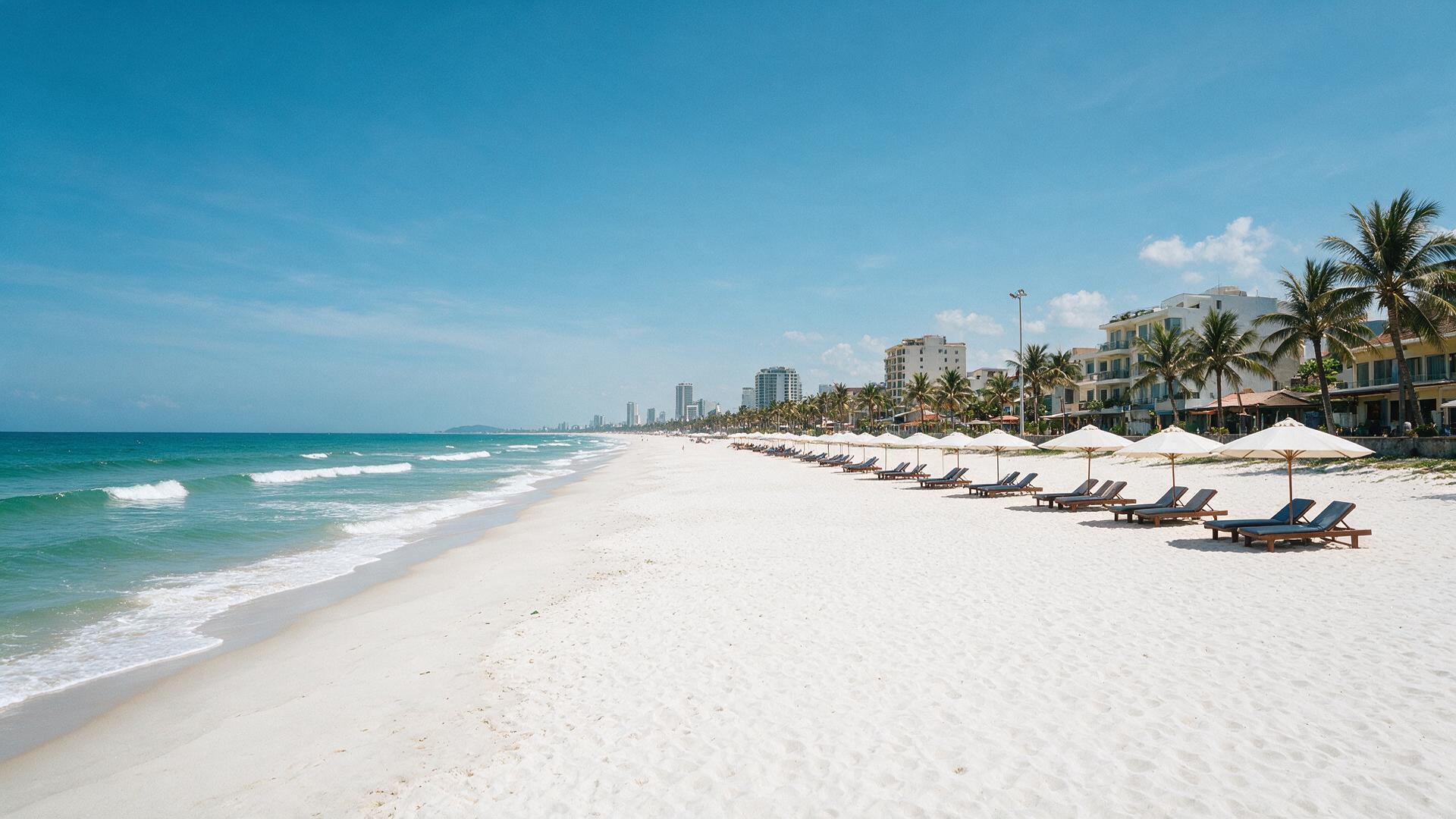
Son Tra is what most visitors mean by “staying near the beach in Da Nang.” It covers the eastern bank from the Han River mouth past My Khe Beach, plus An Thuong — a dense grid of streets inland that forms the city’s main tourist dining and bar strip.
My Khe Beach runs for about 900 metres of walkable public sand directly in front of Son Tra’s hotel row. It’s a working beach, not a resort-only strip: local families use it morning and late afternoon, loungers appear around 8am and clear by sunset, and lifeguards patrol a marked swimming zone roughly April through September. Waves are generally calm May-August and can get choppy with rip currents in the shoulder months, which is when the flag system matters.
An Thuong is where you eat and drink. Streets like An Thuong 2 through An Thuong 26 hold a dense mix of Vietnamese seafood grills, Western brunch cafes, craft beer bars, and late-night food stalls, all within a 10-minute walk. A plastic-stool seafood dinner — grilled squid, clams in lemongrass, a bucket of local beer — typically runs 150,000-300,000 VND (about $6-12) per person; a sit-down version of the same meal runs 300,000-600,000 VND ($12-24).
Hotel prices in Son Tra range from roughly 500,000 VND ($20) a night for a simple beachside guesthouse room to 3,000,000+ VND ($120+) for a beachfront resort tower. This is the most expensive district in the city, and also the most convenient for someone with 3-5 days who wants beach, food, and nightlife within walking distance.
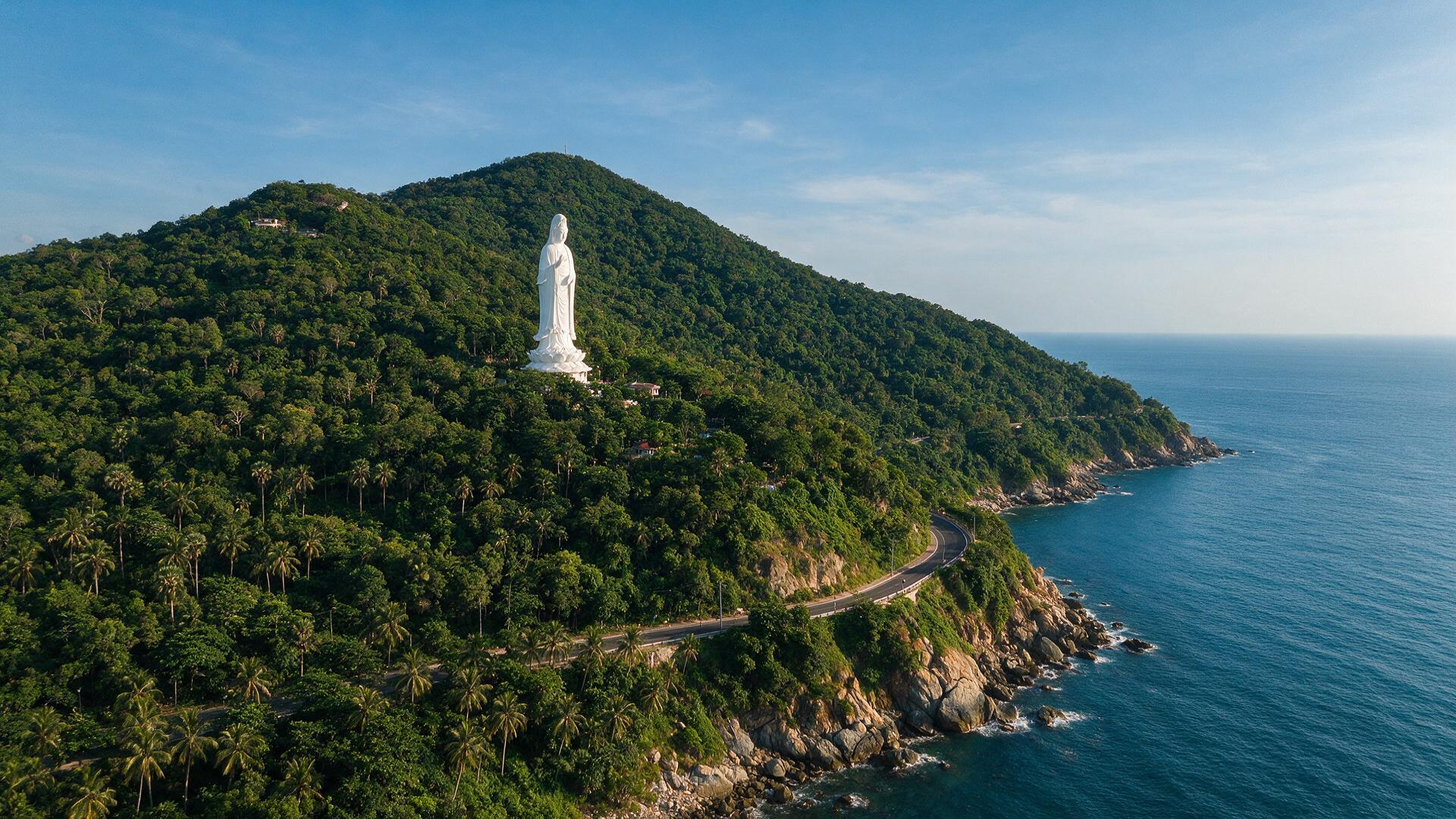
Further north, Son Tra also contains the Son Tra Peninsula itself — a forested mountain reserve jutting into the sea, home to the endangered red-shanked douc langur and the 67-metre Lady Buddha statue at Linh Ung Pagoda. The peninsula loop road is a 30-45 minute motorbike or car ride from the beach hotels and is best done in the morning before clouds settle on the upper viewpoints.
Ngu Hanh Son District: Resorts and the Marble Mountains
South of Son Tra, past the Tran Thi Ly Bridge area, Ngu Hanh Son takes over the coastline down toward Hoi An. This is where the beach widens and the hotel density drops — the district is dominated by large resort compounds (Furama, Naman, Premier Village among them) set back from a quieter stretch of sand generally called Non Nuoc Beach.
Ngu Hanh Son suits travellers who want a pool-and-beach base without walking to restaurants every night, since resorts here are built as self-contained properties with their own dining. It’s also the closest district to Hoi An’s Ancient Town, making it a practical midpoint if a trip splits time between the two.
The district takes its name from the Marble Mountains (Ngũ Hành Sơn), five limestone and marble hills rising out of the flat coastal plain, each named for one of the five elements. Thuy Son, the largest, has caves, Buddhist shrines, and an elevator (30,000 VND, ~$1.20, one-way) that skips the steepest climb; entrance runs around 40,000 VND ($1.60). The marble carving village at the base sells everything from small souvenirs to garden-sized statues.
Room rates here skew resort-level — 1,500,000-5,000,000+ VND ($60-200+) a night — with fewer budget options than Son Tra.
Hai Chau District: The Real City Centre
Cross the Han River to the western bank and you’re in Hai Chau, the administrative and commercial heart of Da Nang. This is where the train station, the main markets, the Cathedral, and most local government buildings sit. It’s also, block for block, the cheapest place to eat well in the city.
Han Market (Chợ Hàn), on Tran Phu Street, is the go-to for dried seafood, produce, fabric, and a ground-floor food court where a full meal costs 25,000-50,000 VND ($1-2). Con Market (Chợ Cồn), a few streets over, is larger and serves mostly local shoppers.
Bakeries, phở stalls, bún chả cá stands, and coffee shops cluster along Tran Phu, riverside Bach Dang, and the alleys behind the Cathedral. A riverside coffee runs 25,000-45,000 VND ($1-1.80); a bowl of mì Quảng at a local stall runs 25,000-35,000 VND ($1-1.40).

Hotels here run 300,000-1,200,000 VND ($12-48) a night for solid three-star options, since Hai Chau caters more to domestic business travellers than foreign tourists. The tradeoff is a 10-15 minute Grab or a 20-minute walk to reach the beach.
Thanh Khe District: Cheap Sleeps Near the Airport
Thanh Khe sits just north of Hai Chau, between the city centre and the airport. It has a short beach of its own (Thanh Khe and Xuan Thieu Beach) but is mostly residential, with lower rents and fewer tourist services.
It’s the practical choice for a layover night or an early flight — fastest to Da Nang International Airport (5-10 minutes) and among the cheapest rates in the city, often 250,000-500,000 VND ($10-20) a night. Skip it for a multi-day stay; restaurants and beach infrastructure are thinner than in Son Tra or Hai Chau.
Getting Between Districts
Da Nang has no metro or tram. Grab (car or motorbike) is metered in-app and typically runs 20,000-60,000 VND ($0.80-2.40) for a cross-district trip; street taxis charge similarly and are easiest to flag in Hai Chau. A rental motorbike costs 120,000-180,000 VND ($5-7) a day and is most useful for the Son Tra Peninsula loop and Marble Mountains. Walking works within Son Tra’s An Thuong grid or central Hai Chau, but crossing the river on foot takes 20-25 minutes, so a Grab is faster.
See the Vietnam transportation guide for options across the whole country, and the Vietnam SIM and eSIM guide for getting a local data plan to book rides.
Day Trips That Change Which District Makes Sense
Two attractions outside the four core districts pull in opposite directions and affect where a base makes sense.
Ba Na Hills, home to the Golden Bridge — the pair of giant stone hands appearing to hold up a pedestrian walkway over the mountains — sits about 25 km west of the city centre, roughly 45-60 minutes by car. The site runs a hill-station theme park with its own cable car, open roughly 7am to 9pm; the bridge is best seen in the first two hours after opening, before cloud and crowds build. Combined cable car and park entry runs 750,000-950,000 VND ($30-38) for adults. Basing in Hai Chau or northern Son Tra shaves 10-15 minutes off this trip versus Ngu Hanh Son.
Hoi An, by contrast, pulls in the opposite direction. It’s 25-30 km south, 30-45 minutes by car, and a Grab or taxi one-way runs roughly 300,000-450,000 VND ($12-18); a public bus (route 01) covers the same route for about 35,000 VND ($1.40) but takes longer. Basing in Ngu Hanh Son shortens this trip the most. Full detail on the town itself is in the Hoi An Ancient Town guide.
Matching District to Trip Length
1-2 nights, in transit: Thanh Khe or Hai Chau, for airport proximity and low cost. Skip resort hunting; prioritise sleep and a cheap good meal.
3-5 nights, beach-focused: Son Tra. My Khe Beach, An Thuong’s food and bar scene, and the Son Tra Peninsula are all within a short ride, and Hoi An remains a manageable day trip.
5+ nights or a honeymoon/relaxation trip: Ngu Hanh Son. Resort infrastructure, a quieter beach, and the shortest run to Hoi An if a multi-day extension there is planned.
Food-first, budget-conscious: Hai Chau. Markets, local noodle stalls, and river-view cafes at local prices, with the beach still a short Grab ride away when needed.
For when to schedule any of this, check the month-by-month calendar for Vietnam. Da Nang’s dry stretch runs roughly February through August, with January-March mild, June-August hot and humid, and September-December carrying the highest rain and occasional typhoon risk.
FAQ
Which district is closest to the beach in Da Nang?
Son Tra, covering My Khe Beach and An Thuong, sits directly on the sand. Ngu Hanh Son’s Non Nuoc Beach is also beachfront but further from the centre.
Is it better to stay near My Khe Beach or in Hai Chau?
My Khe suits beach and nightlife; Hai Chau suits food and city life, with the beach a short Grab ride away either way.
How far is Da Nang from Hoi An?
About 25-30 km, 30-45 minutes by car, or about an hour by public bus.
Do I need a motorbike to get around Da Nang?
No. Grab and taxis cover the city reliably; a rental motorbike mainly helps for the Son Tra Peninsula loop and Marble Mountains.