

Tôi ăn bún chả bốn lần trong sáu ngày ở Hà Nội, và đến bát thứ tư tôi vẫn không biết mình ăn đúng cách hay không. Tôi nhúng bún thay vì nhúng rau thơm. Tôi gọi nem vì nghĩ nó chỉ nhỏ bằng một cuốn nem cho một người, nhưng lại nhận được một đĩa đủ cho ba người ăn. Tôi trả 45.000 VND ở một quán và 120.000 VND ở quán khác cho hai bát bún trông giống hệt nhau.
Vì vậy, thay vì viết một danh sách “top 10 địa điểm ăn bún chả” khác, tôi đã ngồi xuống và trả lời những câu hỏi thực sự mình thắc mắc — những câu hỏi ngớ ngẩn, những câu hỏi thực tế, những câu hỏi mà tôi quá ngại ngùng để hỏi người bạn Hà Nội của mình, Linh, cho đến khi tôi đã ăn món này sai cách suốt ba ngày.
Đây là món bún chả được giải thích theo cách mà tôi ước ai đó đã giải thích cho tôi trước bữa trưa đầu tiên của tôi trên chiếc ghế nhựa ở Khu Phố Cổ.
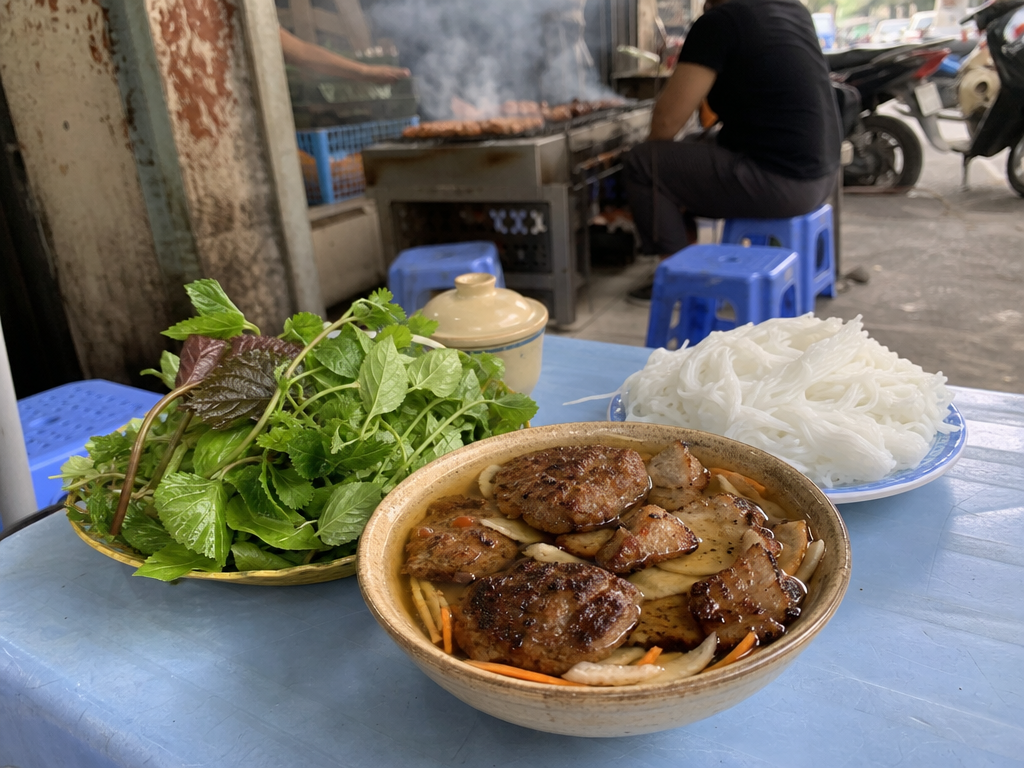
Hỏi: Khoan đã, bún chả thực chất là gì?
Fair place to start, because the name tells you almost nothing if you don’t already know Vietnamese food vocabulary. “Bún” is rice vermicelli noodles. “Chả” is grilled meat, specifically here it means seasoned, char-grilled pork.
So bún chả is, at its simplest: grilled pork (usually two kinds — flat patties called chả băm and slices of pork belly called chả miếng) served in a bowl of warm, sweet-sour-salty dipping sauce called nước chấm, alongside a separate plate of cold rice noodles and a mountain of fresh herbs. You don’t get one bowl with everything mixed together. You get three components and you build each bite yourself.
That’s the part that confused me most on day one — I kept waiting for a “finished” dish and it never came. The dish IS the assembly.
Q: Is this the same thing as phở?
No, and I got this wrong before I ever set foot in Vietnam. Phở is a noodle soup — broth, noodles, beef or chicken, all in one bowl, eaten hot with a spoon and chopsticks. Bún chả is a lunch dish, served warm-not-hot, and it’s assembled by you, piece by piece, dunking noodles and herbs into the sauce bowl rather than drinking broth. Vietnamese people generally eat phở for breakfast and bún chả for lunch — I never once saw it served as a dinner main in the six days I was tracking this.
Q: How much should I actually pay for it?
This is where I got burned, so let me give you real numbers instead of vague advice.
- Local sidewalk spot, no English menu, plastic stools: 35,000–45,000 VND (about $1.40–$1.80) for a standard bowl with noodles and a small herb plate.
- Mid-range restaurant with an English menu, seated indoors: 65,000–90,000 VND ($2.60–$3.60).
- Tourist-zone restaurant near Hoàn Kiếm Lake with AC and photos on the wall: 120,000–150,000 VND ($4.80–$6).
I paid the top price at a place two blocks from the lake because I was hungry, jet-lagged, and didn’t want to walk further. The bowl was fine. It was not four times better than the 35,000 VND version I had two days later in a residential alley near Hanoi Old Quarter. If you’re staying in the Hanoi Old Quarter area, walk two or three streets away from the main tourist strip and prices drop fast without any drop in quality — often the opposite.
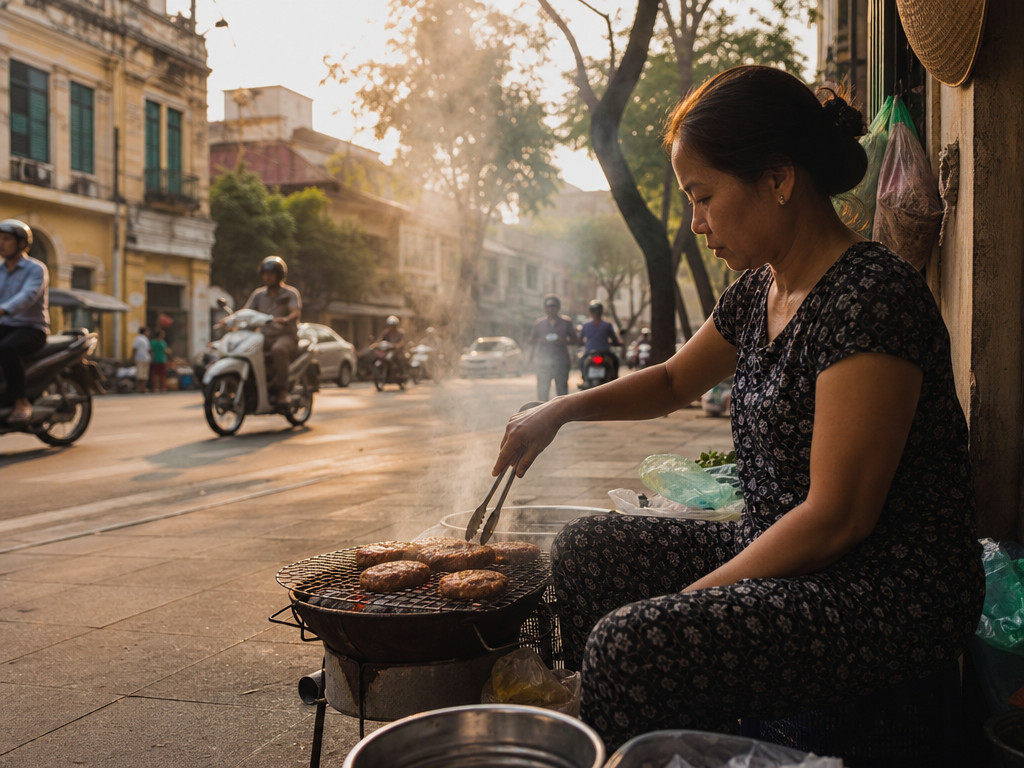
Q: What’s that smoky smell everywhere in the Old Quarter around lunchtime?
That’s the charcoal. Good bún chả has to be grilled over real charcoal, not gas, and not an electric grill — the fat from the pork belly drips onto hot coals and the smoke curls back up and flavors the meat as it cooks. Vendors set up small round charcoal grills directly on the sidewalk starting around 10:30am, and by 11:15 the whole street smells like it.
Honestly, this was my favorite way to find a good spot. I didn’t use a map on day three — I just walked toward the smoke. It worked better than any online “best of” list.
Q: Do I mix everything into one bowl, or keep it separate?
Keep it separate until the very last second. Here’s the actual sequence, the way Linh finally showed me after watching me struggle:
- Grab a chunk of noodles with your chopsticks.
- Dunk it briefly into the sauce bowl (2-3 seconds, don’t drown it).
- Add a piece of herb — usually perilla leaf or a bit of lettuce — either dunked with the noodles or eaten alongside.
- Fish out a piece of grilled pork from the same bowl.
- Eat it all together in one bite.
I had been dumping my entire noodle plate into the sauce bowl like a soup, which waterlogged everything and diluted the sauce so badly that by my third bite it tasted like nothing. Small dunks, one bite at a time — that’s the actual technique.
Q: What’s in the dipping sauce that makes it taste so specific?
Nước chấm for bún chả is fish sauce, sugar, lime or vinegar, water, and garlic, warmed slightly and served with thin slices of pickled green papaya and carrot floating in it. The pickled vegetables aren’t garnish — they’re doing real work, cutting through the richness of the pork fat with acidity and crunch. If your bowl doesn’t have visible papaya/carrot slices in it, something’s off or the place is cutting corners.
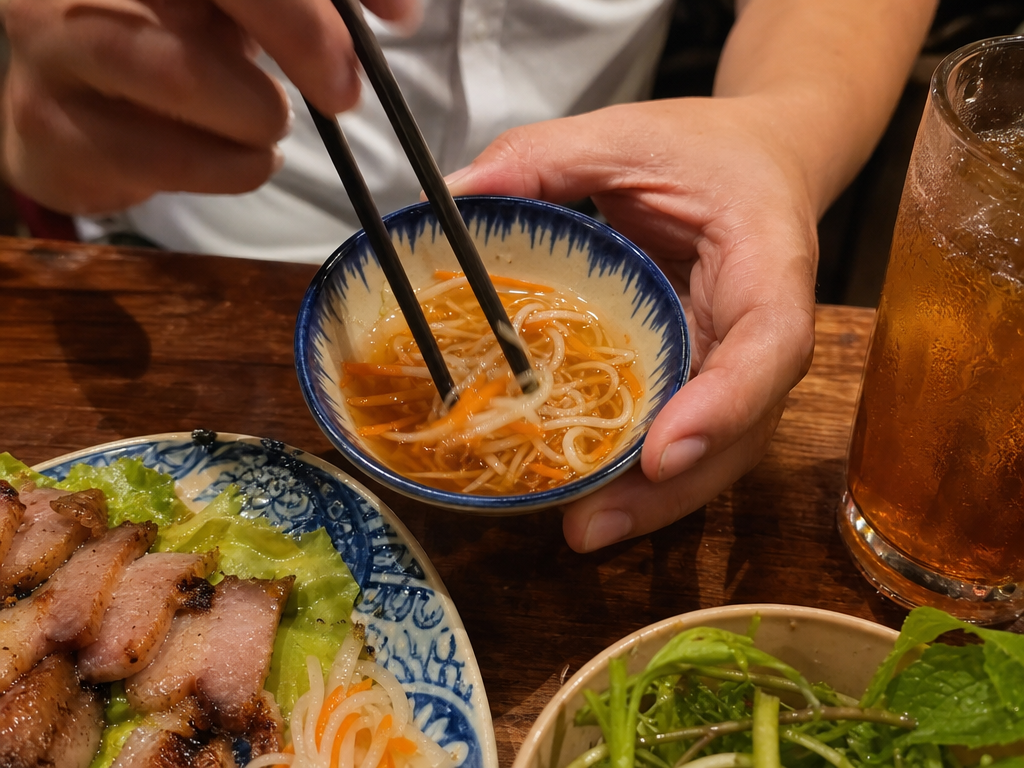
Q: What are the herbs I’m supposed to eat with it, and does it matter which ones?
The standard herb plate includes lettuce, perilla (tía tô — the purple-backed leaf with a slightly minty, slightly grassy taste), Thai basil, mint, and sometimes coriander. It does matter, a little — perilla specifically is the one most tied to bún chả in Hanoi, and skipping it means you’re eating a slightly flattened version of the dish. I’m not precious about this. On day two I picked out just the mint and lettuce because the perilla flavor was new to me and a bit strong. By day five I was specifically asking vendors for extra perilla. Give it a chance past the first bite.
Q: Should I order “nem” too, and what even is it?
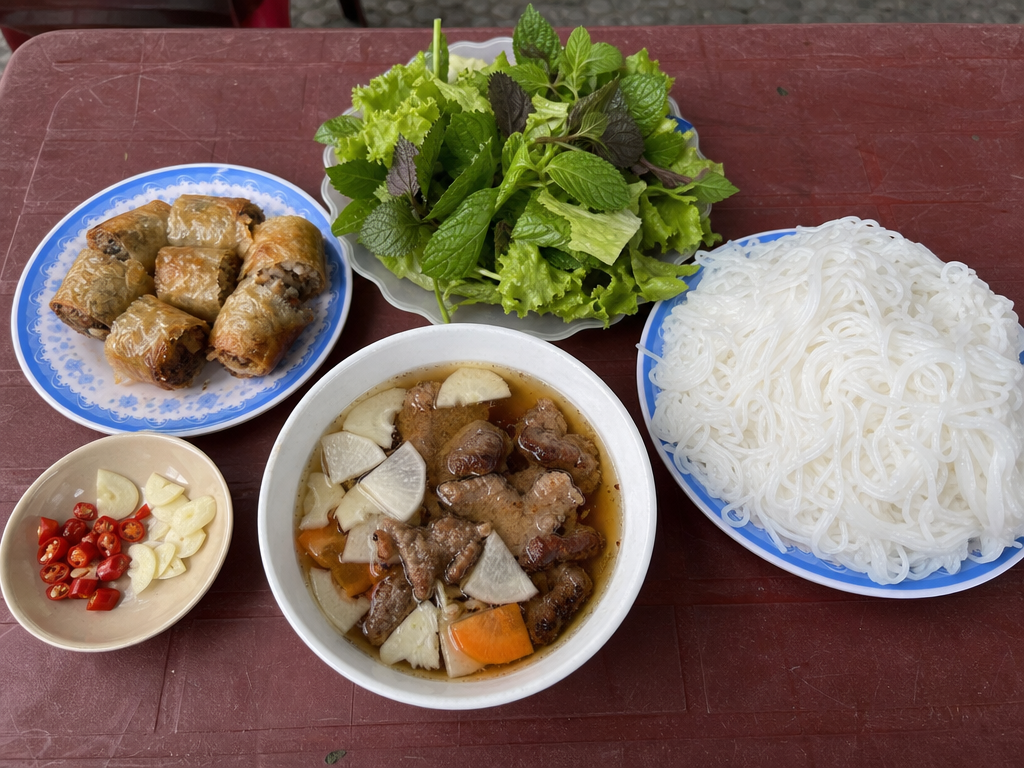
Yes, if you’re hungry, but know what you’re getting. Nem (sometimes called nem rán or chả giò in the south) are fried spring rolls — pork, wood ear mushroom, vermicelli, and often crab, wrapped and deep fried until the outside is glass-crisp. They get added into your bún chả sauce bowl just like the meat, cut into smaller pieces first.
My mistake: I thought “1 nem” meant one small roll like the fried spring rolls I’d had in Vietnamese restaurants back home. It meant one whole plate of about 4-5 rolls, for an extra 20,000-30,000 VND. Ask “mấy cái?” (how many pieces?) before you order if you’re not sure, or just ask for “nửa suất” (half portion) if it’s on the menu.
Q: Is this the “Obama bún chả”? Should I go to that specific restaurant?
You’re thinking of Bún Chả Hương Liên, where Barack Obama ate with Anthony Bourdain in 2016. It’s real, it’s on Lê Văn Hưu Street, and it’s absolutely fine — but by the time I visited in 2026 it had become a full tourist stop, with a glass case displaying “the table” and a menu that’s noticeably pricier than the sidewalk average I mentioned above (I paid around 100,000 VND there). It’s worth doing once for the novelty, especially if you’re a Bourdain fan like I am. Just don’t expect it to be the definitive “best” bún chả in Hanoi — it’s the most famous, which isn’t the same thing. Some of the best bowls I had were at places with no sign at all, just a woman fanning a charcoal grill on a folding table.
Q: Any regional differences I should know about?
Bún chả is specifically a Hanoi and northern Vietnamese dish — it’s part of that same northern food identity you’ll notice in dishes like phở or the crab noodle soup bánh đa cua from nearby Hải Phòng. Head south to Saigon and you’re more likely to find cơm tấm (broken rice with grilled pork) filling a similar “grilled pork lunch” role, though the flavor profile there leans sweeter and the format is completely different — rice instead of noodles, no dipping-bowl assembly at all. If you only have time for one grilled-pork dish on a Hanoi trip, this is the one; the Vietnamese cuisine tradition of balancing sweet, sour, salty, and herbal notes in a single dish is on full display here in a way few other dishes match.
Q: What time of day should I actually go?
Lunch, specifically 11am–1:30pm. This isn’t a rule I’m inventing — most of the sidewalk stalls I found sell out of pork and close by 2pm, and several don’t even open for dinner. I tried to find bún chả for dinner on day two out of pure convenience and ended up walking past three closed stalls with chairs already stacked before I gave up and had bún đậu mắm tôm instead (also excellent, also worth trying, also a completely different experience — that one comes with fermented shrimp paste, which is its own adventure).
Q: Can I make this at home if I don’t live in Vietnam?
Yes, and it travels better than most Vietnamese dishes because the components are simple. You need ground pork and pork belly slices, a marinade of fish sauce, sugar, shallot, and a little five-spice, a charcoal or very hot pan-grill, and the sauce ingredients I mentioned above (fish sauce, sugar, lime, water, garlic, pickled papaya/carrot). The one thing that’s genuinely hard to replicate outside Vietnam is the charcoal smoke flavor — a gas grill or oven broiler gets you 80% of the way there but that last 20% really is the coals. I tried recreating it in a rental apartment with a stovetop grill pan and it was good, not transcendent.
Q: What’s the single biggest mistake first-timers make?
Based on watching other visibly confused tourists at three different stalls (misery loves company), it’s ordering it like a soup — asking for a spoon, or trying to eat the sauce bowl directly with noodles already mixed in like a phở bowl. The staff will usually just let you do your thing without correcting you, which means you can eat an entire meal of bún chả without ever realizing you did it “wrong.” It still tastes good. It just tastes noticeably better once you slow down and dunk one bite at a time.
Quick Reference: Bún Chả Cheat Sheet
- What it is: Grilled pork patties + pork belly in warm dipping sauce, with cold noodles and herbs on the side
- When to eat it: Lunch, 11am–1:30pm — most stalls sell out or close after
- Fair price: 35,000–90,000 VND depending on setting; skip anything over 120,000 VND unless it’s the novelty of Hương Liên
- How to eat it: Small dunks — noodles + herb + pork into the sauce, one bite at a time, don’t pre-mix
- What to add: Nem (fried spring rolls), ordered by the plate, not by the piece
- Where it’s from: Hanoi and the north specifically — not the same dish as southern Vietnam’s grilled pork rice, cơm tấm
FAQ
Is bún chả spicy? Not by default. The sauce is sweet-sour-salty, not hot. Chili is usually served on the side (sliced fresh or as a chili-garlic paste) so you control the heat yourself.
Is bún chả gluten-free? The noodles (rice vermicelli) and the grilled pork are naturally gluten-free. The main risk is cross-contamination or a sauce mixed with soy-based condiments at some stalls, so if you’re strictly gluten-free, ask before ordering.
Can I get a vegetarian version? Rarely on a traditional street stall menu, but some restaurants catering to travelers now offer a mushroom or tofu “chả” version. It’s not traditional, so don’t expect to find it outside tourist-oriented restaurants.
Chả giò và chả miếng khác nhau ở chỗ nào? Chả giò là thịt lợn xay nhuyễn được nặn thành những miếng dẹt. Chả miếng là thịt ba chỉ thái lát nướng nguyên miếng. Hầu hết các tô chả giò đều có cả hai – chả giò giúp bạn có hương vị đậm đà hơn, còn thịt ba chỉ thái lát tạo độ giòn và vị béo ngậy.
Ăn bún chả bằng tay có được không? Rau thơm thì được – người ta thường dùng tay bốc rau diếp và các loại rau thơm khác để cuốn hoặc thêm vào khi ăn. Bún và thịt thì ăn bằng đũa. Sẽ chẳng ai để ý nếu bạn dùng tay gắp rau thơm cả.