

Every week I get messages about the Mekong Delta, and roughly eight out of ten of them are really the same question wearing different clothes: is Cần Thơ worth it, or has the floating market been ruined? I’ve been down to Cần Thơ five times now — once on a rushed day trip from Saigon that I still regret, twice sleeping in the city, twice sleeping out in a canal-side homestay in Phong Điền. This Can Tho travel guide is built entirely out of the questions people actually send me, in the order they usually ask them. No brochure language, no “immerse yourself in timeless waterways.” Just what I’ve paid, what I got wrong, and what I’d do differently.
Can Tho travel guide: getting there and getting around
How do I get from Ho Chi Minh City to Cần Thơ?
Bus. Don’t overthink it. Futa (Phương Trang) runs something like 40 departures a day from Miền Tây station and their own office in District 5; I paid 165,000 VND for a seat and 210,000 VND for the limousine van. Scheduled time is 3.5 hours. My actual times were 3h20, 4h10, and once a horrible 5h05 because I left Saigon at 4pm on a Friday.
That last one is the lesson: the traffic out of Saigon between 3pm and 7pm on a Friday will eat an hour of your life. Take a morning bus or a 9pm one. Futa includes a free shuttle from their Cần Thơ terminal to your hotel — actually free, no tip expected, though I always give 20,000 VND.
If you want the full breakdown of trains, sleeper buses and internal flights, I wrote a separate piece on getting around Vietnam by bus, train and plane.
Do I need to rent a motorbike?
In the city, no. Cần Thơ’s centre is small and Grab bikes cost 15,000–25,000 VND for almost any trip. Out in Phong Điền, yes — a scooter (120,000–150,000 VND/day from most homestays) turns the delta from a place you look at into a place you ride through. The dikes are single-lane concrete with no railings and a two-metre drop into a canal on both sides. I dropped a wheel off the edge once at low speed and it cost me a bent brake lever and a lot of dignity.
Is it walkable?
The riverfront and Ninh Kiều wharf area, yes — maybe 25 minutes end to end. Beyond that the blocks get long, hot and shadeless. From about 11am to 3pm in April I stopped pretending I was a walker.
The floating market question
Has Cái Răng floating market died?
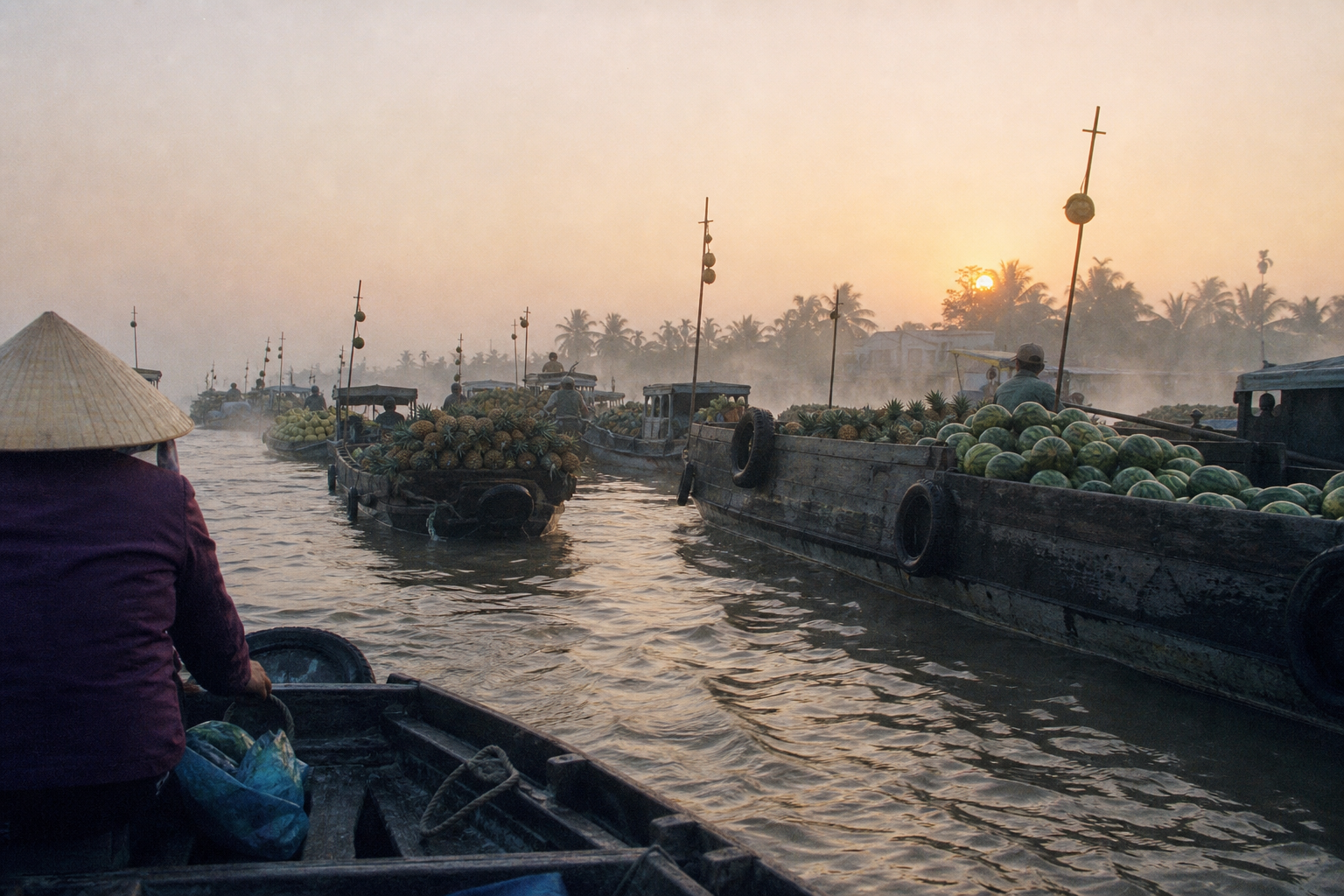
No, but it has shrunk badly and you should know that before you go. In 2010 there were reportedly over 500 boats trading each morning. The count now sits closer to 200. New bridges and better delta roads mean wholesalers truck their produce instead of floating it — which is good for farmers and bad for photographers.
What’s left is still a real wholesale market, not a performance. The big cargo boats are genuinely buying and selling pomelos, pineapples and watermelons at volume. What’s added is a fringe of small tourist boats selling coffee, noodles and souvenir hats to the ring of tourist sampans. Both things are true at once. If you arrive expecting the 2005 postcard, you’ll be disappointed. If you arrive expecting a working river market with a tourist crust on the outside, you’ll have a good morning. There’s a decent factual summary on the Cái Răng Floating Market Wikipedia page if you want the background.
What time do I actually have to be there?
Be on the water by 5:30am. Not at your hotel at 5:30 — on the water.
My first trip I booked a 6:30am boat because a blog told me “6 to 8am is fine.” We reached the market at 7:10 and about a third of the cargo boats had already sold out and left. Second trip I was at Ninh Kiều wharf at 5:15, on the river at 5:25, at Cái Răng at 5:50. Completely different market: mist still on the water, boats three deep, men shouting prices across gunwales.
The market is thinning out by 8am and mostly finished by 9. There is no late option.
How much should a boat cost?
Here’s what I’ve paid, all from Ninh Kiều wharf:
- Shared boat, ~2 hours, market only: 100,000–150,000 VND per person
- Private sampan, 3 hours, market + one small canal: 400,000 VND total (I was solo; I negotiated down from 600,000)
- Private, 4–5 hours, market + Phong Điền + a noodle factory + a small orchard: 700,000–900,000 VND total
Anything much above a million dong for a half-day private boat is a tour agency margin, not a boat price. Book at the wharf the evening before, agree the route and the finish time out loud, and pay at the end. I’ve never had a problem doing it this way.
Should I skip Cái Răng and go to Phong Điền instead?
This is the question I wish someone had asked me earlier. Phong Điền is a smaller market about 20km upriver, much more local, much fewer tourists — and much smaller. Honestly the best answer is neither/both: do Cái Răng for the scale, then have your boatman turn into the narrow canals on the way back. The canals were the part I still think about, not the market.

How long to stay, and where
Is a day trip from Saigon enough?
I did it once and I’d call it a mistake. A Saigon day trip means leaving at 5am, reaching the water around 9am — after the market is over — and being sold a “floating market experience” that is basically five souvenir boats. Then four hours back.
If you only have one day, go to Bến Tre or Mỹ Tho instead; they’re two hours out and honest about being close-to-Saigon countryside. Cần Thơ needs a night, minimum. Two nights is the sweet spot.
One night or two?
- One night: arrive afternoon, dinner on the riverfront, 5:15am boat, back by 10am, bus home in the afternoon. Works, but tight.
- Two nights: night one in the city, night two in a Phong Điền or Mỹ Khánh homestay. This is what I’d tell a friend to do.
- Three nights: only if you’re renting a scooter and riding the dikes, or continuing on to Châu Đốc or Cà Mau.
City hotel or countryside homestay?
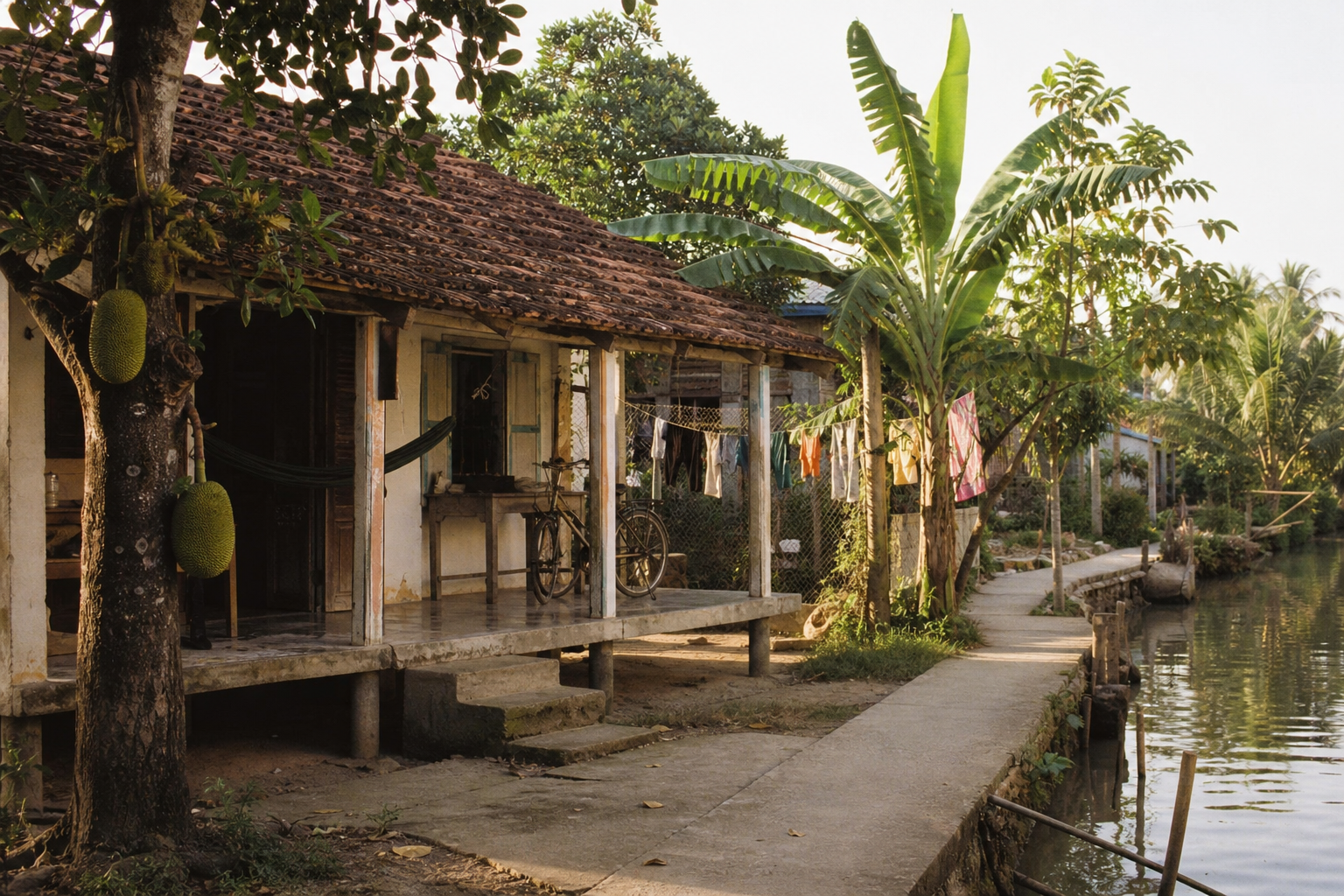
Both, in that order. The city gets you the 5am wharf and the night food scene. The homestay gets you the thing you actually came for: frogs at night, a rooster at 4:40am, and someone’s grandmother handing you a plate of fruit you can’t name.
I paid 350,000 VND for a fan room with a mosquito net at a family homestay near Phong Điền, including a breakfast of rice porridge and a coffee so strong it felt personal. City hotels near the wharf run 400,000–800,000 VND for something clean with air conditioning.
Does it matter which season?
Less than people think. The delta is warm and humid year round — the Mekong Delta doesn’t really do cold. Rainy season, roughly May to October, means a violent 45-minute downpour in the afternoon, not all-day drizzle; the market runs fine because it’s over before the rain arrives. Boats have a canvas roof. September and October are the high-water months and the canals look their best. I’d avoid the week of Tết, when half the market closes.
Food questions
What should I eat in Cần Thơ that I can’t get elsewhere?
Three things I go back for:
- Bánh xèo — the delta version is bigger, thinner and packed with far more herbs than the Saigon one. I wrote a whole piece on bánh xèo in Cần Thơ and how to eat it properly, including the wrap-it-in-mustard-leaf move that changed my life.
- Bún cá / bánh canh at the small stalls around Xuân Khánh market, 35,000–45,000 VND.
- Rice paper and hủ tiếu noodles made at the little factories along the canals — you’ll be taken to one on any boat tour. If you like that noodle style, the Saigon hủ tiếu Nam Vang guide explains where the whole tradition comes from.
Should I eat breakfast on a boat at the market?
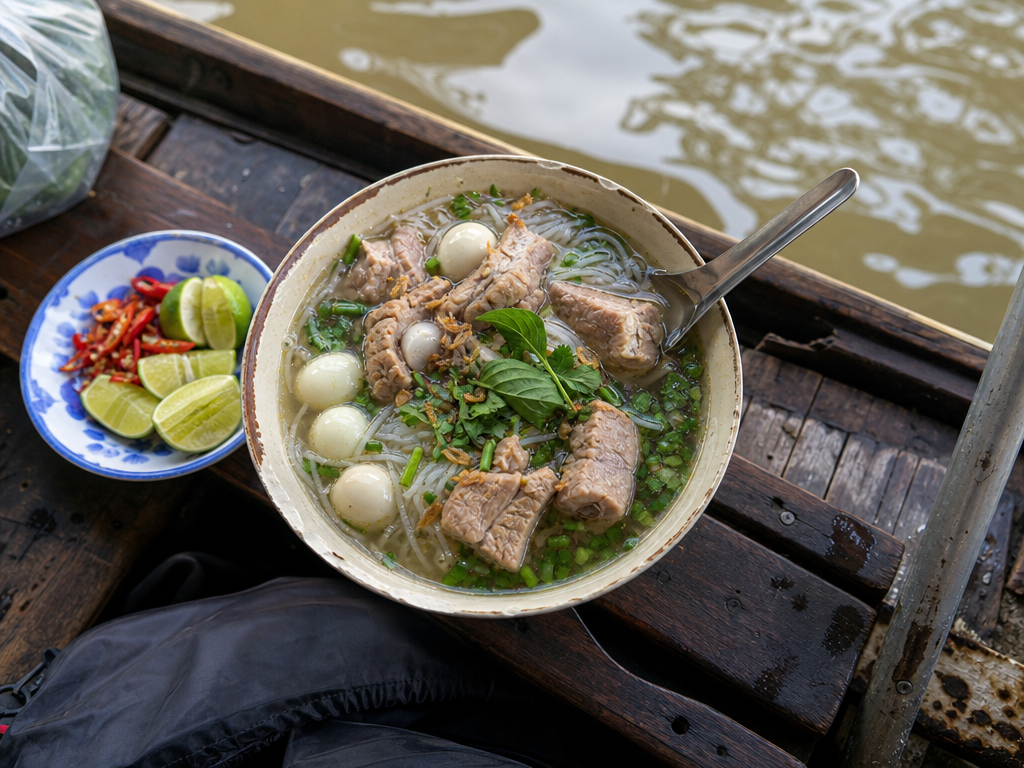
Yes, once, with adjusted expectations. A bowl of noodles handed across from a rocking boat costs 40,000–50,000 VND — roughly double the shore price — and it is not the best bowl you’ll have in Vietnam. But eating it at 6:15am with mist on the river is worth the 20,000 VND premium. Get the coffee too; the boat coffee is genuinely good.
Is the “fruit orchard visit” a tourist trap?
Semi. You pay 30,000–50,000 VND, you get a plate of fruit and a woman singing đờn ca tài tử folk music, and it’s clearly a set piece. The fruit is excellent and the money goes to the family. I’ve stopped resenting it. Just don’t schedule three of them.
Money and practicalities
What does two days in Cần Thơ actually cost?
My last two-night trip, solo, no alcohol, mid-range:
| Item | VND |
|---|---|
| Bus Saigon → Cần Thơ → Saigon | 330,000 |
| City hotel, 1 night | 550,000 |
| Homestay, 1 night incl. breakfast | 350,000 |
| Private boat, 4 hours | 700,000 |
| Scooter, 1 day + petrol | 170,000 |
| Food and coffee, 2 days | 420,000 |
| Orchard/entrance bits | 90,000 |
| Total | 2,610,000 (~US$103) |
Cheaper than my four days in Đà Lạt, and the boat is the single line item worth spending more on.
Anything I should genuinely worry about?
Three real ones. Mosquitoes at dusk in the countryside — bring repellent, the homestay’s net is for sleeping, not sitting. Sun on the water, which is much stronger than it feels in a breeze; I burned the tops of my feet through a boat’s shade gap. And the dike edges if you ride. Nothing else about Cần Thơ has ever felt unsafe to me, at any hour.
Is Cần Thơ worth it, honestly?
If you take one thing from this Can Tho travel guide, take this: yes — if you sleep there and get on the water before six. As a day trip it’s a long bus ride to see a shrinking market at the wrong time of day. As two nights with a sampan and a homestay, it’s the most rewarding 48 hours in southern Vietnam. For context on the city itself, the Cần Thơ Wikipedia entry covers its role as the delta’s main hub of about 1.2 million people.
FAQ
What time does Cái Răng floating market start?
Trading begins around 4:30–5am and peaks between 5:30 and 6:30am. Be on a boat from Ninh Kiều wharf by 5:30am at the latest; the market thins out by 8am and is finished by 9.
How much is a boat to Cái Răng floating market?
Shared boats cost 100,000–150,000 VND per person for about two hours. A private sampan for 3–5 hours including the smaller canals runs 400,000–900,000 VND for the whole boat, booked at the wharf.
How many days do you need in Cần Thơ?
Two nights is ideal — one in the city for the early boat, one in a countryside homestay. One night works if you’re efficient. A day trip from Ho Chi Minh City is not enough, because you’ll arrive after the market ends.
Is Cần Thơ better than Bến Tre or Mỹ Tho for the Mekong Delta?
Cần Thơ is better if you can stay overnight, because it has the real wholesale market and deeper countryside. Bến Tre and Mỹ Tho are better if you only have one day from Saigon.
Can you visit the floating market without a tour?
Yes. Walk to Ninh Kiều wharf the evening before, negotiate directly with a boat owner, agree the route and finish time, and pay at the end. It’s cheaper and more flexible than a booked tour.