

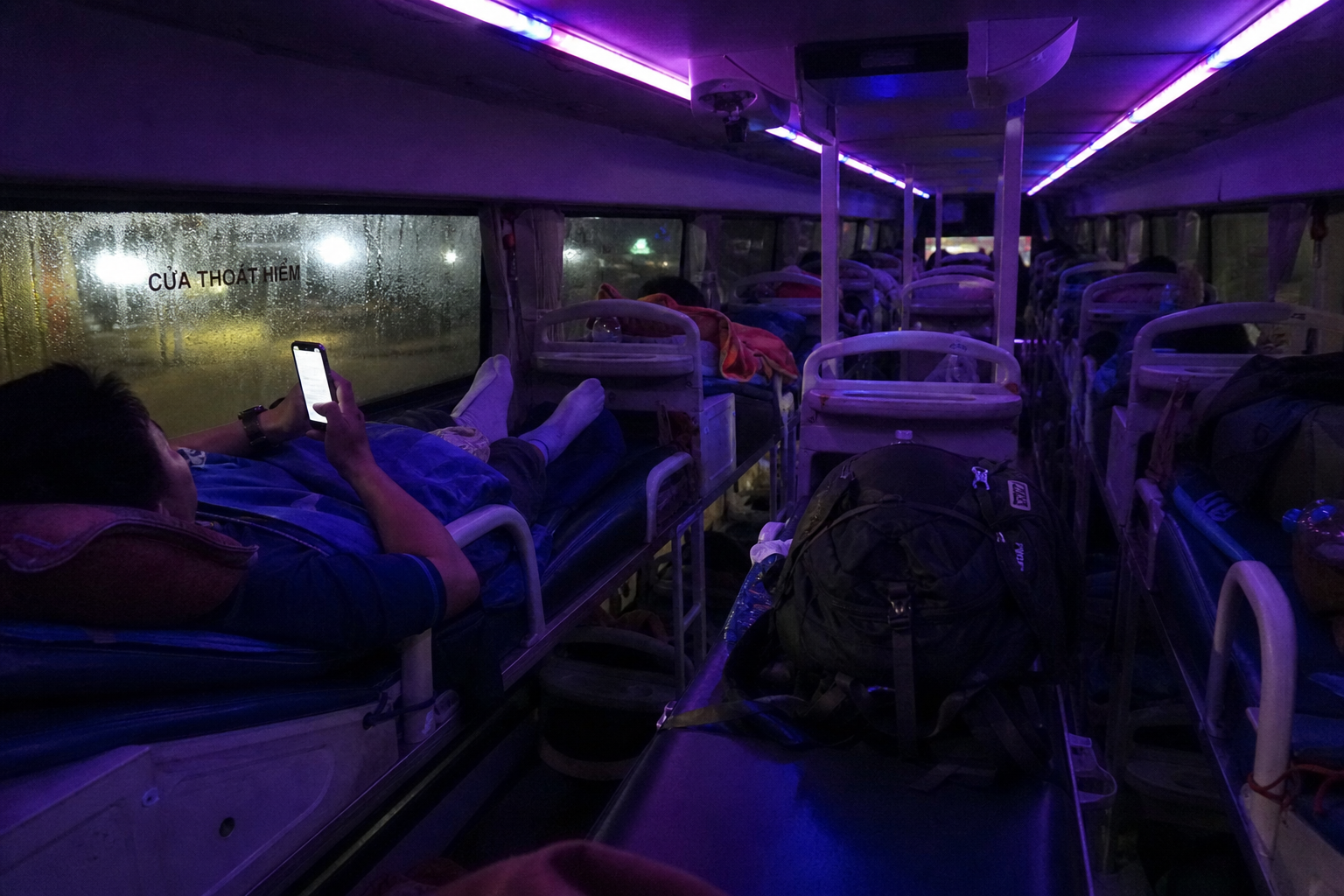
I used to make one dumb mistake in Vietnam: I chose transport by price alone. If the sleeper bus was 180,000 VND cheaper than the train, I booked the bus and congratulated myself for being practical. Then I arrived in Phong Nha at 4:37 a.m., half-asleep, with one sandal missing under someone else’s backpack, and spent the next day pretending I was enjoying a cave tour while my body was clearly still on Highway 1.
So this Vietnam transportation guide is not a polished piece written from a desk. This is my honest decision tree after taking the wrong bus, overpaying for last-minute flights, getting motion sick on mountain roads, and learning that the “best” way to travel around Vietnam depends less on distance and more on sleep, luggage, weather, road shape, and how much chaos you can handle before breakfast.
Vietnam Transportation Guide: Start With This Decision Tree
Every Vietnam transportation guide starts with price. Mine starts with five questions, asked in this order. It sounds too careful, but it has saved me from several miserable “cheap” decisions.
1. Is the trip over 8 hours by road?
If yes, I check flights first, then trains, then buses. Vietnam looks slim on the map, but long north-south routes eat days quickly. Hanoi to Da Nang, Hanoi to Ho Chi Minh City, and Ho Chi Minh City to Hue are not casual bus rides unless you genuinely enjoy spending a full day folded into vinyl.
For anything under 6 hours, buses and private cars usually make sense in most Vietnam transportation planning. For 6–8 hours, I compare comfort against timing. For over 8 hours, I stop pretending I am tougher than I am.
2. Is the route scenic?
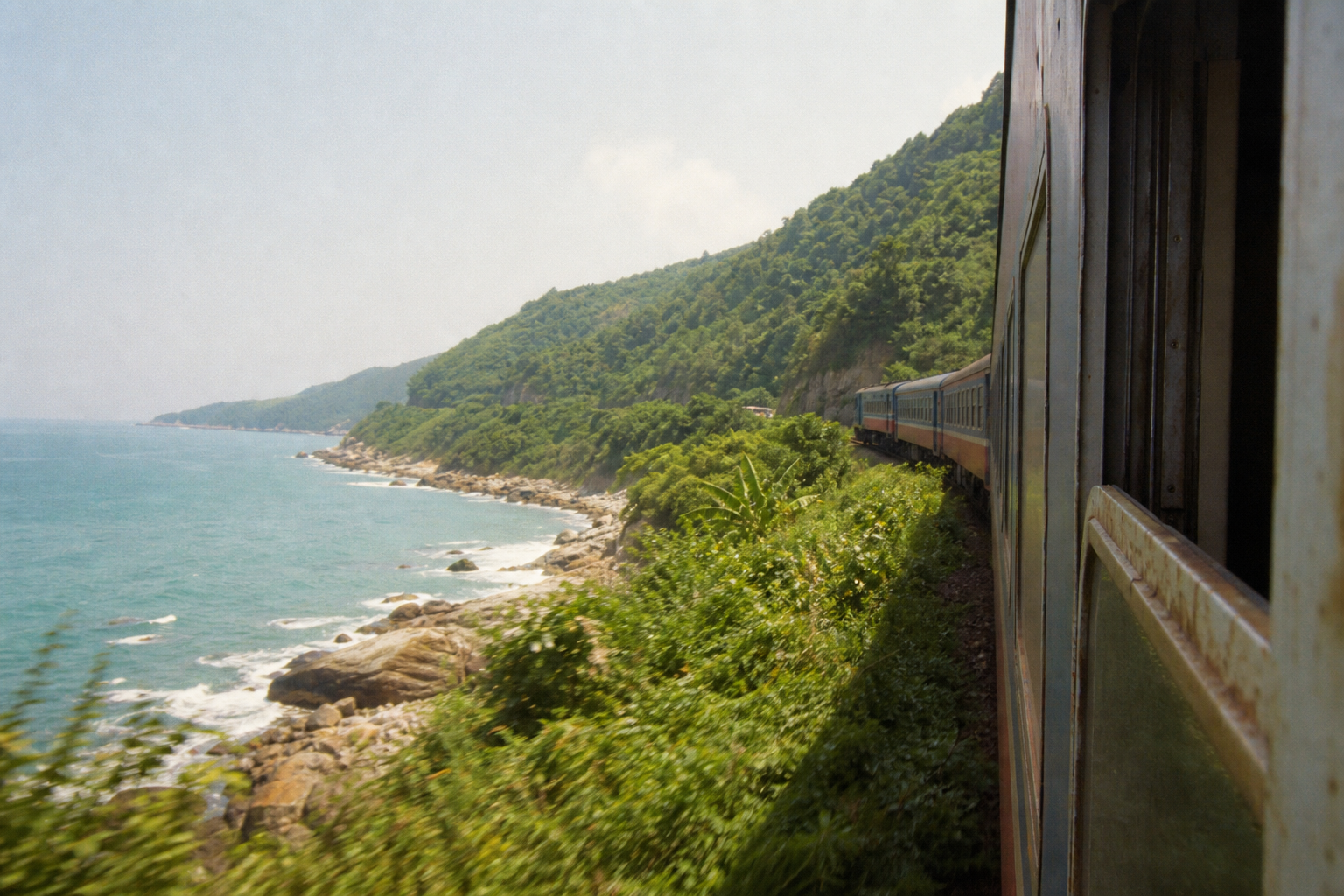
If yes, I lean train or motorbike. The Hue to Da Nang railway section near the Hải Vân Pass is one of the few journeys where I would happily choose the slower option again. I remember salt haze on the window, green slopes dropping into blue water, and everyone in the carriage suddenly becoming quiet because the view did the talking.
If the route is mostly highway, industrial suburbs, and night darkness, I care less about romance and more about arrival time.
3. Do I need to function the next morning?
This is the question I ignored for years. If I have a food tour, motorbike ride, cave trip, or long walking day the next morning, I avoid overnight buses unless the alternative is truly expensive. Saving 300,000 VND is not a win if I spend the next day nauseous and irritated.
For places like Phong Nha, where the good stuff starts early, I would rather arrive rested. My Phong Nha 48-hour itinerary only works if you are not already destroyed before the first cave.
4. Am I carrying proper luggage?
With a small backpack, I can be flexible. With a suitcase, I become boring on purpose. Trains, flights, and private transfers are easier with luggage. Motorbike taxis and chaotic bus drop-offs are not fun when your suitcase wheel gets stuck in broken pavement outside a gas station at 5 a.m.
5. Is weather part of the route?
Rain changes everything. A motorbike route that feels brave in dry weather can feel stupid in mountain fog. This is especially true in northern loops, coastal passes, and rural roads after dark. I love the freedom of a bike, but I no longer treat weather like a minor detail.
If You Want Comfort: Choose the Train
Trains are the part of any Vietnam transportation guide I trust most. The railway system is not luxurious, but it has one huge advantage: you can stand up. That sounds small until you have spent 11 hours on a bus where your knees and soul both feel trapped.
I like trains for medium and long routes where the timing is decent: Hanoi to Ninh Binh, Hue to Da Nang, Da Nang to Quy Nhon, or overnight sections on the north-south line. The Vietnam Railways network is old, slow in places, and not always spotless, but it gives you space, toilets, windows, and fewer surprise roadside stops.
What I Usually Pay
Skip the cheapest hard seat on anything over three hours; I learned that the slow way. For short routes like Hanoi to Ninh Binh, I expect roughly 120,000–250,000 VND depending on seat type and timing. For longer sleeper routes, the range can jump from around 600,000 VND to over 1,200,000 VND. I do not treat these as fixed prices because trains sell by class, route, season, and availability.
When the Train Is the Wrong Choice
The train is wrong when the station location creates more hassle than the journey solves. Some destinations still require a long onward taxi or bus. For example, if I am going deep into mountain areas, the train may only get me to the nearest city, not the place I actually want to sleep.
If You Want the Cheapest Option: Choose the Bus Carefully
Buses are the backbone of budget Vietnam transportation. They are cheap, frequent, and sometimes surprisingly efficient. They are also where most of my transport regrets happened.
A sleeper bus is best when the route is direct, the operator has decent recent reviews, and arrival time is not ridiculous. A bad sleeper bus does not feel like transport; it feels like being stored in a plastic drawer while the driver argues with physics.
I avoid the back row: it bounces more and becomes the unofficial luggage zone. The worst arrival times are between 3 a.m. and 5 a.m. I have done it. The bus lights come on, everyone stumbles into a dark roadside town, and suddenly the “cheap” ticket requires an early check-in fee, a taxi, and two coffees just to become human again.
My Sleeper Bus Rules Now
For city-to-city routes under 6 hours, buses can be excellent value. For long overnight mountain routes, I check twice. If the road is winding and the bus arrives before sunrise, I look for another option.
If You Are Short on Time: Fly, But Count the Real Cost
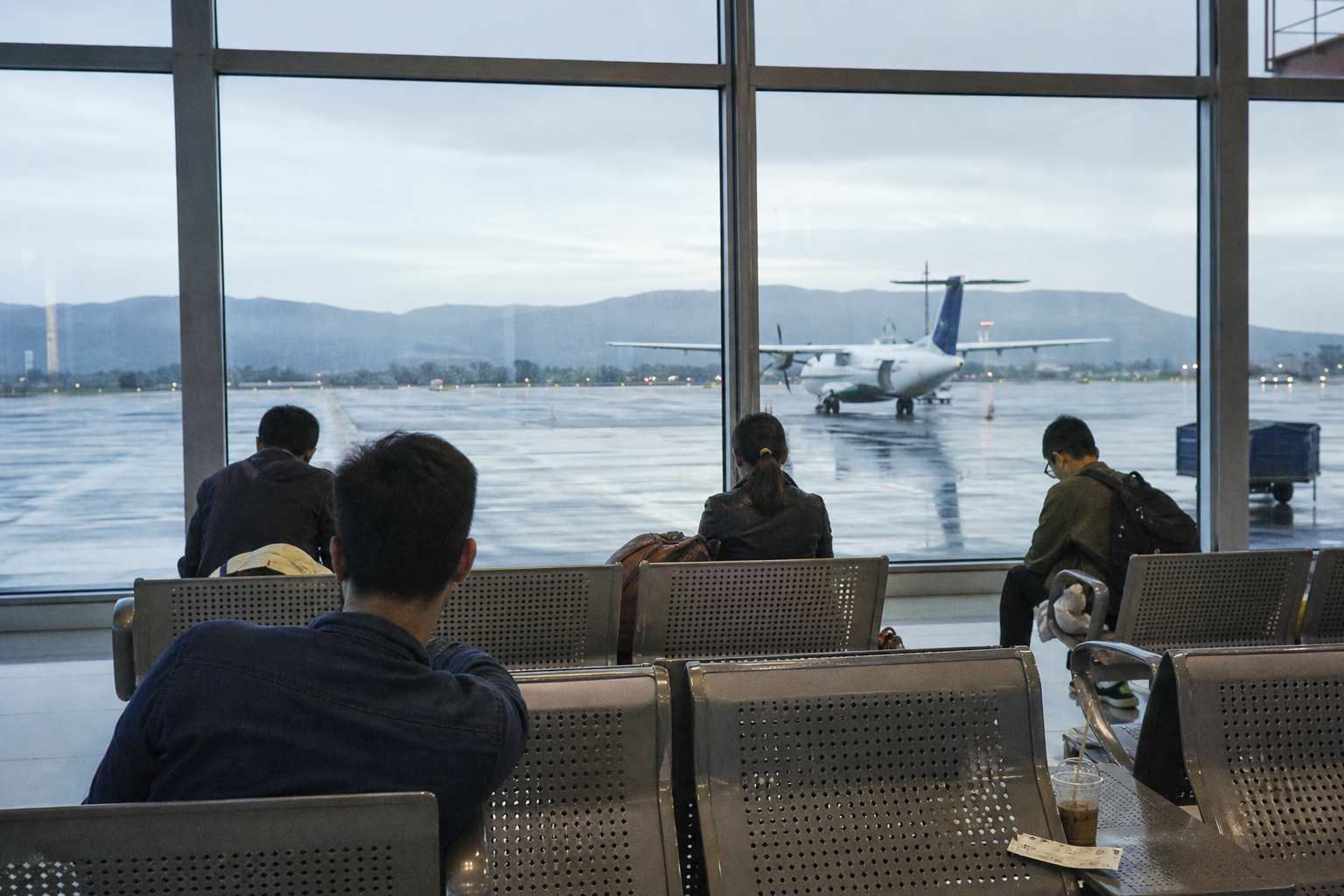
Domestic flights are the fastest tool in the Vietnam transportation kit. Hanoi to Da Nang, Da Nang to Ho Chi Minh City, and Ho Chi Minh City to Phu Quoc are routes where flying often makes sense. The trick is not comparing flight time to bus time. A “1 hour 20 minute” flight is not a 1 hour 20 minute journey.
Add the airport transfer, check-in buffer, security, baggage wait, and the taxi into town. Suddenly the short flight becomes 4–5 real hours. That can still beat a 15-hour bus, but it may not beat a 4-hour train.
Where Flying Usually Wins
Flying wins when the road or rail time is over 10 hours, when you have limited vacation days, or when you are connecting regions instead of exploring between them. If I am going from Hanoi straight to central Vietnam, I will usually fly to Da Nang unless I specifically want the train experience.
Where Flying Feels Wasteful
Flying often feels wasteful for short hops. Hanoi to Ninh Binh by flight makes no sense because there is no direct useful flight. Da Nang to Hoi An is a car transfer. Hue to Da Nang is better by train or car because the route itself is beautiful.
If your route is already covered by a good local itinerary, stay on the ground. My Ninh Binh travel guide is a good example: the joy is in slow movement between Tam Coc, Trang An, and Hang Mua, not in airport math.
If You Want Freedom: Rent a Motorbike Only When the Route Deserves It
Motorbikes are romantic in Vietnam until they are not. I love them most on routes where stopping matters: mountain viewpoints, coffee farms, small beaches, roadside noodle stalls, and villages where a bus would never pause.
I do not love them inside big-city traffic with luggage. Hanoi and Ho Chi Minh City are not where I personally want to practice confidence. Even crossing the street can feel like negotiating with a river of helmets.
The Motorbike Test I Use
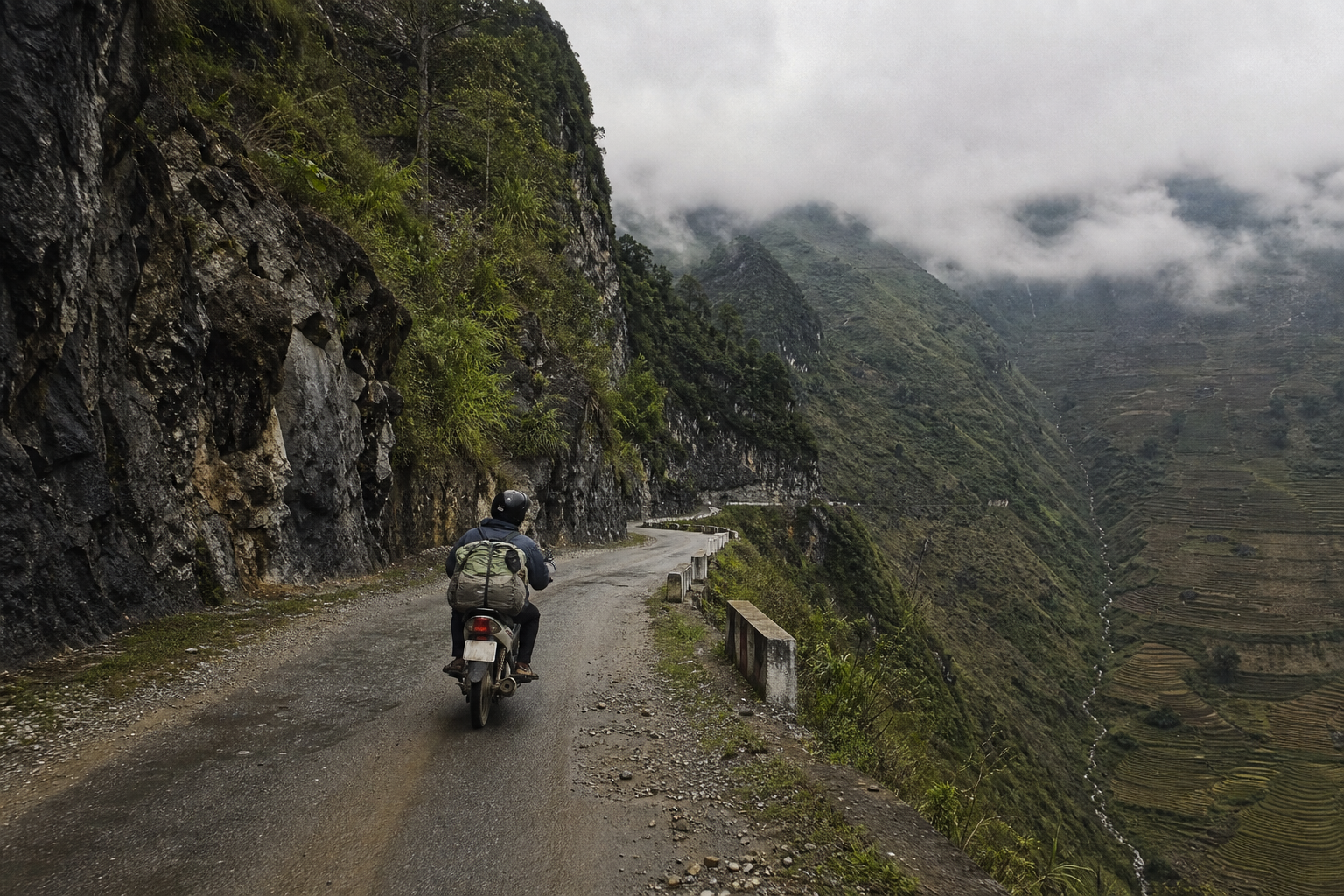
I rent a bike only if all three things are true: the road is scenic, the weather is stable, and I do not need to ride after dark. If one of those fails, I consider a driver or tour. If two fail, I stop trying to be heroic.
The Ha Giang Loop is the clearest example. The motorbike is part of the experience, but the road is serious. Fog, trucks, hairpin turns, loose gravel, and fatigue can stack quickly. I would rather be the cautious person who arrives safely than the confident person who becomes someone else’s cautionary story.
What About Licenses and Police?
This is where travelers get vague, so I will be direct: check your license and insurance situation before riding. Many travel insurance policies do not cover motorbike accidents if you are not properly licensed for the engine size. The rental shop may still hand you keys. That does not mean your insurance agrees.
For Cities: Use Ride-Hailing, Walk Short Distances, Avoid Ego
City Vietnam transportation is a different problem. Inside major cities, I use ride-hailing apps for longer hops and walking for neighborhoods. Motorbike taxis are fast and cheap, but I avoid them when I have a suitcase, heavy rain, or a route that crosses high-speed roads.
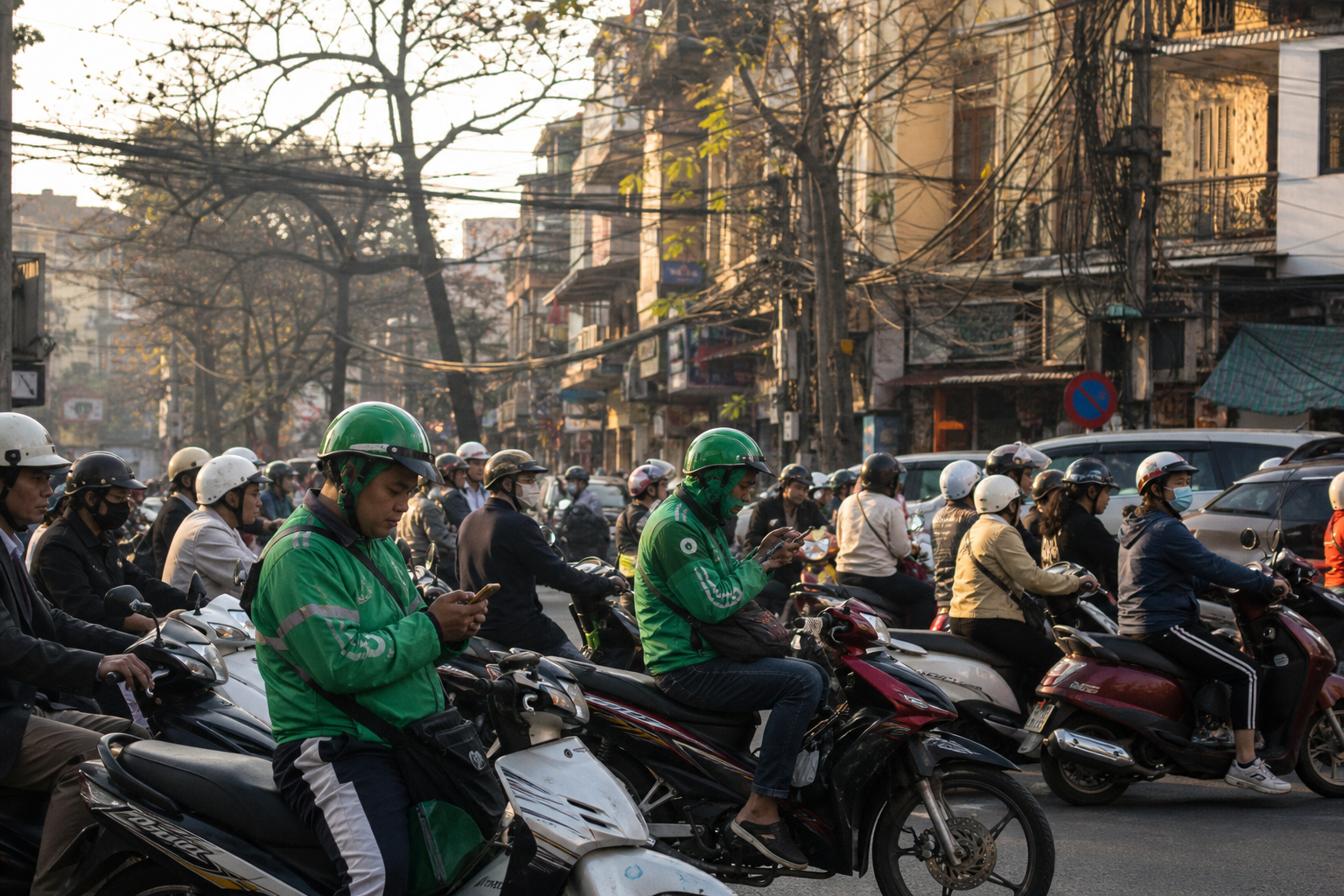
For food neighborhoods, walking is usually better. You notice grills, herbs, steam, and tiny shops you would miss from a car. This is especially true in Hanoi’s old streets, where my Hanoi Old Quarter travel guide makes more sense on foot than through a windshield.
My Quick Route Choices
Routes Where I Take the Train
Hanoi to Ninh Binh, and Hue to Da Nang. Both are short enough to enjoy and scenic enough to justify the slower pace.
Routes Where I Take the Bus
Hanoi to Ha Giang, and Ho Chi Minh City to the Mekong Delta. Buses cover these properly, but I check arrival times before booking anything overnight.
Routes Where I Fly
Hanoi to Da Nang, Hanoi to Ho Chi Minh City, and Da Nang to Da Lat when the fare is reasonable. These are the routes where road time stops being travel and starts being endurance.
The Money Rule: Cheap Is Not Always Cheap
Here is the real Vietnam transportation math I use now:
Ticket price + transfer cost + lost sleep + arrival inconvenience + next-day energy = true cost.
A 250,000 VND bus can become expensive if it forces a 150,000 VND taxi, a 300,000 VND early check-in, and a wasted morning. A 900,000 VND flight can be worth it if it saves a full day. A 700,000 VND train can be the best middle choice if it replaces one hotel night and lets you arrive with a working brain.
This is also why I like budget breakdowns more than perfect rules. When I tracked what I actually spent in my Da Lat travel budget, the surprises were not always big-ticket items. They were the small costs created by bad timing.
FAQ: Vietnam Transportation Questions I Get Asked
Is it better to travel Vietnam by train or bus?
For comfort, I usually choose the train. For price and route coverage, buses win. If the journey is scenic or overnight, I compare carefully instead of automatically choosing the cheapest ticket.
Are sleeper buses in Vietnam safe?
Many are normal and widely used, but quality varies. I check recent reviews, avoid bad arrival times, keep valuables close, and avoid overnight mountain routes in bad weather when possible.
Should I rent a motorbike in Vietnam?
Only if you are properly licensed, insured, confident, and riding a route where a bike adds real value. For big cities or bad weather, I would choose ride-hailing, a driver, or a tour.
How far in advance should I book transport?
For normal weekdays, a few days can be enough on many routes. For holidays, weekends, popular trains, and flights, I book earlier. Around Vietnamese public holidays, last-minute transport gets expensive and messy fast.
Final Answer: How I Actually Choose
If I have time and the route is beautiful, I take the train. If I need to save money and the schedule is humane, I take the bus. If the road journey is too long, I fly. If the route is about freedom and stops, I rent a motorbike or hire an easy rider. If I am in a city, I walk or use ride-hailing and leave my ego at the hotel.
That is the most honest Vietnam transportation guide I can give you: do not ask “what is cheapest?” first. Ask what condition you want to arrive in. Vietnam rewards energy. Spend a little more when it protects the day you came here for.