

Written with bug splatter still on my jacket, somewhere between Dong Van and Meo Vac, engine still ticking as it cools.
Everyone who’s done the Ha Giang Loop has a story that starts with “so on day one, I almost—” and then some version of a cliff, a rainstorm, or a very confused water buffalo. Mine involves all three. Here’s what I actually wish someone had told me before I rented that motorbike.
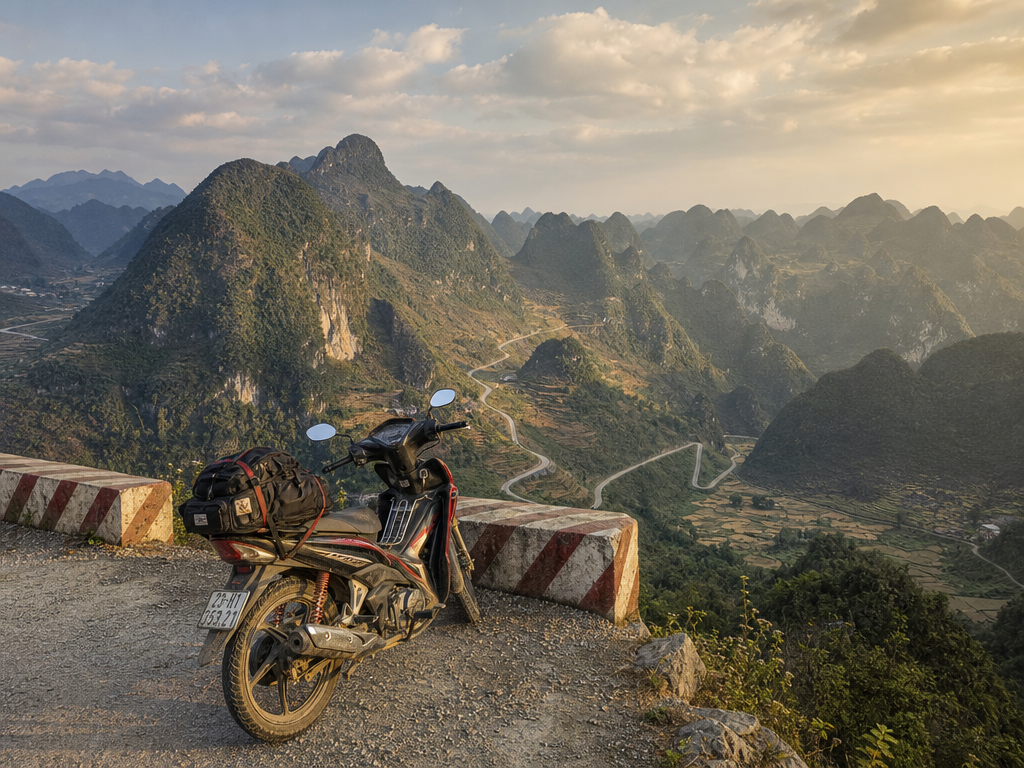
1. It’s Not a “Loop” for Beginners, No Matter What the Hostel Poster Says
The route runs roughly 300–350km through Ha Giang province, looping through Dong Van, Meo Vac, and the Ma Pi Leng Pass, and hostels everywhere sell it like a fun weekend joyride. Some of it is. A lot of it is hairpin turns on narrow roads with a drop on one side and zero guardrail. I’d ridden a scooter around cities before this and it still humbled me on the first real mountain descent. If you’ve never handled a manual motorbike on a wet, cliffside road, practice somewhere flat first — not on the loop itself.
2. Renting the Bike Is the Easy Part. Renting the Right Bike Is Not.
Ha Giang town is full of rental shops, and most bikes look fine sitting still. Mine had brakes that felt more like a suggestion by day two. Test the brakes, the horn, and the lights before you leave the shop, not after you’re an hour into the mountains. A semi-automatic (like a Honda Blade or Wave) is the sweet spot for most riders — enough control for the hills without needing full manual clutch skills.
3. Easy Riders Exist for a Reason, and There’s No Shame in It
If you’re not confident, you can hire an “easy rider” — a local driver who takes you on the back of their bike through the whole loop. I met two separate travelers who switched to this after day one because they realized, correctly, that white-knuckling through Ma Pi Leng Pass wasn’t worth the risk. Nobody thinks less of you for this. Several locals told me plainly they’d rather drive a nervous tourist safely than watch one attempt it solo and end up in a ditch.
4. The Weather Changes the Entire Trip, Not Just the View
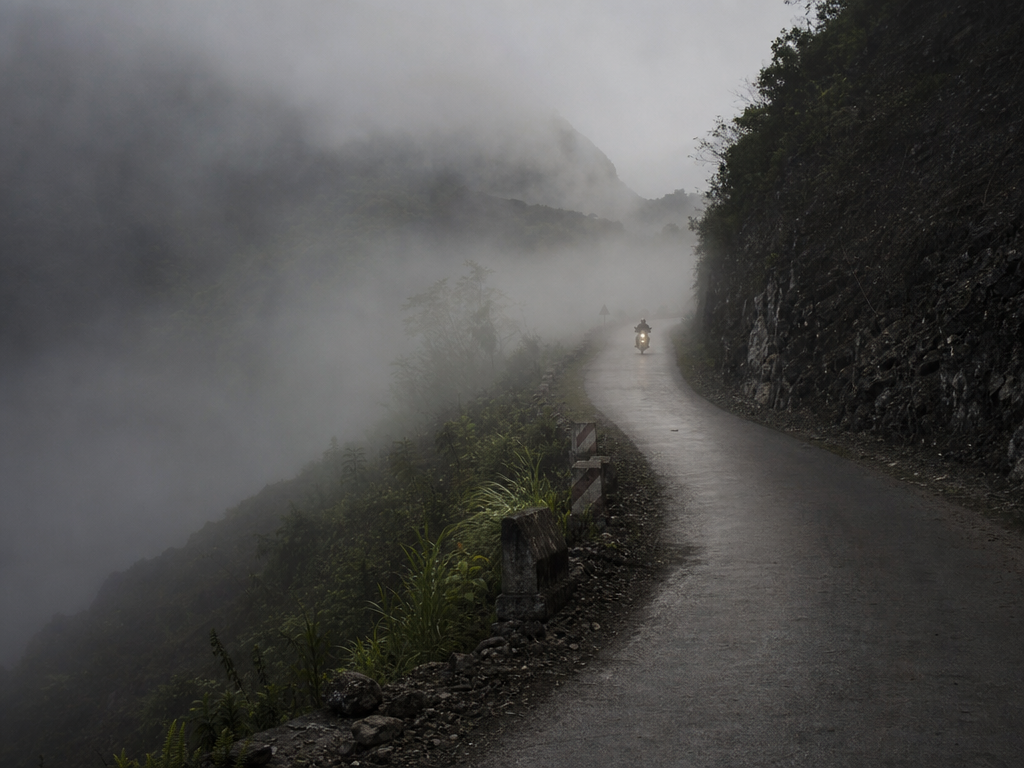
I started under blue sky and ended day one riding through cloud so thick I could barely see ten meters ahead, on a mountain road, in the dark, because I’d underestimated how long the ride would take. Fog rolls in fast in Ha Giang, especially in the afternoon. Start early — like, actually early, 7 or 8am — and don’t plan to be riding after 4 or 5pm. The roads are hard enough to read in daylight.
5. You Need the Permit, and Checkpoints Are Real
Ha Giang province requires a travel permit for foreigners, checked at a station on the way in and occasionally along the route. It’s cheap and easy to get in Ha Giang town, but skip it and you risk being turned back or fined at a checkpoint. Sort it before you leave town — it takes maybe 20 minutes.
6. The Homestays Are Better Than Most Hotels You’ll Stay in Elsewhere in Vietnam
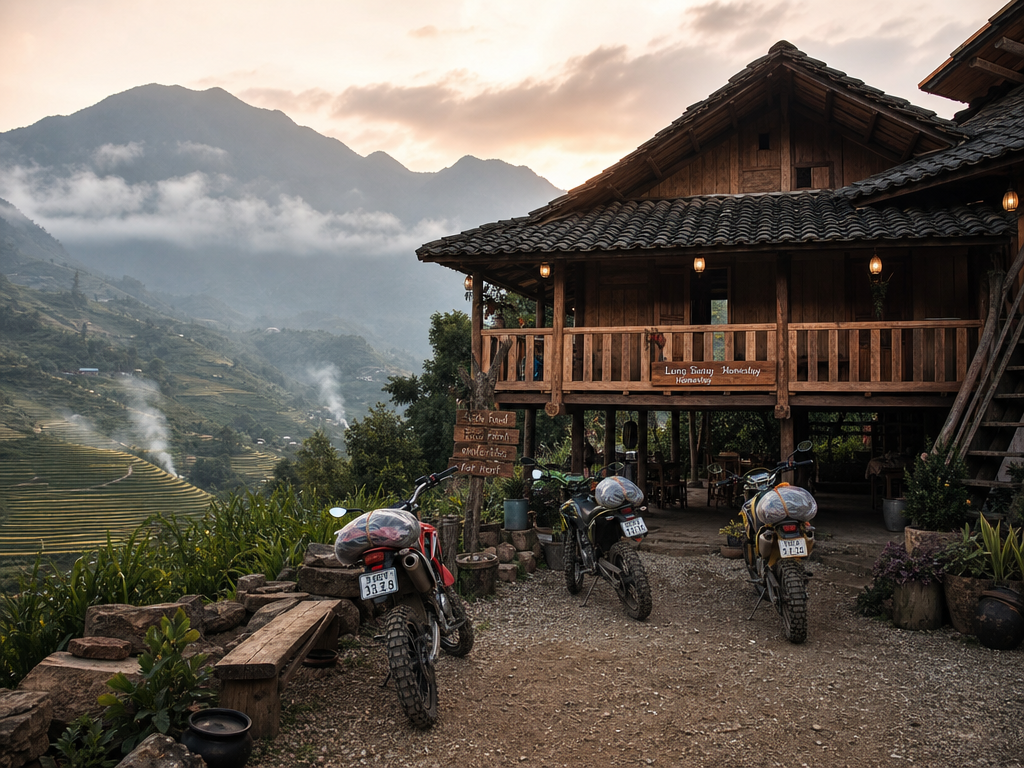
I stopped expecting much and got a wooden stilt house, a family dinner that wouldn’t stop coming, and a night sky with more stars than I’d seen anywhere else in the country. Most homestays along the loop run 100,000–200,000 VND a night including dinner. Book the ones connected to local families rather than the newer, more polished ones built specifically for tour groups — the food and the welcome are noticeably different.
7. Ma Pi Leng Pass Is Worth the Hype — And the Nerves
Everyone talks about this stretch for a reason: a road cut into a cliff face above the Nho Que River, with views that genuinely stop conversation. It’s also one of the most exposed, narrow sections of the whole route. Go slow, pull over completely (not just to the shoulder) for photos, and don’t try to ride it while also filming it on a phone mount. I saw someone nearly do exactly that.
8. Bring Cash, a Rain Jacket, and Lower Your Expectations for Phone Signal
ATMs get sparse once you’re deep into the loop. Cards are close to useless outside Ha Giang town itself. Signal drops in and out through the mountains, which is honestly part of the appeal, but plan for it — download offline maps before you leave town.
9. Two Days Is Technically Possible. Three or Four Is the Actual Answer.
I met people who crammed the loop into two rushed days and regretted it — too much riding, not enough village, not enough of the actual point of doing this in the first place. Three to four days lets you actually stop, actually eat with a family, actually stand at a viewpoint without checking the time. If you only have two days in your Vietnam trip for this, you might be better off spending them somewhere like Ha Long Bay instead — a place built for shorter visits — and saving the Ha Giang Loop for a trip where you can give it the time it actually needs.
So, Should You Do It?
If you want a polished, comfortable version of Vietnam, this isn’t it. But if you want the version where you’re cold, a little scared, eating dinner with a family whose language you don’t speak, and staring at a view you didn’t know existed — this is one of the most honest ways into that. Just don’t do it in two days, don’t skip the permit, and for the love of everything, test your brakes before you leave the rental shop.
FAQ
Is the Ha Giang Loop dangerous?
It carries real risk — narrow cliff roads, changeable weather, and riders with limited experience. It’s not inherently unsafe if you ride within your skill level, go slow, and consider an easy rider if you’re not confident on a motorbike.
How many days should I spend on the Ha Giang Loop?
3–4 days is the sweet spot for most travelers. 2 days is possible but rushed; a week lets you explore side routes most people miss.
Do I need a permit for Ha Giang?
Yes, foreigners need a travel permit for Ha Giang province, available cheaply in Ha Giang town before you set off.
Can beginners ride the Ha Giang Loop?
Confident beginners on a semi-automatic bike can manage it carefully, but true first-timers on a motorbike should strongly consider an easy rider instead.
What’s the best time of year for the Ha Giang Loop?
September to November (harvest season, terraces and buckwheat fields in bloom) and March to May are generally considered the best windows, with clearer weather than the summer rainy season.