

The best time to visit Vietnam is not one window. The country runs about 1,650 km from the Chinese border to the Mekong Delta and sits across three separate climate zones, so a month that is perfect in one region can be the worst month of the year in another. February gives you dry, mild weather in Hanoi and Saigon at the same time. October gives you clear northern mountains and 400 mm of rain in Huế.
This calendar goes month by month. For each month you get what the weather actually does in the north, centre and south, what it does to prices and crowds, and which seasonal food and festivals only exist in that window. Use it in reverse: pick your travel dates first, then let the calendar tell you which regions to build the trip around.
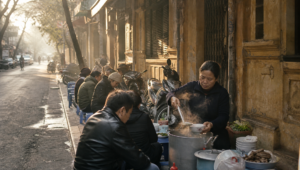
Why the Best Time to Visit Vietnam Depends on the Region
Vietnam’s shape is the reason there is no single answer. The country is split by the Trường Sơn range and crosses two monsoon systems, which is covered in more detail on the climate of Vietnam page.
North (Hanoi, Ninh Bình, Hạ Long, Sapa, Hà Giang)
Four rough seasons. Cool and dry November to April, hot and wet May to September. Hanoi averages around 1,600–1,700 mm of rain a year, most of it between June and September; August alone can bring 300 mm or more. Winter nights in Sapa and Hà Giang drop to 0–8°C.
Central (Huế, Đà Nẵng, Hội An, Phong Nha, Quy Nhơn)
The reverse pattern. Dry and hot February to August, wet September to December. Huế’s rainfall peaks in October and November, commonly 400–670 mm per month, which is when Hội An’s Ancient Town floods.
South (Saigon, Mekong Delta, Mũi Né, Cần Thơ)
Two seasons only, both warm. Dry December to April, wet May to November. Wet-season rain is usually a heavy afternoon burst of 30–90 minutes, not all-day drizzle. Temperatures stay 25–35°C year-round.
Quick Comparison: The Best Time to Visit Vietnam by Region
| Month | North | Central | South | Crowds & prices |
|---|---|---|---|---|
| Jan | Cool, dry | Cool, showers | Dry, ideal | High |
| Feb | Mild, dry | Improving | Dry, ideal | Peak (Tết) |
| Mar | Best of year | Dry, warm | Hot, dry | High |
| Apr | Warm, humid | Excellent | Very hot | High to mid |
| May | Hot, first rains | Hot, dry | Rains start | Low |
| Jun | Hot, wet | Hot, dry | Wet afternoons | Low |
| Jul | Hottest, wet | Hot, dry | Wet afternoons | Mid (domestic) |
| Aug | Wettest | Hot, storm risk | Wet afternoons | Mid (domestic) |
| Sep | Clearing, harvest | Rain begins | Wet, high water | Low |
| Oct | Excellent | Worst month | Rain easing | Mid |
| Nov | Cool, dry | Wet, flood risk | Dry begins | Mid |
| Dec | Cold, dry | Easing | Dry, ideal | High |
January: Coldest in the North, the Best Time to Visit Vietnam’s South
Hanoi sits at 13–20°C with grey skies and little rain — jacket weather, not beach weather. Hạ Long Bay cruises run but haze cuts visibility. The south is at its best: Saigon and the Mekong Delta are dry, 22–33°C, with clear mornings.
Central Vietnam is the weak link — Đà Nẵng and Huế are cool with intermittent rain and sea too rough for boat trips to Cù Lao Chàm.
Food note: this is peak season for northern hotpot and grilled dishes, and the last of the winter citrus. Prices are high but stable, and rooms are easier to find than in February.
February: Tết Reshapes Everything
On weather alone, February is one of the strongest months country-wide and an obvious candidate for the best time to visit Vietnam. The complication is Tết, the Lunar New Year, which falls on 6 February in 2027 with the official public holiday running roughly 3–11 February.
What Tết does to a trip:
- Family-run street food stalls and small restaurants close for three to seven days; hotel restaurants and chains stay open.
- Domestic flights and trains sell out weeks ahead, and fares run two to three times normal — a Hanoi–Saigon flight that costs 900,000–2,500,000 VND (about $35–95, at roughly 26,000 VND to the dollar) can pass 4,000,000 VND.
- Cities empty as people travel to home provinces; rural areas and highways get busy.
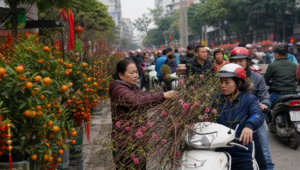
Travel in the week either side of the holiday and you get flower markets, kumquat trees strapped to motorbikes and near-empty museums without the shutdown.
March: The Strongest Nationwide Month of the Year
If you want one set of dates that works from Hà Giang to Cần Thơ, March is it. Northern rain is still low, central Vietnam is dry with sea temperatures climbing past 24°C, and the south has not yet hit its April peak heat. For a single-trip north-to-south route, March is arguably the best time to visit Vietnam overall.
Hanoi warms to 18–25°C. Motorbike routes like the Hà Giang loop are dry and passable, with rapeseed and plum blossom in the valleys. Beach days in Đà Nẵng and Nha Trang are reliable.
April: Hot, Dry, and a Long Public Holiday
Central Vietnam peaks here — Hội An and Đà Nẵng are dry with calm seas. The south turns punishing, with Saigon hitting 35–38°C before the rains break.
Watch the 30 April–1 May public holiday. Domestic tourism spikes, coastal hotels raise rates 30–60%, and Đà Lạt, Nha Trang and Phú Quốc fill with Vietnamese families. Book beach accommodation at least three weeks out.
May: Low Season Begins and Prices Drop
The southwest monsoon arrives. Saigon gets its first real downpours, usually mid-afternoon; northern humidity climbs sharply. Central Vietnam stays dry and is the safest bet.
This is when the north’s rice terraces are flooded for planting — Mù Cang Chải and Sapa fill their paddies from late May, producing the mirror-water landscapes. Rooms in Sapa and Hạ Long drop 20–40% from March rates.
June: Terraces Turn Green
Hanoi runs 30–36°C with high humidity and thunderstorms. Central beaches are excellent. Southern afternoons are wet but mornings usually clear.
June and July are also school-holiday months for Vietnamese families, so coastal domestic destinations get busier even as international arrivals fall. Inland northern trekking around Sapa and Ninh Bình is green, hot and quiet.
July: Peak Heat, Peak Rain in the North
The wettest and hottest stretch in the north. Expect 250–300 mm of rain in Hanoi, delivered in short violent storms. Hà Giang and Sapa see landslide risk on mountain roads; check conditions before committing to a loop.
Central Vietnam is the counterweight — hot, dry and sunny, and the strongest month for Hội An beach time. Typhoon season technically opens in June, but landfall risk on the central coast stays low until late August.
August: Wettest Month, Best Value
Hanoi’s rainfall peaks at roughly 300–340 mm. Ninh Bình rivers run high and green. Storm risk starts building on the central coast from mid-month.
Value is the argument for August, and for anyone whose budget decides the best time to visit Vietnam it is a serious one: mid-range hotels that cost 1,200,000–1,800,000 VND in March often fall to 700,000–1,100,000 VND (about $27–42). Carry rain gear rather than planning around it — see the Vietnam packing list for what actually earns its space.
September: Rice Harvest in the North, Rain Starts in the Centre
Northern skies clear from mid-September and the terraces turn gold. Harvest in Mù Cang Chải and Sapa typically runs mid-September to mid-October — a two to three week window, not a fixed date.
Central Vietnam flips into its wet season, and typhoon probability rises fast. The Mekong Delta enters high water, when canals rise and floating-market boats sit higher against the banks.

October: Excellent North, Avoid the Central Coast
October is the sharpest split in the calendar, and the clearest proof that the best time to visit Vietnam is a regional question rather than a national one. Hanoi, Hạ Long and Ninh Bình get their clearest, driest, most comfortable weather of the year at 21–29°C. Meanwhile Huế records 400–620 mm of rain and Hội An’s Ancient Town floods most years, sometimes closing riverside streets for days.
If your dates are fixed in October, build the trip around the north and the Mekong Delta and treat Đà Nẵng and Hội An as short, flexible stops.
November: Northern Sweet Spot, Central Flood Risk
For the northern half of the country, November is the best time to visit Vietnam alongside October: cool, dry and reliable — the best month for Hạ Long Bay visibility along with October. Đà Lạt enters its dry season. Southern rain tapers off by mid-month.
Central Vietnam remains the risk: Huế’s rainfall can exceed 480 mm and typhoon landfall is still possible into late November. Book refundable central-coast accommodation and keep a spare day in the plan.
December: Dry South, Cold North, High Season Returns
International arrivals climb through December and rates rise with them, especially over the last two weeks. The south is at its most comfortable: Saigon and the Mekong Delta are dry at 22–32°C.
Hanoi turns genuinely cold at 15–20°C, and Sapa can hit 0–5°C with occasional frost. Central Vietnam is easing but not dry.

Using the Calendar for a Two-Week Trip
Two weeks is enough for two regions, not three, once the weather is working against you. Match the pairing to the season rather than forcing a full north-to-south route into the wrong months.
- November to April: north and south, connected by a 2-hour flight. Add the centre only February to April.
- May to August: centre plus one other region. The central coast is the most reliable half of the trip.
- September to October: north plus the Mekong Delta. Skip or shorten the central coast.
Moving between regions costs less than most people expect. Domestic flights run 900,000–2,500,000 VND, sleeper trains 600,000–1,400,000 VND for long legs — the trade-offs are broken down in this guide to getting around Vietnam.

Frequently Asked Questions
What is the single best month to visit Vietnam?
March, if the trip covers the whole country. It is the one month when all three regions are simultaneously dry and not extreme, which makes it the best time to visit Vietnam for a north-to-south route.
Which months are the worst time to visit Vietnam?
October and November on the central coast, because of flooding and typhoon risk. Also the Tết week itself if street food matters, since small stalls close.
Is the rainy season a reason to cancel a trip?
No. Southern and northern wet-season rain typically falls in short bursts, and hotel rates drop 20–40%. The exception is the central coast between late September and mid-November, when multi-day rain is common.
When is the cheapest time to visit Vietnam?
May to early September, outside the 30 April–1 May holiday and the June–August domestic beach peak. Flights, tours and mid-range rooms all fall.
Does the weather affect street food availability?
Yes. Heavy rain shortens the trading hours of pavement stalls, and many operate reduced hours through the central wet season. Ordering and hygiene basics are covered in the site’s guide to eating street food in Vietnam.