

Phu Quoc is a single island, but it doesn’t behave like one place. The east coast, west coast, town center, and southern tip each run on a different rhythm, with different sand, different crowds, and different reasons to base there. Picking the wrong area is the most common planning mistake here — not the wrong hotel, but the wrong coast.
This guide breaks Phu Quoc into six functional areas, what each is actually for, and how to combine them without losing a day to transit. Distances are short — nothing is more than about 45 minutes away by car — but dirt roads, unlit stretches at night, and a mountain range down the spine make the wrong base a real inconvenience, not a minor one.
Where Phu Quoc Sits, and Why Its Geography Matters
Phu Quoc is Vietnam’s largest island, sitting in the Gulf of Thailand closer to Cambodia than to mainland Vietnam — Ha Tien, the nearest Vietnamese port, is about 45 km away. It belongs to Kien Giang province, runs roughly 50 km long, and is shaped like a rough triangle pointing south. A forested ridge down the interior — Phú Quốc National Park, which covers over half the island — means east-coast and west-coast roads rarely connect directly. Almost every route crosses through Duong Dong town in the northwest, which is why that town matters no matter which coast you base on.
Area 1: Duong Dong Town — The Functional Center
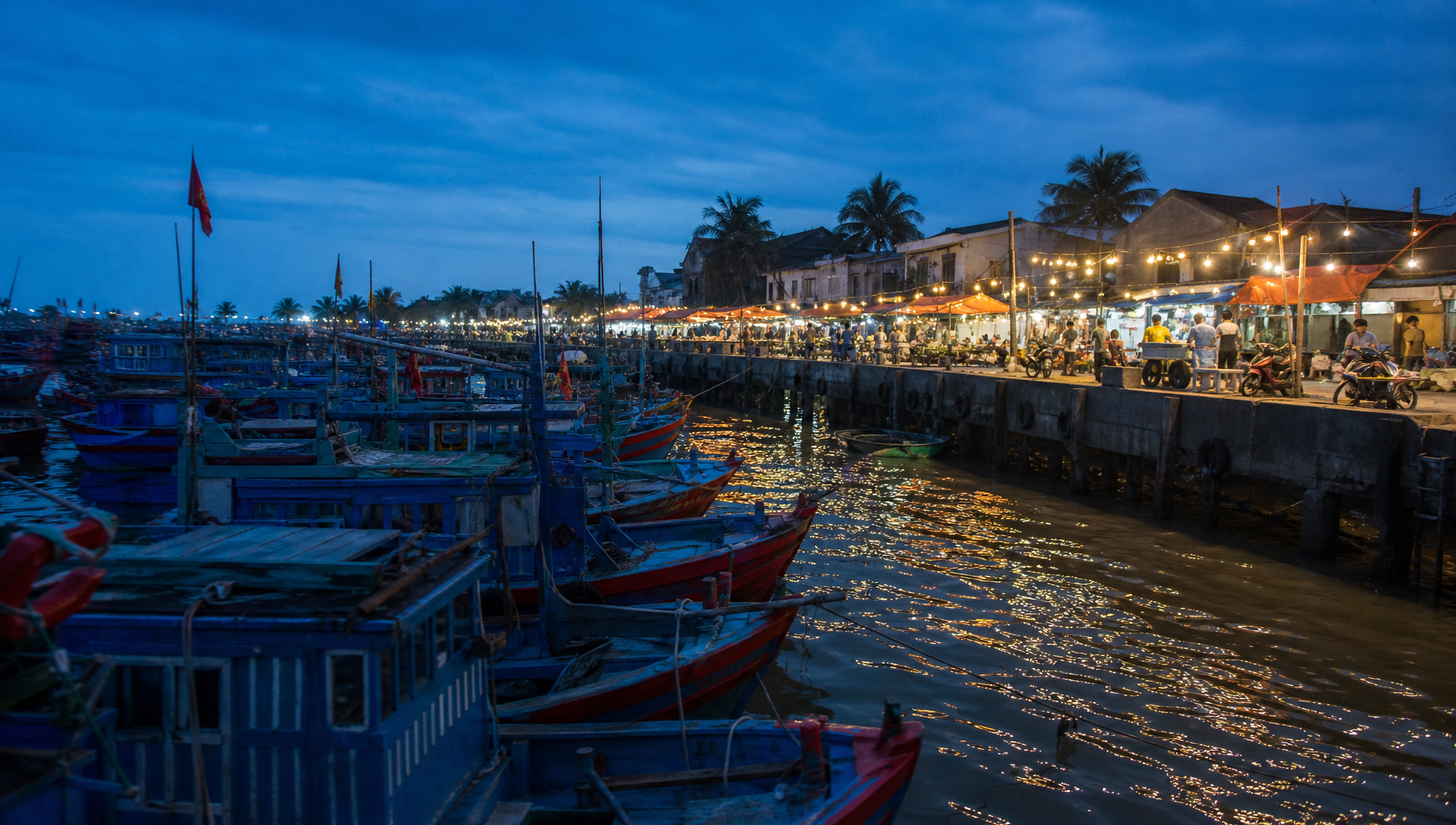
Duong Dong is the island’s only real town: fishing port, wet market, hospital, bank branches, and night market all sit here. It’s not a beach destination itself — the town beach is unremarkable — but it’s the most convenient base for restaurants, ATMs, and a SIM card shop within walking distance rather than a taxi ride.
What it’s for: budget and mid-range stays, street food, the Dinh Cau Night Market, and harborside seafood restaurants.
Getting oriented: the night market runs roughly 5pm to midnight along Nguyen Trai and Vo Thi Sau streets, mixing grilled seafood stalls with clothing and souvenir vendors. A plate of grilled scallops or a whole grilled squid typically runs 60,000–120,000 VND (about $2.50–$5); seafood priced by live weight can run higher depending on the catch that week.
Who should base here: budget travelers, or anyone who wants to be centrally located for day trips in both directions rather than committed to one coast.
Area 2: Long Beach (Bãi Trường) — The Resort Strip
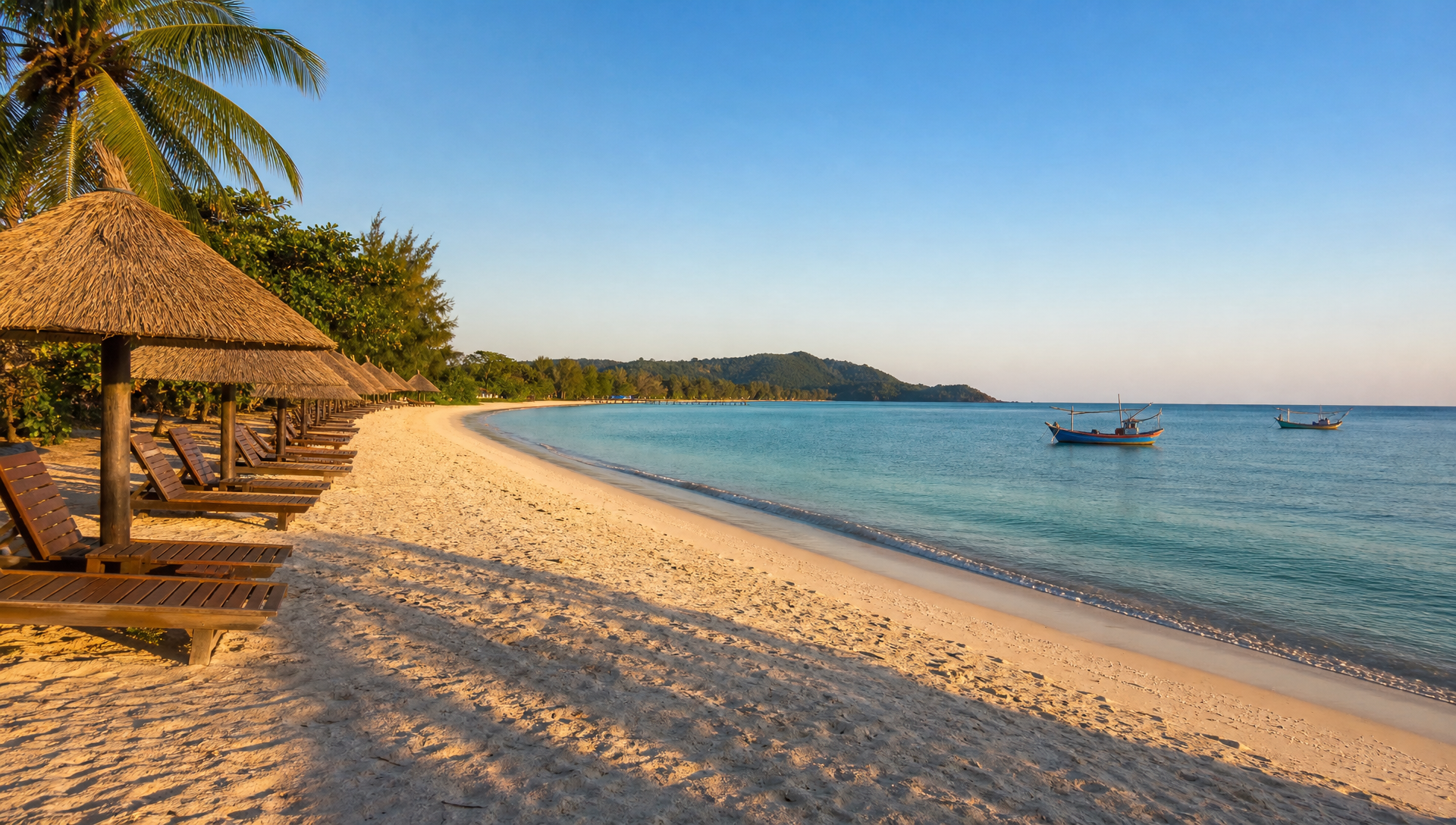
Long Beach runs about 20 km down the southwestern coast, from the edge of Duong Dong almost to An Thoi. It’s the most built-up stretch on the island — resorts, mid-range hotels, beach bars, and restaurants line the road, especially in the few kilometers closest to town.
What it’s for: beach access without giving up restaurant variety, sunset views (this coast faces west, so sunset over the water is the default here), and easy access to Duong Dong.
What to expect: sand quality varies block by block — some stretches are fine and clean, others coarser or broken up by resort seawalls. This isn’t the powder-sand beach Phu Quoc is famous for; that’s Bai Sao, on the other coast.
Who should base here: first-timers who want one base for the whole trip, and groups with mixed budgets, since Long Beach runs from hostels to five-star resorts within a few kilometers of each other.
Area 3: Ong Lang and Cua Can — The Quiet Alternative
About 7–10 km north of Duong Dong, the coast turns rockier and development thins out fast. Ong Lang and adjoining Cua Can are where boutique bungalow resorts and small family-run guesthouses replace Long Beach’s larger hotels.
What it’s for: a beach base without nightlife — the trade-off is a patchier shoreline, coral rubble and rock in places, sand in others, for far fewer people on it.
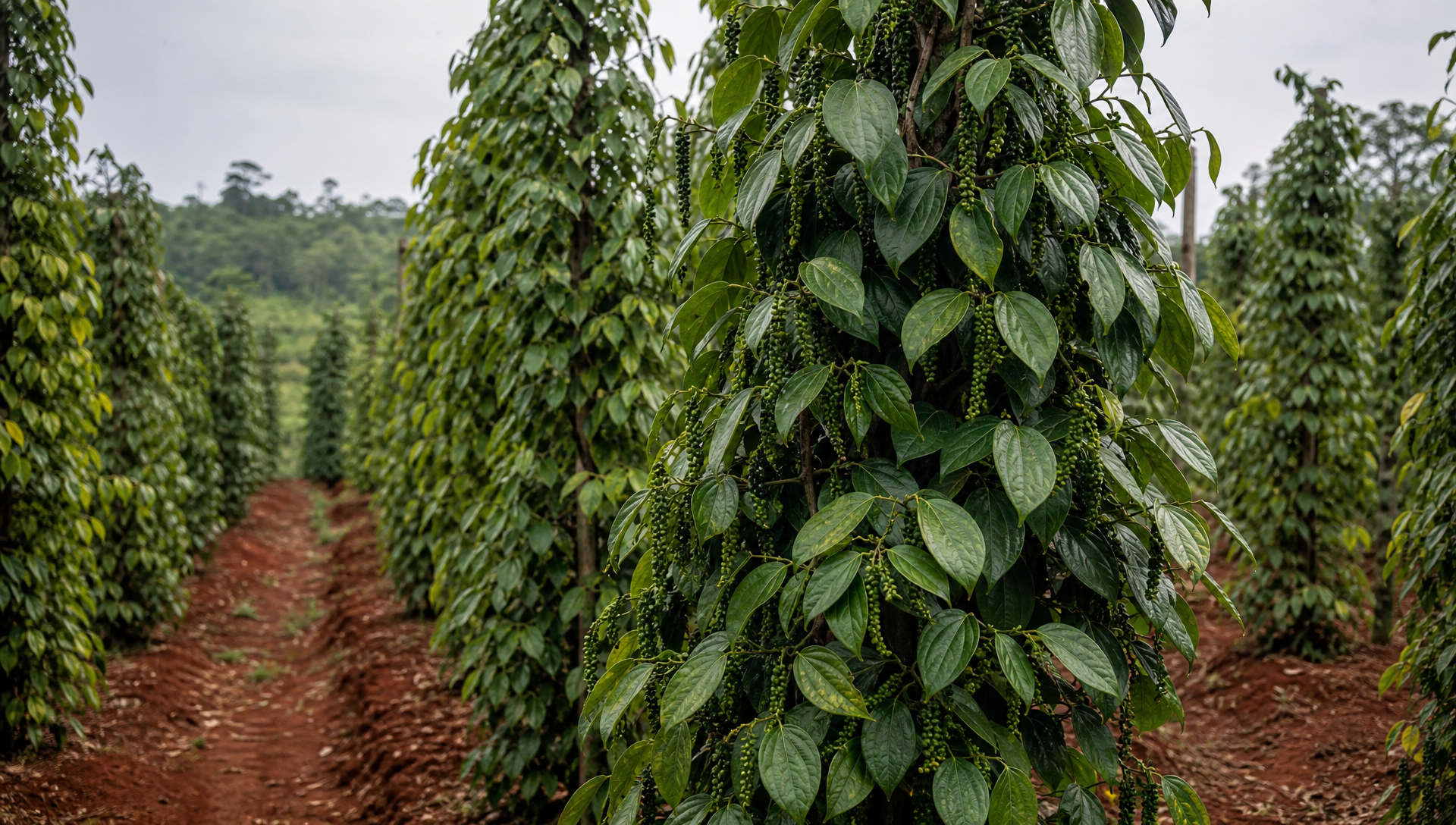
What’s nearby: small local restaurants rather than resort dining, a few working pepper farms a short drive inland, and quiet roads suited to exploring by scooter.
Who should base here: couples, slower travelers, and anyone who’s already seen a Long-Beach-style strip elsewhere in Southeast Asia and wants something calmer.
Area 4: Bai Sao and Bai Khem — The Postcard Beaches
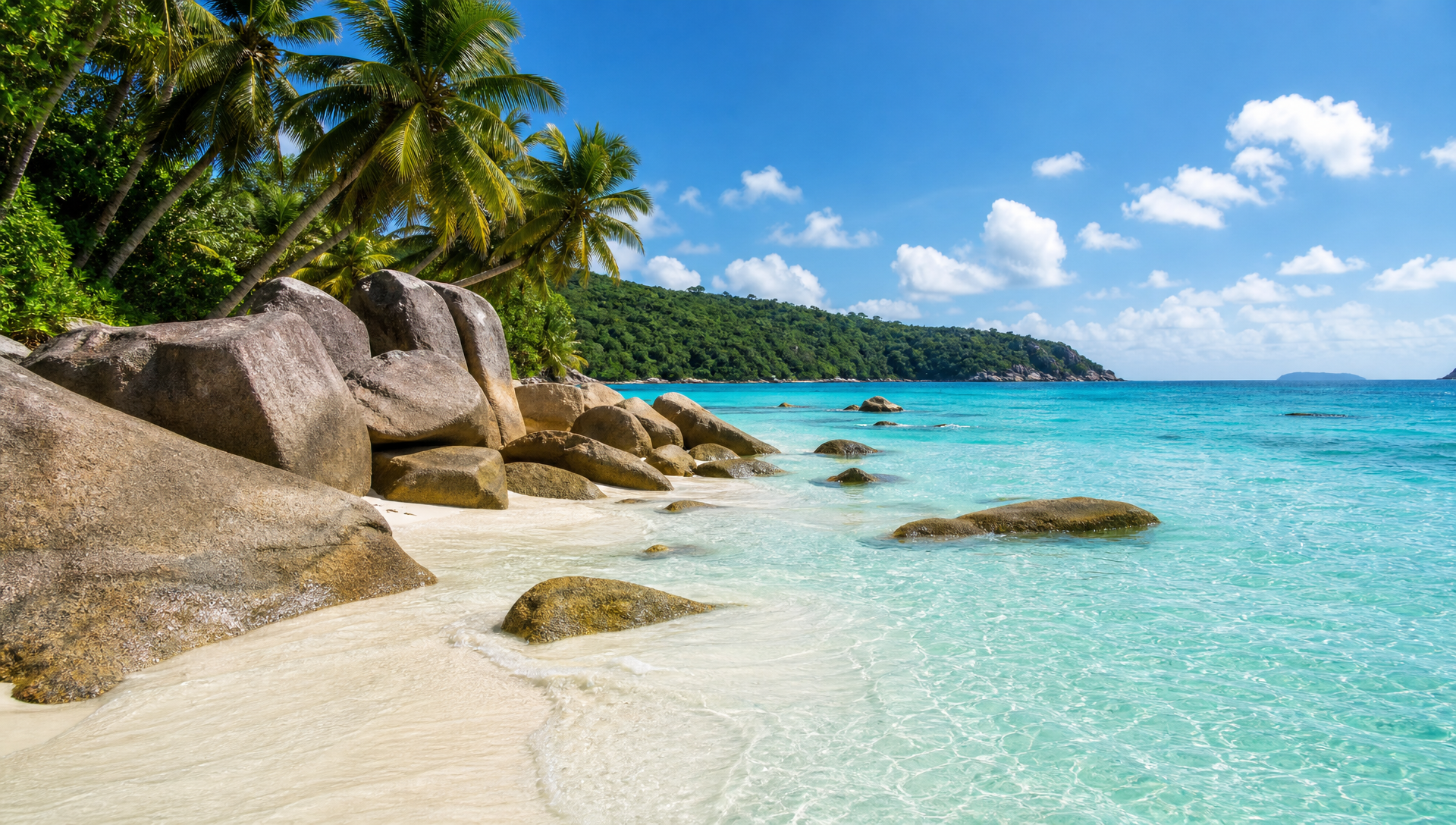
On the southeastern tip, Bai Sao (“Star Beach”) and neighboring Bai Khem are the beaches in almost every Phu Quoc photo: fine, almost powdery white sand, shallow turquoise water, and granite boulders at the water’s edge in places.
What it’s for: a day trip rather than a stay — accommodation directly on Bai Sao is limited, so most visitors base elsewhere and drive the 25–30 minutes from Duong Dong.
Practical notes: beach chair and umbrella rental from the restaurants along the back of the beach runs 50,000–100,000 VND (about $2–$4) for the day, often with a minimum food or drink order. Bai Khem sits partly within a military zone and has had restricted access at times, worth checking before planning a visit around it specifically; Bai Sao has no such restriction.
Who should visit: nearly everyone — go on a weekday morning, before the tour buses arrive in the late morning.
Area 5: An Thoi and Hon Thom — The Southern Gateway
An Thoi, at the southern tip, is a working port and the departure point for two things: speedboat trips to the outlying “An Thoi Islands” (a cluster good for snorkeling day trips), and the cable car to Hon Thom island.
The cable car: billed as one of the longest over-sea cable car lines in the world, it runs roughly 8 km from An Thoi to Hon Thom in about 15–20 minutes. Round-trip tickets run approximately 700,000–850,000 VND (roughly $28–$34) for adults, usually bundled with access to a water park and beach clubs on Hon Thom; prices are set by the operator and worth checking directly, since they’re adjusted periodically.
Island-hopping boats: full-day speedboat tours to three or four smaller islands typically cost 500,000–900,000 VND (about $20–$36) per person including lunch, varying by operator and whether snorkeling gear is included.
Who should base here: almost no one overnight — it’s a launch point, best visited as a half- or full-day trip from Long Beach, Ong Lang, or Duong Dong.

Area 6: Phú Quốc National Park and the North — Ham Ninh, Rach Vem, and the Interior
The northern half of the island and its mountainous spine fall largely inside Phú Quốc National Park, covering most of the island’s remaining primary forest. Two fishing villages worth knowing: Ham Ninh, on the east coast, known for pearl farms and a long wooden pier over shallow water; and Rach Vem, further north, a stilt-house hamlet with a floating restaurant scene.
What it’s for: a change of pace from beach time — jungle waterfalls (Suoi Tranh and Suoi Da Ban are the two most visited, both a short walk from the parking area), pearl farm tours, and fishing-village seafood that’s cheaper than the tourist-strip restaurants because it’s sold closer to where it’s caught.
Getting there: roads into the park interior include unpaved sections with minimal lighting or signal once off the main coastal roads — a daytime trip, not a night drive, and best suited to a confident scooter rider rather than a first-timer.
Who should visit: anyone with 4–5 days or more who wants a day away from beaches, and anyone curious about the pepper and fish sauce (nước mắm) production Phu Quoc is known for beyond tourism, tied to its position on major fishing grounds in the Gulf of Thailand.
Getting to Phu Quoc
Flights land at Phu Quoc International Airport (PQC), just south of Duong Dong, with direct domestic connections from Ho Chi Minh City (about 55 minutes) and Hanoi (around 2 hours), plus a growing number of international routes. This is the fastest option and, on a discount fare booked ahead, sometimes cheaper than the ferry once time is factored in.
By sea, high-speed ferries run from Rach Gia and Ha Tien. Ha Tien to Phu Quoc takes roughly 1.25–2.75 hours depending on the vessel, with fares around 230,000–330,000 VND (about $9–$13) one way. Rach Gia runs closer to 2.5 hours, at a similar fare. Schedules shift seasonally between the two main operators, Superdong and Phu Quoc Express, so it’s worth checking current departure times a few days ahead rather than assuming a fixed timetable.
For payment logistics, see Money in Vietnam: What to Pay With at Every Kind of Food Stop — the resort strip takes cards widely, but the night market and village restaurants are cash-only in most cases.
Getting Around the Island
Scooter rental is the default way to move between areas, typically 120,000–180,000 VND ($5–$7) per day for an automatic, though the same license rules apply here as on the mainland — see Getting Around Vietnam: How to Pick the Right Ride. Grab covers car and bike rides where a rental isn’t practical; taxis exist but are worth agreeing a price on upfront, especially for longer airport trips.
Distances worth knowing: Duong Dong to Long Beach’s southern end is about 20–25 minutes by scooter; to Bai Sao roughly 25–30 minutes; to An Thoi around 35–40 minutes; to Ong Lang closer to 15 minutes.
When to Go
Phu Quoc runs a dry season from roughly November through April and a wetter one from May through October, driven by the same monsoon pattern covering southern Vietnam. Dry season brings calmer seas — relevant for the island-hopping boats out of An Thoi — and more reliable sunny days. Wet season isn’t a washout: rain usually arrives as short afternoon downpours, and it comes with lower rates and thinner crowds at Bai Sao. See Best Time to Visit Vietnam: A Month-by-Month Calendar for how this plays out nationally.
Sort connectivity before arrival — see the Vietnam SIM Card and eSIM Guide for what holds up best outside the town centers.
How to Combine Areas by Trip Length
A 3-day trip works based entirely on Long Beach or Ong Lang, with one day for Bai Sao and a half-day for the cable car or an island-hopping boat.
A 5-day trip can add a full day in the national park’s north — Ham Ninh or Rach Vem — plus more unhurried beach time rather than rushing every area.
A 7-day-plus trip is long enough to split the base: a few nights on Long Beach for convenience, then a few in Ong Lang for the quieter pace, with only a short drive between them.
Frequently Asked Questions
Is Long Beach or Ong Lang better for a first visit? Long Beach suits a first visit better if restaurant variety, sunset bars, and being centrally located matter most. Ong Lang suits a repeat visitor or anyone prioritizing quiet over convenience, since dining options are more limited and spread out.
Do you need a boat to reach Bai Sao? No. Bai Sao is accessible by road on the southeastern side of the island, roughly 25–30 minutes from Duong Dong by car or scooter — no boat is required, unlike the outlying An Thoi Islands.
Is the Hon Thom cable car worth the cost? For most visitors interested in the view over the open sea and access to Hon Thom’s beach clubs in one trip, yes — it replaces what would otherwise be a boat transfer. Travelers only interested in snorkeling may get better value from a dedicated island-hopping boat tour instead.
Can you visit Phu Quoc without a scooter? Yes. Grab rides and hotel-arranged taxis cover the same routes; a scooter mainly saves cost and adds flexibility for stopping along the way, particularly toward the national park’s interior roads.
Is Phu Quoc a good add-on to a Mekong Delta trip? Geographically yes — ferries connect from Rach Gia and Ha Tien, both accessible from the Mekong Delta region, making a delta stop before or after the island a straightforward routing rather than a detour.