
Six cities, roughly forty bánh mì, one pair of jeans that no longer fit the same. Worth it.
I didn’t plan to turn bánh mì into a ranking system. It just happened, somewhere around city number three, when I realized I’d eaten one almost every single day of the trip and had strong, occasionally unreasonable opinions about all of them. So here it is: every bánh mì I ate across Vietnam, ranked, ordered from “genuinely changed how I think about sandwiches” down to “I regret this specific decision.”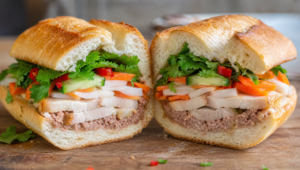
Cross-section view of a Vietnamese banh mi sandwich showing layers of pate, meat, pickled vegetables and herbs inside a crispy baguette
Quick Refresher: What Actually Goes Into a Bánh Mì
Before the rankings, the basics, because half the appeal is in the contrast of textures and temperatures happening at once:
- The baguette — a legacy of French colonial rule, adapted into something lighter and airier than a traditional French baguette, with a thin, cracker-crisp crust
- Pâté — smooth, rich, usually pork liver based
- Mayonnaise — yes, real mayo, and it matters more than people expect
- Cold cuts — often a mix of Vietnamese cold cuts (chả lụa), head cheese, or grilled pork depending on the region
- Pickled carrot and daikon (đồ chua) — the acidity that cuts through everything else
- Fresh herbs — usually cilantro, sometimes Vietnamese coriander
- Chili and soy sauce or Maggi seasoning — the finishing touch, and the thing regulars will judge you for skipping
Every region does its own version, and that’s really the whole point of this list.
The Ranking
🥇 S-Tier: The One That Ruined All Other Sandwiches For Me
A cart on Phan Chu Trinh, Hoi An. No sign, a woman working alone, a line that forms out of nowhere around 7am and disappears by 9. She toasts the baguette over actual coals, which — I didn’t know this until I watched her do it — makes a genuinely different, smokier crust than anything steamed or oven-warmed. Pâté, a slightly spicy pork mixture I never identified, pickled veg, and an herb I still can’t name that showed up nowhere else on this trip.
I ate this one four mornings in a row. I am not exaggerating for the sake of the list. I really did that.
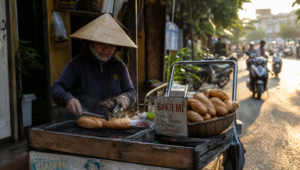
A street vendor’s cart in Hoi An grilling banh mi baguettes over hot coals in the early morning
🥈 A-Tier: Consistently Excellent, Deservedly Famous
Bánh mì Huỳnh Hoa, Saigon. Famous for a reason — it’s absurdly overstuffed, borderline structurally unstable, and worth the queue that wraps around the block most evenings. The variety of cold cuts alone (I counted at least five types crammed in) makes it feel more like a cured-meat sampler than a sandwich. My only knock: it’s pricier than a street cart version, and honestly, a smaller one would still be plenty.
A nameless cart near Đồng Xuân Market, Hanoi. Northern bánh mì tends to be simpler — less mayo, a punchier pickled veg ratio, sometimes a fried egg (bánh mì ốp la) instead of cold cuts. This particular cart did the egg version, yolk still runny, soaking into the bread in the best possible way.
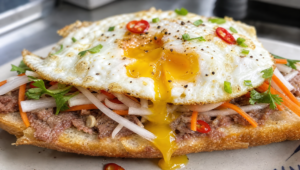
Close-up of a banh mi op la sandwich with a fried egg with runny yolk, pate and pickled vegetables
🥉 B-Tier: Reliable, Would Happily Eat Again, Nothing Life-Altering
A hotel breakfast buffet version, Da Nang. Fine. Genuinely fine. Fresh bread, decent pâté, slightly too much mayo, herbs clearly added as an afterthought. The kind of bánh mì that does its job and moves on. Nothing wrong with it, nothing memorable either.
A 24-hour convenience store version, Saigon. I ate this at 1am after a night out and have no complaints, though I also had no standards at that hour. Pre-made, slightly soft bread from sitting in plastic, but the filling-to-bread ratio was surprisingly generous for something wrapped in cellophane on a shelf.
🚫 D-Tier: The One I Wish I’d Skipped
A tourist-strip cart near a major hotel, Nha Trang. Charged roughly triple the going rate, used a baguette that had clearly been sitting out since morning (soft, slightly chewy in the wrong way), and skipped the herbs entirely — presumably assuming tourists wouldn’t notice or care. I noticed. This is the one entry on the list I’d actively tell you to walk past.
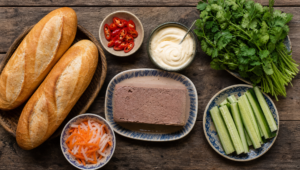
Flat lay of banh mi ingredients including baguette, pate, pickled carrots and daikon, herbs and chili on a wooden table
How to Spot a Good One Before You Order
A few honest signals I picked up after enough of these:
- A visible line of locals, not just tourists — the single most reliable indicator on this entire trip.
- The bread sounds crisp when tapped, not soft or dense. A good baguette should sound almost hollow.
- They toast or warm the bread to order rather than pre-making a stack that sits around going soft.
- The herbs look fresh, not wilted — an easy corner to cut, and a clear tell when a place is coasting on reputation.
- Price roughly matches the local going rate — usually 15,000–30,000 VND depending on the city and filling; anything triple that near a tourist strip is a red flag, not a premium version.
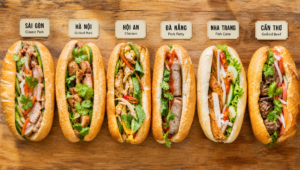
Northern, central, and southern bánh mì, side by side — same idea, genuinely different sandwich depending on where you are.
Regional Differences Worth Knowing
Hanoi and the north tend toward simpler fillings, less mayo, sharper pickled vegetables, and the fried-egg version showing up more often as a breakfast staple.
Hoi An and central Vietnam lean into distinct local pork preparations and, in my experience, more willingness to grill or toast over coals rather than steam.
Saigon and the south go bigger — more cold cuts, more mayo, more of everything, and the closest thing to the “famous” bánh mì most people picture before visiting.
None of these are better or worse, exactly — they’re just different enough that ordering “a bánh mì” in three different cities gets you three genuinely different sandwiches, which is the actual reason this ranking took forty of them to finish.
Should You Build a Trip Around This? Honestly, Sort Of
If you’re already visiting food-forward stops like Hoi An, building in a morning bánh mì crawl costs you nothing but an early alarm — most of the best carts sell out by mid-morning. Pair it with something like chả cá lá vọng in Hanoi or gỏi cuốn as a lighter counterpoint later in the day, and you’ve basically built a food itinerary around a sandwich, which — after this trip — I fully endorse.
FAQ
What is traditional bánh mì made of?
A Vietnamese baguette filled with pâté, mayonnaise, cold cuts or grilled pork, pickled carrot and daikon, fresh herbs, and chili — though exact fillings vary significantly by region.
Is bánh mì French or Vietnamese?
Both, in a sense. The baguette itself arrived through French colonial influence, but the fillings, proportions, and overall sandwich were adapted and created in Vietnam — it’s considered a distinctly Vietnamese dish today, not a French one.
What’s the difference between bánh mì in the north and south of Vietnam?
Northern versions tend to be simpler with less mayo and a sharper pickled vegetable ratio; southern versions are typically larger with more varied cold cuts and more condiments overall.
How much should a bánh mì cost?
Roughly 15,000–30,000 VND at most street carts. Prices well above that near major tourist areas are usually a markup, not a sign of better quality.
Can I get a vegetarian bánh mì?
Yes — many stalls, especially near temples or in bigger cities, offer a version with fried tofu, mock meats, or just egg and vegetables instead of pâté and cold cuts. Ask for “bánh mì chay.”