

This Vietnam packing list is not a theory. It is the actual contents of my 38-litre backpack after three weeks of eating from Hanoi down to the Mekong, weighed on a luggage scale at Nội Bài airport, then judged honestly at the end of the trip: what earned its place, what I carried for 21 days and never touched, and what I should have bought in a Vietnamese market for the price of a bowl of noodles.
I am writing it as an inventory rather than a guide, because that is how packing mistakes actually show up — item by item, on the day you need the thing you left at home. Each item below gets a verdict: KEPT (would pack again), DITCHED (dead weight, leave it), or BUY THERE (do not carry it from home, buy it in Vietnam for a fraction of the price).
Total pack weight when I left: 11.4 kg. Total when I flew home: 9.2 kg, and that includes 800 g of coffee and a bag of dried mango. That gap is the whole point of this post.
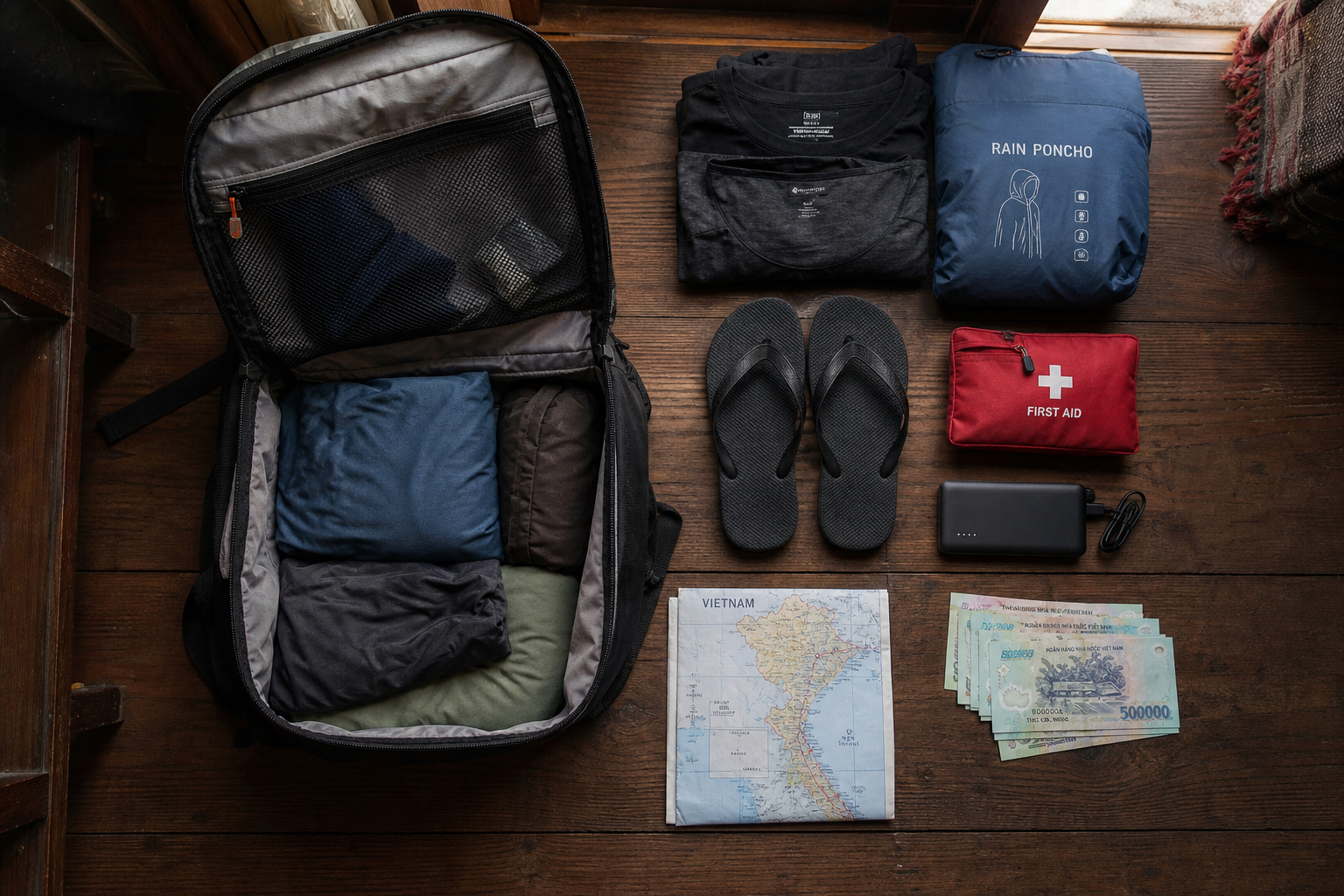
How I Judged Each Item
Three questions, applied at the end of the trip while repacking:
- Did I use it more than twice?
- If I had lost it on day 3, would I have replaced it?
- Could I have bought the same thing here for under 100,000 VND?
Anything that failed all three got the DITCHED verdict. It is a brutal filter and it killed about a third of what I brought.
Clothing: The Section Where I Over-Packed Worst
5 quick-dry t-shirts — KEPT
I wore these on rotation and washed two of them in a sink most nights. In Hanoi in July I sweated through a shirt by 10am, and cotton stays wet for hours in that humidity. Quick-dry synthetic was dry by breakfast. Five was exactly right; a sixth would have been dead weight, because laundry services charge 25,000–40,000 VND per kilo almost everywhere and turn it around in a day.
1 pair of jeans — DITCHED
I wore them once, on the plane. They spent 20 days compressed at the bottom of the pack getting damp. In a country where the average lowland afternoon sits in the low-to-mid 30s °C with heavy humidity — the north also gets a genuinely cold, drizzly winter, which is worth reading up on in the climate of Vietnam overview before you pack — jeans are a punishment. Bring one pair of light long trousers instead, for temples and for evening mosquitoes.
Long-sleeve light shirt — KEPT (surprisingly)
I packed it for sun protection and used it constantly: on motorbike days, in over-air-conditioned buses that run at about 18 °C, and in the cave sections around Phong Nha. This was the single most-used item in my bag after my flip-flops.
Proper hiking boots — DITCHED
I carried 1.1 kg of boots for one trek. If your trip is mostly cities and eating, running shoes are enough. If you are actually trekking in the north, note that the guesthouses in Sapa lend rubber boots for free or for around 20,000 VND — which I found out the hard way after ruining a pair of shoes in ankle-deep mud, a story I told in full in my 3-day Sapa trip diary.
Flip-flops — KEPT, then replaced with market ones
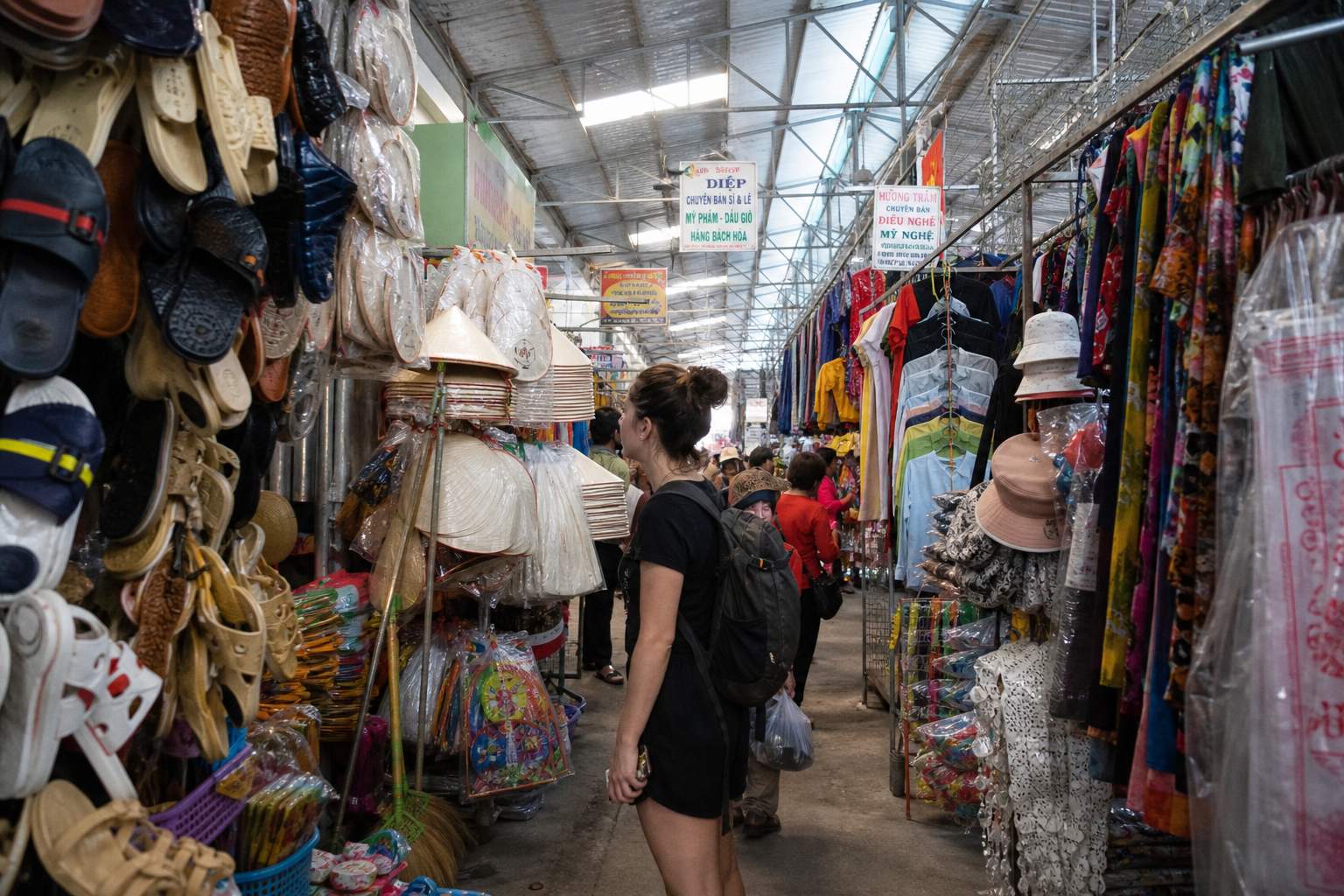
I brought a pair from home, snapped a strap in week two, and bought a replacement pair at a market in Hoi An for 60,000 VND. They were better. Just do that from the start.
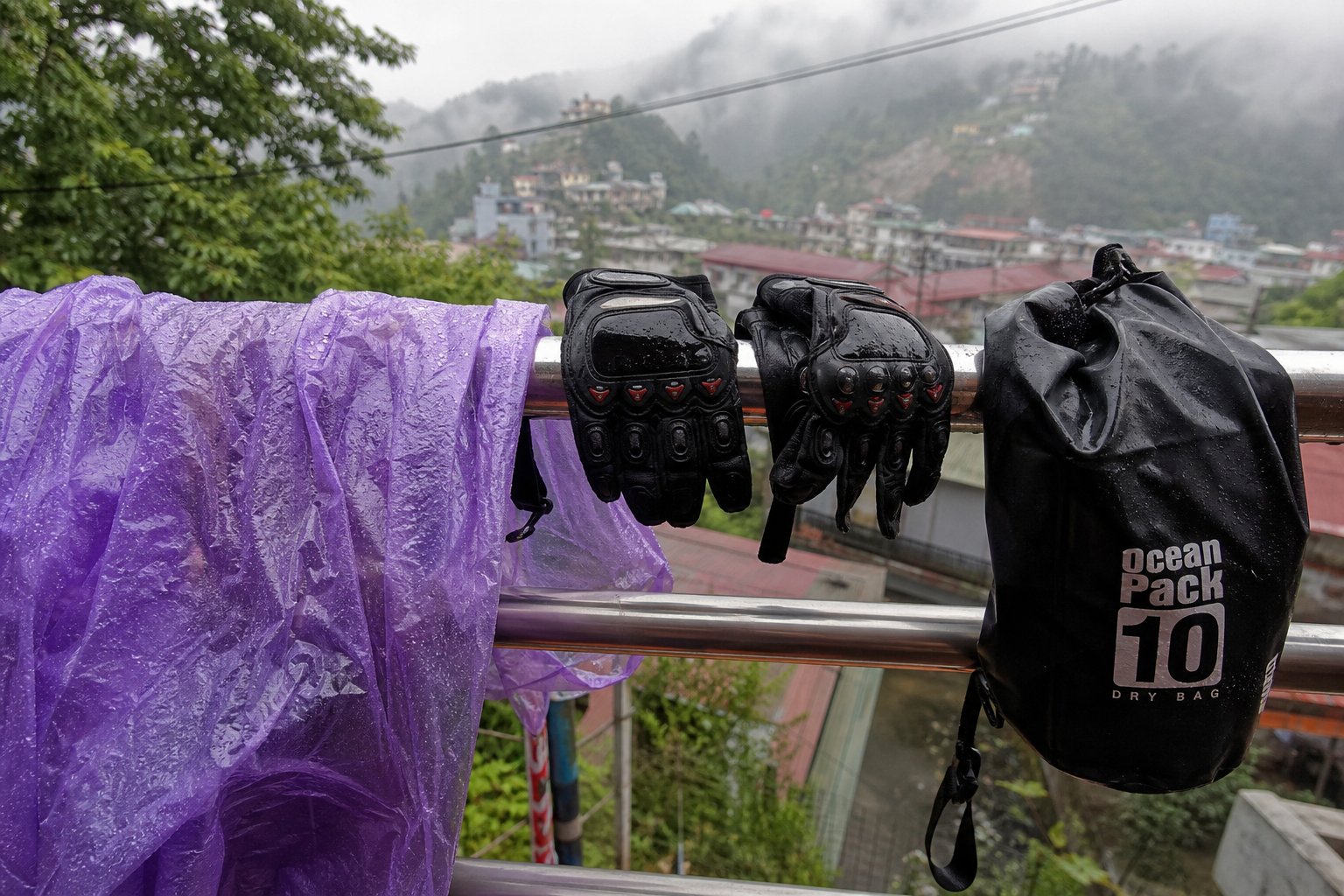
Rain and Motorbike Gear
Expensive waterproof jacket — DITCHED
It was breathable, technical, and completely useless. In 90% humidity you are wet from the inside anyway. Everyone local wears a 20,000 VND plastic poncho, and there is a reason: it covers you and the bike and your bag, and when it rips you buy another one.
Plastic poncho — BUY THERE
Any roadside shop sells them. On the Ha Giang Loop I bought two in three days. If you are planning that ride, the gear and weather realities are covered in more detail in my post on what nobody tells you before the Ha Giang Loop.
Dry bag (10 L) — KEPT
The best 250,000 VND I have spent on travel gear. Camera, passport, cash and phone stayed dry through two full days of rain on a motorbike. A plastic bin liner works too, but it tears.
Motorbike gloves — BUY THERE
Bought a pair in Hà Giang town for 90,000 VND. Sunburn on the back of your hands after five hours of riding is a specific, stupid pain that I only needed to experience once.
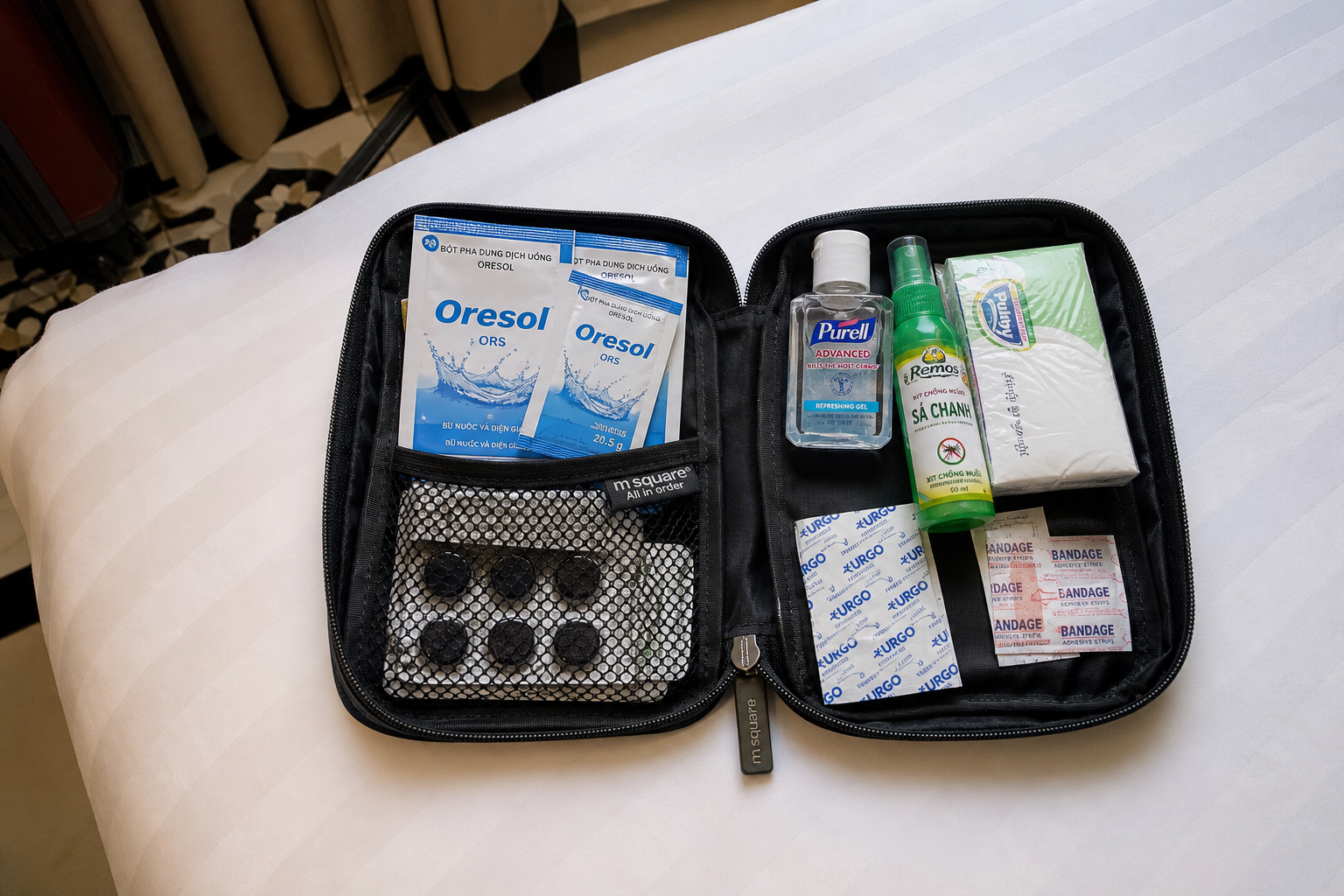
The Food Kit: What a Street-Eating Trip Actually Needs
This is where a food-focused trip differs from a normal one, and where most packing lists are useless.
Tissue packets — KEPT, essential
Street stalls give you thin paper napkins that dissolve on contact with broth, if they give you anything. I carried a small pack in every pocket. In Vietnam, tissues on your table are sometimes charged for — usually 2,000–5,000 VND — so keeping your own also avoids a small, confusing line on the bill.
Hand sanitiser — KEPT
You eat with your hands more than you expect: herbs, rice paper, spring rolls. Handwashing at a plastic-stool stall is often a shared bowl of water.
Rehydration salts (6 sachets) — KEPT, used 4
I got sick once, in week two, and it was not from a street stall — it was from an air-conditioned tourist restaurant with a laminated English menu. Oral rehydration salts cost almost nothing and take up no space. Vietnamese pharmacies sell them everywhere as oresol, so you can restock for around 3,000 VND a sachet.
Activated charcoal tablets — KEPT
Sold in every pharmacy here, but I liked having them in the bag on a night bus. Two doses over three weeks.
A small notebook — KEPT
Sounds twee. It was the most valuable food item I carried. I wrote down stall names, cross-streets and prices immediately, because after eleven bowls of noodles in a week they blur together. I would not have been able to write anything honest about bún đậu mắm tôm without those scribbles about exactly how the fermented shrimp paste hit me the first time.
A reusable water bottle with a filter — DITCHED
I used it for four days. Bottled water is 5,000–10,000 VND for 1.5 litres, hotels almost always give you two free bottles a day, and the filter bottle was heavy and slow. Environmentally I am not proud of this, but I am being honest about what I used.
Tech and Money
20,000 mAh power bank — KEPT
Google Maps on a motorbike eats a phone battery in about four hours. On the loop I drained a full phone charge and half the power bank in one day.
Laptop — DITCHED (for most people)
I brought mine to work. If you are not working, leave it. It cost me an anxious hour every time I left a room with a flimsy door lock.
eSIM vs local SIM — BUY THERE
I paid roughly €22 for an eSIM before flying, then watched a friend buy a Viettel SIM with 120 GB at a phone shop for 150,000 VND. Do that instead. Coverage on mountain roads was noticeably better on the local network too.
Cash, and the note problem — KEPT
Bring some cash to exchange, and then learn the notes properly. The 20,000 and 500,000 VND notes are both blue-ish polymer, and I handed over the wrong one at a bánh mì cart on day two — the vendor laughed and gave it straight back, which tells you more about Vietnam than most travel articles do. If numbers on the Vietnamese đồng still feel abstract, spend ten minutes with the note designs before you land.
A card, but not as your main plan — KEPT
ATM fees ran 22,000–55,000 VND per withdrawal depending on the bank. QR payment is now everywhere in cities, including at small stalls, but the plastic-stool places I liked best were still cash-only.
What I Should Have Brought and Didn’t
- Earplugs. Karaoke does not stop at a reasonable hour. This is the single most common regret I hear from other travellers, and it is a 30 g fix.
- A cheap sleep sheet. For night buses, where the blankets are shared and the air conditioning is set to arctic.
- A second phone mount. Mine vibrated loose on a rough road and my phone bounced off the tarmac at 30 km/h.
- Loose shorts for eating. Sitting cross-legged on a 25 cm plastic stool for an hour is its own kind of workout, and jeans make it worse. See again: ditch the jeans.
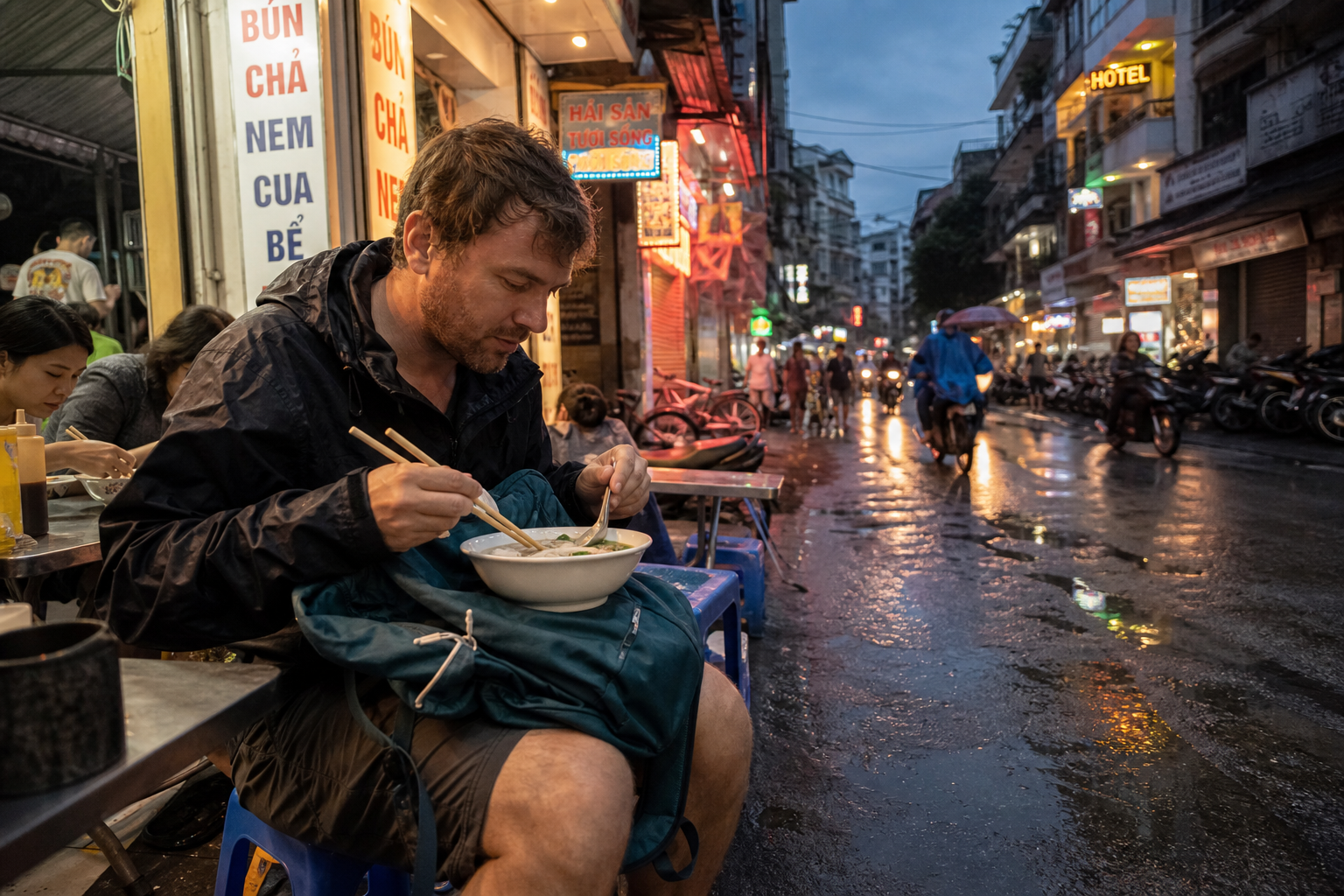
The Daypack: The Only List That Really Matters
Ninety per cent of my days ran out of a 12-litre daypack, not the big bag:
- Phone, power bank, short cable
- 400,000–600,000 VND in small notes (nothing above 200,000 for street stalls)
- Tissue packets and hand sanitiser
- Poncho, folded flat
- Sunglasses and sunscreen
- The notebook
That is it. If you are wandering the tangle of streets in the Hanoi Old Quarter, carrying more just makes you slower and hotter.
What This Vietnam Packing List Cost Me
I spent roughly €310 on gear before the trip. Of that, I would honestly repeat about €120 of it. The dry bag, the power bank and the long-sleeve shirt were worth every cent. The jacket, boots, filter bottle and pre-paid eSIM — about €190 — were a straight loss, and everything they were meant to do was available locally for under 400,000 VND total. If you want to see how those small daily numbers add up over a real trip, my 4-day Da Lat budget breakdown shows the receipts.
The short version of this Vietnam packing list: pack light clothing you can wash in a sink, one waterproof bag, a small medical pouch, and cash. Buy the rest here. You will spend less, carry less, and eat better — because the lighter your bag, the more willing you are to sit down at the next stall.
FAQ
What should I pack for street food in Vietnam specifically?
Tissue packets, hand sanitiser, rehydration salts, a small notebook and small-denomination cash. That kit weighs under 300 g and covers almost every practical problem you hit at a plastic-stool stall.
How much luggage do I need for 3 weeks in Vietnam?
A 35–45 litre backpack is plenty. Mine weighed 11.4 kg and about a third of it was unnecessary. Laundry costs 25,000–40,000 VND per kilo, so five days of clothes is enough for any trip length.
Do I need to bring medicine to Vietnam?
Bring a small personal kit, but do not over-buy. Vietnamese pharmacies are widespread, cheap and stock rehydration salts, charcoal tablets and basic painkillers without a prescription.
Is it better to buy a SIM in Vietnam or an eSIM before flying?
A local SIM bought in Vietnam is far cheaper — around 150,000 VND for a large data package — and tends to have better coverage on rural mountain roads than a pre-purchased tourist eSIM.
What clothes should I avoid packing for Vietnam?
Jeans, heavy cotton, hiking boots and technical waterproof jackets. Humidity makes all four uncomfortable, and lighter, cheaper local alternatives are sold everywhere.