
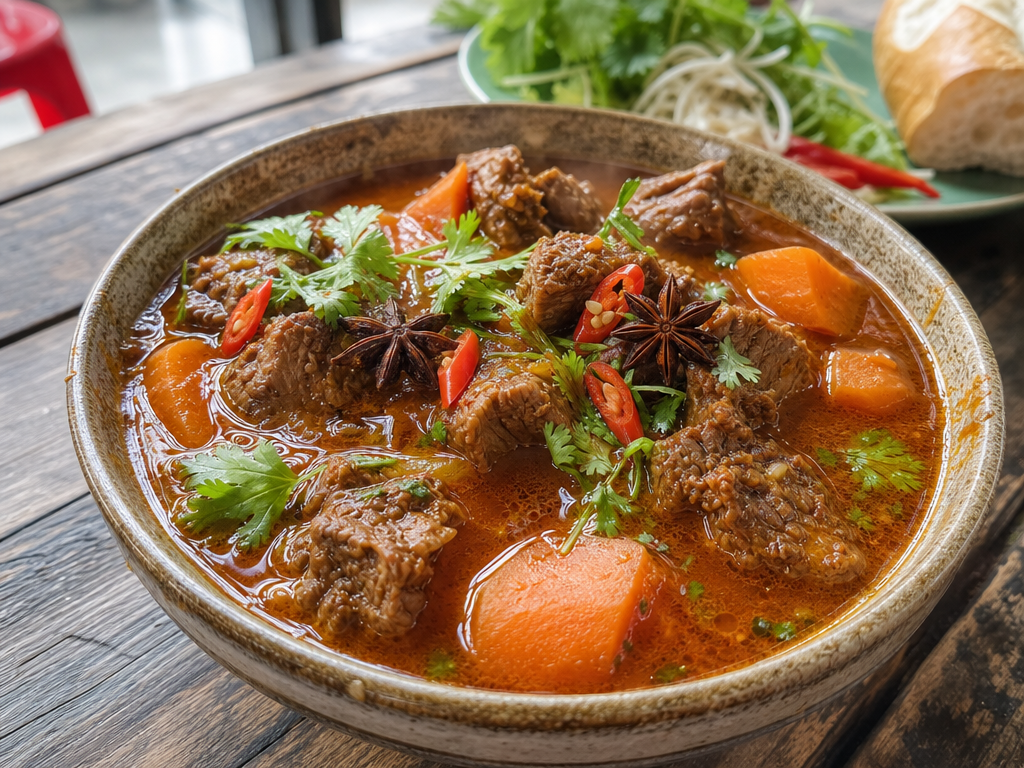
Bò kho, Vietnam’s classic beef stew, is built on star anise, lemongrass, and a deep reddish-orange base, usually eaten with bread, rice noodles, or plain rice. This Vietnamese beef stew sits in an odd spot on the Vietnamese menu: heavier and spicier than most breakfast dishes, but rarely served as a dinner main. Most stalls sell it only in the morning and are sold out or closed by early afternoon.
The dish carries visible French and Chinese five-spice influence — tomato paste and carrots point to one, star anise and cinnamon to the other — and it changes shape depending on which part of the country serves it. A bowl in Saigon, a bowl in Hue, and a home-cooked pot in the Mekong Delta are not quite the same dish, even though all three go by the same name.
This guide breaks the Vietnamese beef stew down by region and by how it’s served, so you know what to expect before a bowl lands on the table — and what to ask for if you want a specific style.
What This Vietnamese Beef Stew Actually Is
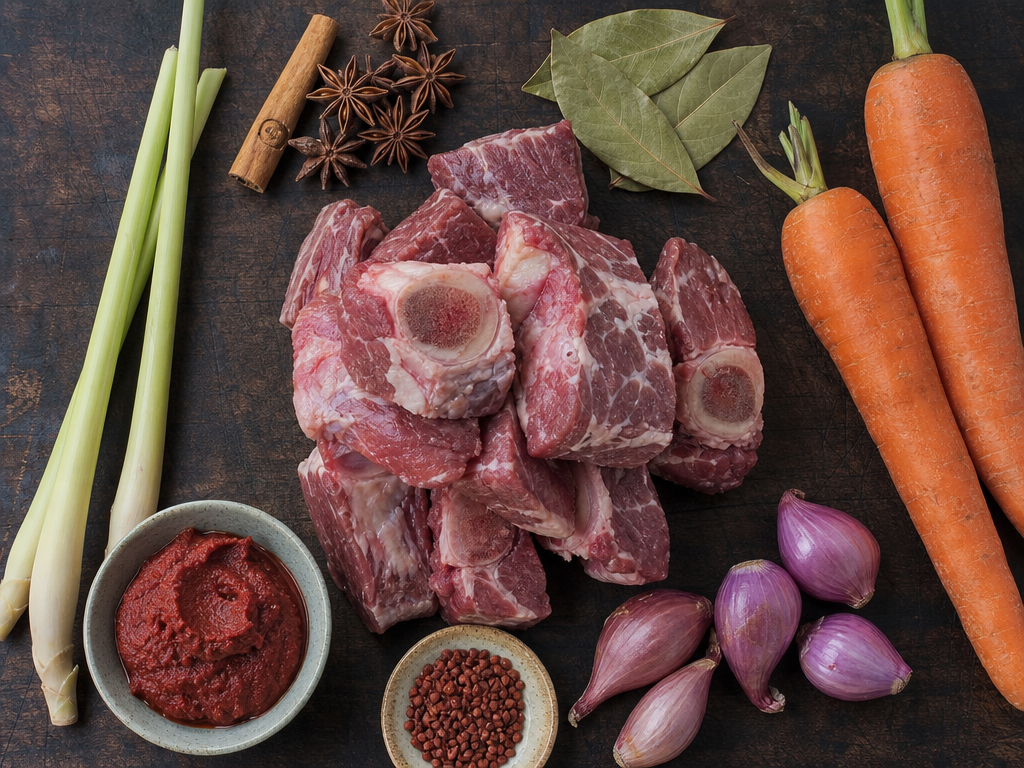
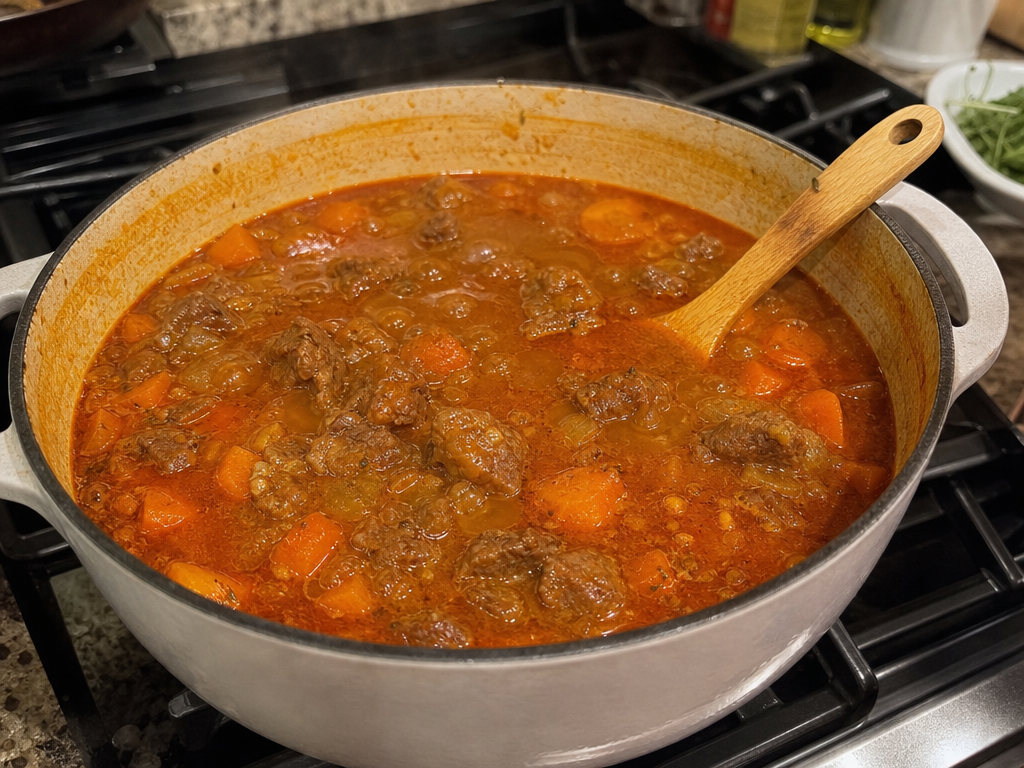
At its core, bò kho is beef — usually chuck, shank, or brisket, sometimes with a piece of tendon or tripe mixed in — braised for one to three hours in a liquid built from tomato, annatto oil or paprika for color, and a spice base of star anise, cinnamon, cloves, and bay leaves. Lemongrass and sometimes a small chunk of ginger go in early; carrots go in partway through so they hold their shape instead of turning to mush.
The result is a stew, not a soup — the defining trait that separates this Vietnamese beef stew from Vietnam’s noodle-soup dishes. The broth is thick enough to coat a spoon, not clear like phở, and the flavor leans warm and slightly sweet from the tomato and carrot rather than salty-sharp like a fish-sauce-based broth. Chili oil or fresh sliced chili is added at the table, not cooked in, so the base itself is only mildly spicy.
It’s classified as a Southern and Central dish more than a Northern one, though it’s sold everywhere today. The Wikipedia entry on bò kho traces the name to a general Vietnamese cooking term for a dry-braised stew (kho), applied here to beef (bò) — distinguishing it from the fish or pork versions of the same braising method.
Regional Profiles of Vietnamese Beef Stew
Saigon and the South
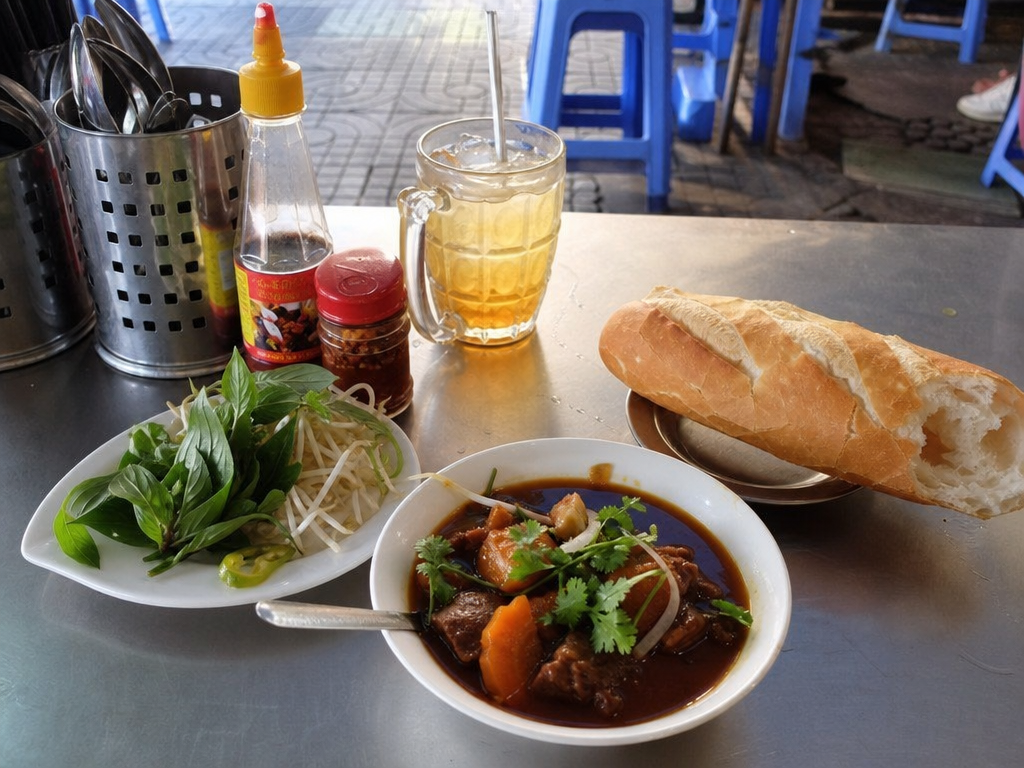
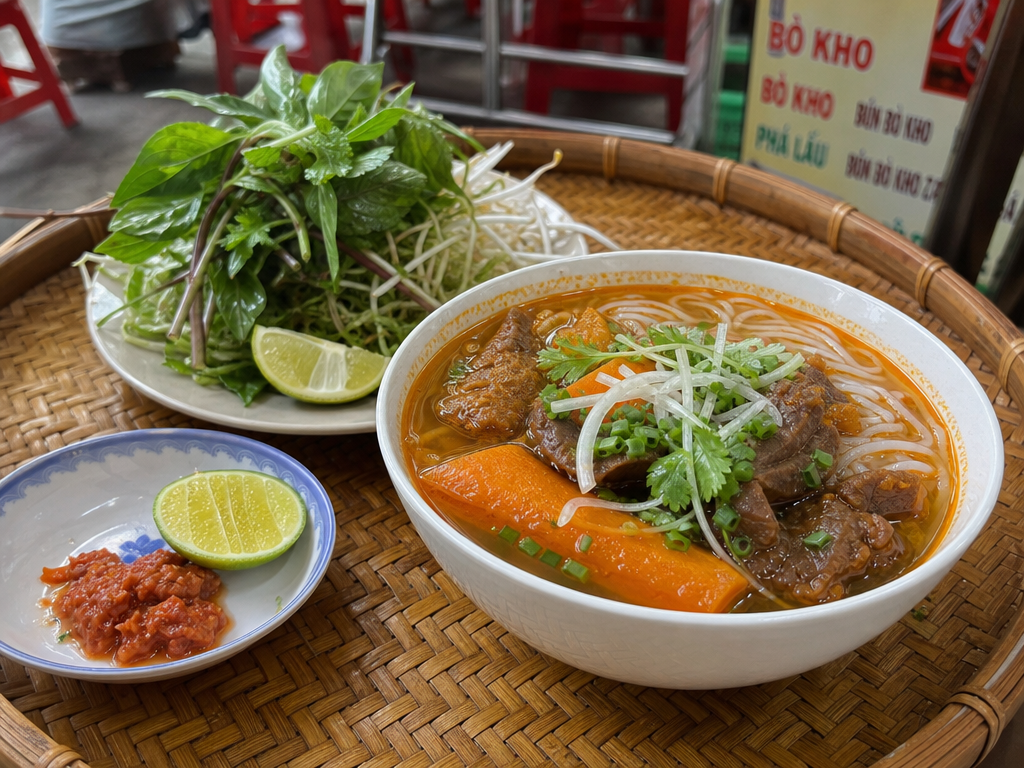
This is the version most visitors encounter first, sold from small carts and corner eateries mostly between roughly 6:00 and 10:00 a.m. The Saigon style tends to run slightly sweeter than other regions, with more tomato and carrot and a lighter hand on chili. Bread is the default pairing — a small torn baguette for dipping — though a version with rice noodles (bún) is common at sit-down spots and often listed on the menu as “bò kho bánh mì” (bread) versus “bò kho bún” (noodles).
Expect to pay roughly 35,000–55,000 VND (about USD 1.40–2.20) for a street-cart bowl with bread, and 55,000–75,000 VND (about USD 2.20–3.00) at a proper sit-down eatery with a fuller portion and extra herbs on the side. Prices vary with neighborhood — a bowl near a market or in a district geared toward locals runs cheaper than one in a tourist-heavy strip. For a sense of how prices shift across Ho Chi Minh City’s districts more broadly, see this Ho Chi Minh City neighborhood guide.
Hue and the Central Coast
Hue’s version pushes lemongrass and chili further forward, in keeping with the region’s general preference for spicier, more aromatic broths — the same instinct that shows up in bún bò huế. Annatto oil gives the broth a deeper red rather than the lighter orange-red of the Saigon bowl, and it’s more commonly served with rice noodles or even plain rice than with bread. Portions tend to be smaller but denser — less broth, more concentrated flavor per spoonful.
The Mekong Delta and Home-Style Versions
Away from the big cities, this Vietnamese beef stew is as much a home dish as a street dish, cooked in larger batches for family meals or gatherings rather than sold by the bowl. Home versions often include daikon radish alongside carrot, and the stew is simmered longer — sometimes past three hours — until the beef is close to falling apart. This style is rarely found on a printed menu; it shows up at home-style eateries (quán cơm gia đình) that serve whatever the kitchen made that day, alongside rice and a rotating tray of other dishes.
Northern Vietnam
Bò kho appears less often in Hanoi and the north, where beef noodle dishes skew toward clear broths like phở rather than braised stews. Where it does show up — usually at Southern-transplant eateries or specifically labeled as a Saigon-style dish — it’s closer to the sweeter Southern profile than a distinct Northern variant, since the dish didn’t originate there.
What to Order It With
- Bread (bánh mì): the most common pairing nationwide, especially at breakfast carts. The bread is for dipping and mopping the broth, not for making a sandwich out of the stew.
- Rice noodles (bún): common at sit-down restaurants and in Central Vietnam; turns the dish into something closer to a noodle bowl than a stew-and-bread combo.
- Plain rice (cơm): the home-style default, especially for the Mekong Delta version, and common at lunch rather than breakfast.
- Egg (trứng): a soft-boiled or hard-boiled egg added to the bowl is a common add-on, usually for a small extra charge of 5,000–8,000 VND (about USD 0.20–0.30).
If a menu simply says “bò kho” with no bread or noodle specified, it’s worth asking which comes standard — conventions differ by region and by shop, and some places charge separately for bread by the piece.
When and Where to Find Vietnamese Beef Stew
This Vietnamese beef stew is fundamentally a morning dish. Most dedicated stalls open around 6:00 a.m. and wind down by 10:00 or 11:00 a.m., once the day’s pot is gone — it’s cooked once, in one batch, and not usually restocked. This is different from dishes like cơm tấm, which are sold through lunch and often into the evening.
It also skews toward the cooler months. Demand is higher in the Vietnamese winter and early spring (roughly November through February in the north and central regions, when temperatures drop into the teens Celsius), since a hot, thick stew reads as cold-weather comfort food in a way it doesn’t during peak summer heat. It’s still available year-round in the south, where temperature swings are smaller.
Markets and market-adjacent streets are a reliable place to find it, since the dish traditionally supplied a fast, filling breakfast for vendors and shoppers starting work early. For a broader sense of what other dishes are typically sold at which type of venue, see this guide to what to order at Vietnamese eateries.
How the Broth Is Built
The color and flavor of this Vietnamese beef stew come from a short list of ingredients, each doing a specific job:
- Star anise and cinnamon — the backbone aromatics, giving the stew its warm, slightly sweet spice note. Too much star anise and the broth turns medicinal; the better versions use it with a light hand.
- Annatto seed oil or paprika/tomato paste — the color source. Annatto (hạt điều màu) gives a more orange-red hue and a faint earthy taste; tomato-forward versions lean redder and sweeter.
- Lemongrass — bruised and added in large stalks, then usually removed or left as a garnish rather than eaten. It’s the ingredient most responsible for the dish smelling distinctly Vietnamese rather than generically like a beef stew.
- Fish sauce — added for salt and depth instead of plain salt, in smaller quantities than in a clear broth soup, since the tomato and spices already carry most of the flavor.
- Carrots — added partway through cooking, not at the start, so they stay firm rather than disintegrating into the broth over a two-hour braise.
Ordering Tips by Situation
If you want the mildest version: ask for it without added chili on the side, or specify “không cay” (not spicy) — the base broth itself is mild, so most of the heat comes from a chili condiment added afterward, not from the cooking process.
If you’re vegetarian or avoiding beef: skip this dish entirely rather than asking for a substitution. The broth itself is typically built with beef bones and beef fat rendered in with the aromatics, so a “vegetable-only” version isn’t standard the way it sometimes is with noodle soups.
If you want the Hue-style spicier bowl outside of Hue: look for menus that specifically list “bò kho Huế” or ask if the kitchen uses more lemongrass and chili — some Southern eateries offer both a standard and a “spicy Central-style” version.
If you’re ordering for a group with different spice tolerances: order the stew with chili and condiments served separately rather than mixed in, which is standard practice at most sit-down places anyway.
Frequently Asked Questions
Is this Vietnamese beef stew the same as beef phở? No. Phở uses a clear, long-simmered bone broth with rice noodles and thin-sliced beef; bò kho is a thicker, tomato- and spice-based braise served with bread, noodles, or rice, and the beef is cut into chunks rather than thin slices.
Is bò kho spicy? The base broth is only mildly spicy. Heat is usually added at the table through fresh chili, chili oil, or a chili-salt dip, so the dish can be adjusted up or down easily.
What cut of beef is used? Chuck, shank, and brisket are the most common cuts, often with a piece of tendon included for texture. Cheaper versions may use tougher cuts braised longer to compensate.
Can bò kho be reheated well? Yes — like most braises, the flavor deepens after a day in the refrigerator, which is part of why it’s common as a home-cooked dish made in a large batch rather than a single serving.
Why is it mostly a breakfast dish? Convention more than necessity. It developed as a fast, hearty breakfast option sold near markets, and the tradition of morning-only sale has largely stuck, even though nothing about the dish itself requires eating it early.